Tiefgelb / Tieftürkis

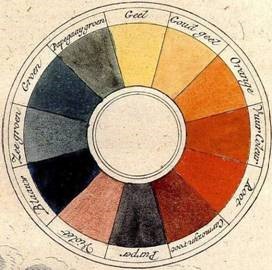
Colour wheel with 18th century labels: clockwise from yellow over red to blue and green; one purple field has paled to pink.Tiefgelb

Die tiefgelbe Blume vor wollweißer Wand,
die frohrosa Büschel vor lehmbraunem Zaun,
der vollblaue Tag über kraftgrünem Land –
der rundbunte Sommer, ein tiefgelber Traum!

Christina Egan © 2016


Tieftürkis

Tieftürkis und lässig prächtig,
sonnensatt und sonnenträchtig
steht der Horizont noch spät.
Schwarze Flammen, schwanken Bäume,
stumm gestaltgewordne Träume,
wenn der wirre Nachtwind weht.

Liegt die Erde endlich nächtig,
scheint der Himmel übermächtig,
unerschöpfter Helle Quell.
Alle Sehnsucht kann noch fruchten
in verborgnen Gartenfluchten
oder einer höhern Welt.

Christina Egan © 2017


Colour adjectives develop only very slowly in languages all over the world. There are still not nearly enough! I don’t see why in German, we have the words ‘deep red’ and ‘deep blue’ — written as one word, even — but no ‘deep yellow’ or ‘deep turquoise’; so I am introducing them. I also made up a number of unusual descriptors for the first poem, leading up to the internally rhyming ‘rundbunt’ for multi-coloured in all colours of the earth or of the colour wheel.

Colour wheel with 18th century labels: clockwise from yellow over red to blue and green; one purple field has paled to pink.


Image: Arnoldus Lobedanius, Utrecht, 1744. (One purple field must have paled to pink.)

Reproduced with kind permission of the Library of Cologne University of Applied Sciences (Fachhochschule Köln).

Snow-White Patches

Snow-White Patches
(July Tanka)

Daisies, buttercups,
scattered across the lush green
like two galaxies:
humble, ephemeral and
full of the glory of God.

*

Those snow-white patches,
patterns on the lawn, the mulch:
hortensia flowers,
as if cut out from the world
of colours and of motion.

Christina Egan © 2012


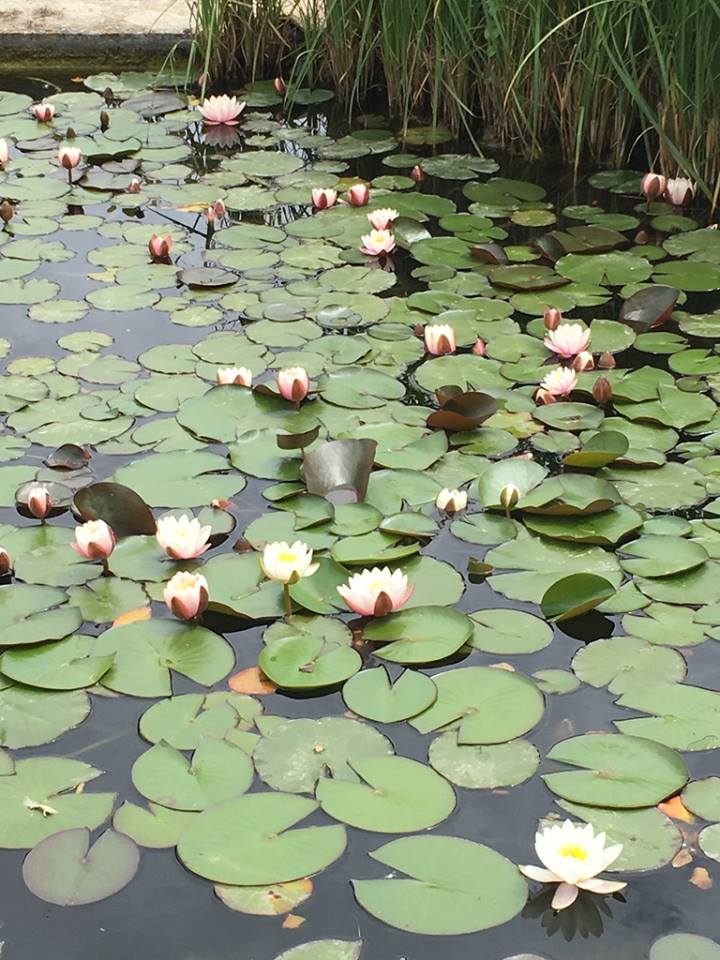
Waterlilies with half-open luminous pink and white flowers.

These poems describe the world as an ensemble of patterns. They also try to make sense of the world, and perhaps the act of discovering order also unveils meaning…

Something tiny resembles something gigantic, the whole of the known world, in fact. Something white appears as a hole or an island in the colourful picture: like a shadow of death or a gate to eternity.


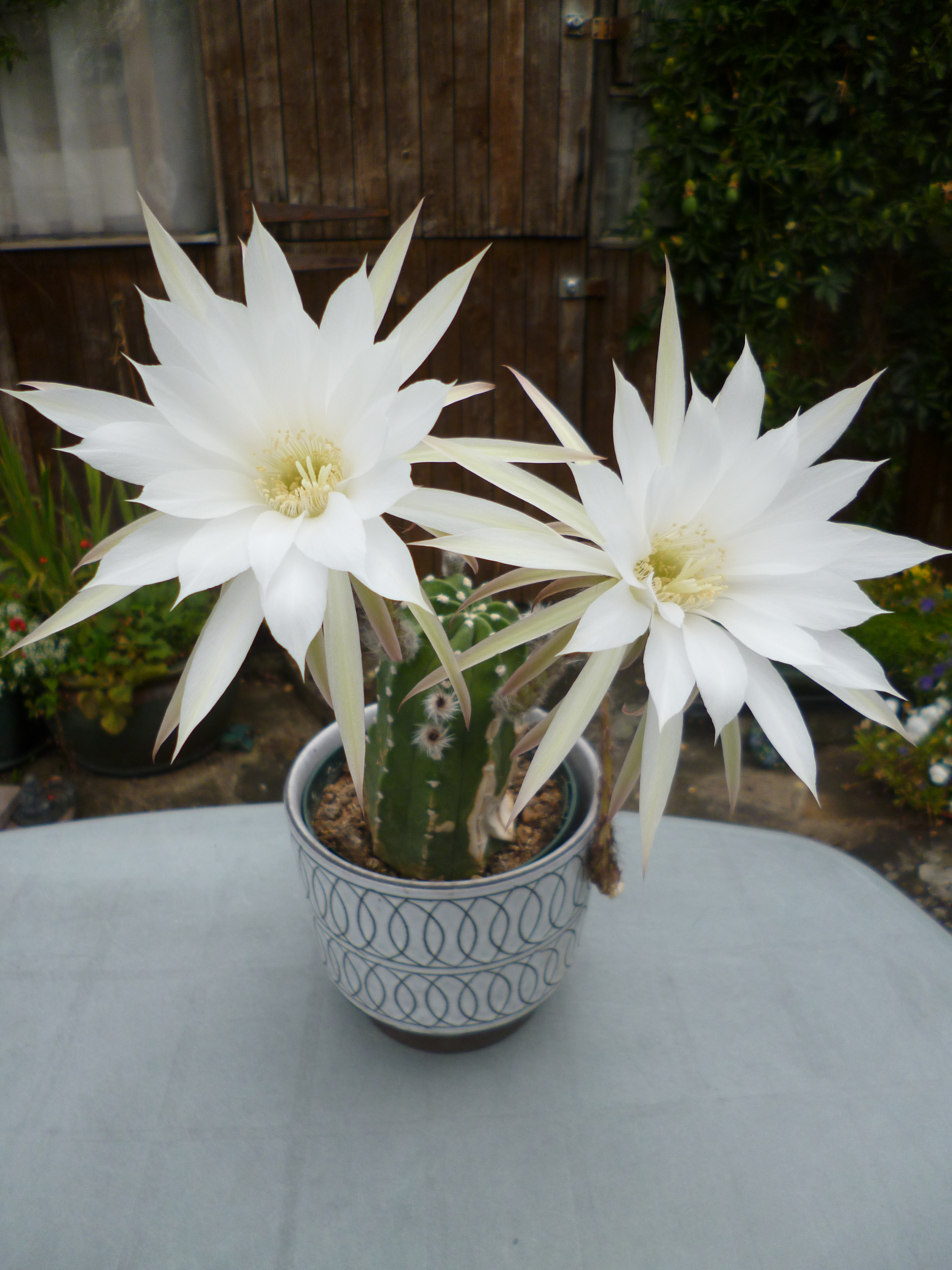
Cactus seen from above, with two star-like flowers bigger than the body of the cactusThe line ‘full of the glory of God’ was inspired by the verse ‘The world is charged with the grandeur of God‘ by Gerald Manley Hopkins.

You can truly ‘see a world in a grain of sand / and a heaven in a wild flower’, as William Blake claimed!

Photographs: Water-lilies. Liu Ye (Ye Liu) © 2016. — Queen of the night. Christina Egan © 2014.

Silver Vein

Silver Vein

The curves of your step and your hand
leave a feathery trail in the air,
leave a flickering trace in my heart.

It’s a script you can’t see,
it’s a script I can’t read,
it’s a glittering vein on the earth.

That you weigh your weight,
that your flesh fills space,
that you radiate warmth

is a wonder to me,
a wealth of amazement,
a maze of desire.

Christina Egan © 2006

gedichte über blumen

gedichte über blumen

Buds and fresh leaves on top of shoots above a parkein jeder blumenkranz
ein jedes sommerlied

jede hochgemute knospe
ja jeder nadelfeine halm

ist eine kriegserklärung
an den krieg

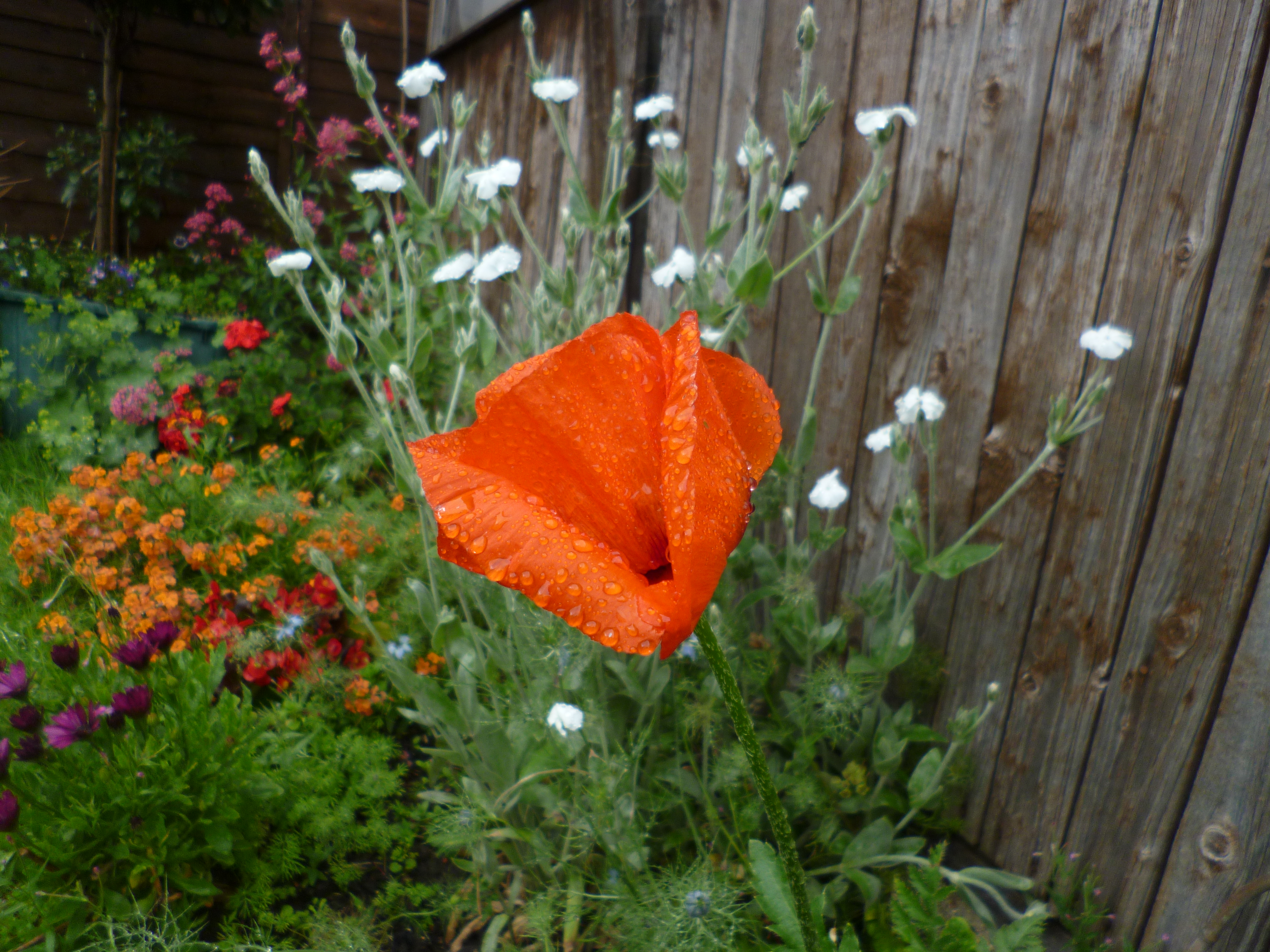
Close-up of poppy flower with dew or rain on it, above other red, orange, purple, and white flowers.

eine nichtigkeitserklärung
des nichts

eine liebeserklärung
an die liebe

an alle
ans all

Christina Egan © 2014

Photographs: Christina Egan © 2014 / 2016.


My insistence on writing poems about flowers is a reaction to Bertolt Brecht’s often-quoted suggestion that a conversation about trees borders on criminal negligence because it is silent about atrocities. In the poem An die Nachgeborenen from the 1930’s he exclaims:

“Was sind das für Zeiten, wo
Ein Gespräch über Bäume fast ein Verbrechen ist
Weil es ein Schweigen über so viele Untaten einschließt!”

Brecht’s idea is  startling and ingenious; but I hold that all praise of a flower or a bud is a praise of life and peace: ‘a declaration of war / against War… a declaration of love / to Love.’

Also, if you have read a few of my poems, you will have noticed that they do not describe flowers and trees alone, but use them as images for human life and joy, suffering and death. ‘Poems about flowers’ has 35 words — but amongst them are ‘nothingness’ and ‘the universe’!

Moon Rainbow

Moon Rainbow

Enveloped in the velvet cloak of night,
I feel I have been chosen before birth
As secret queen of this enchanted earth,
Enrobed in moon and star and rainbow light.
Enveloped in this sparkling cloak of night,
Embroidered by an angel, tireless,
And lined with solid human tenderness,
I know I live and die to see the light.
I’m wrapped into this lining of the night:
Your silver beauty scooped out of the moon
And made to breathe and smile and give me room.
I hold your smooth and tapered fingers tight,
I hold your dreams to give them earth to bloom:
Around us moves the sky’s luminous loom.

Christina Egan © 2010

Under the Blue Bloom of the Tree

Under the Blue Bloom of the Tree

Under the blue bloom of the tree,
O little mouse, I buried thee.
I heard thee often run until
I saw thee lying, small and still.
So high the sky, so late the light
ascending to midsummernight…
The deep warm earth is now thy bed,
with snow-white petals for a spread.
Fresh spikes of lavender I chose
and last, a minuscule red rose.
Tonight, the ceanothus tree
will scatter sky-blue dust on thee.

Christina Egan © 2017

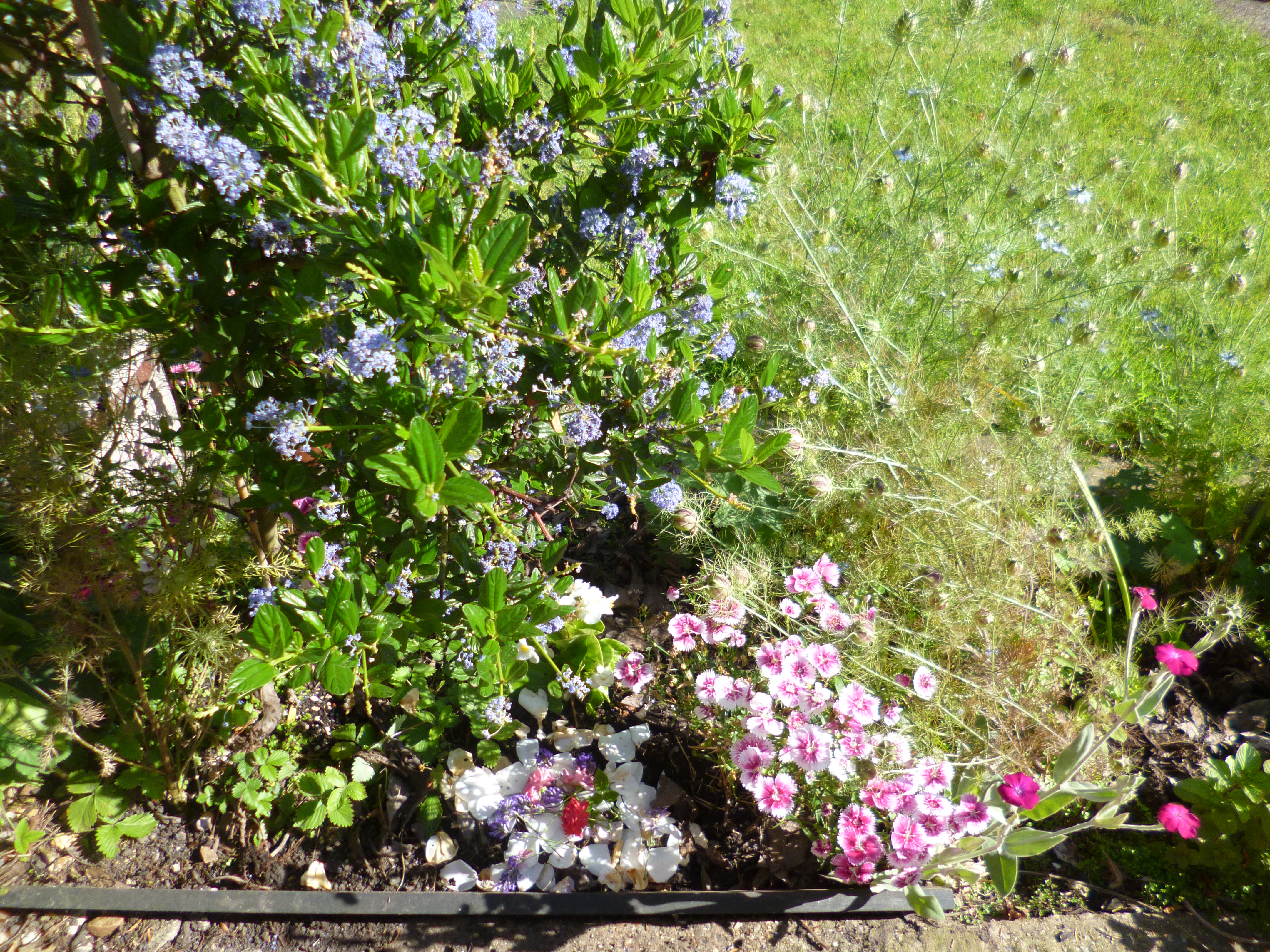
White and coloured petals on the ground, beneath ceanothus and carnation.

The mouse grave in the poem. Photograph: Christina Egan © 2017.

Sambation

Sambation

O daß der Mühlenräderlärm der Plätze
verrauschte wie ein Sommerwolkenbruch,
das grelle purzelnde Geröll der Menge
versiegte in der Großstadtstraßenschlucht,

auf daß das Flußbett sich durchwandern ließe
an Pforten, Traufen, Blumentrog vorbei
und nur die Schwalbe in die Stille stoße,
hoch, froh, mit Sichelflug und Silberschrei.

O daß die Lichterstrecken, Lichterhaufen
verblaßten wie das Nordlicht überm Meer,
auf daß die Sterne aus dem Dunkel tauchten
wie ein mit Bronze überglänztes Heer!

Christina Egan © 2017


The mythical river Sambation at the edge of the known world cannot be crossed because it is wild and full of mud and rocks — or even consists of rocks instead of water.

Here, the busy streets of a big city are experienced as a ravine full of tumbling stones, while the screech like grinding millstones; by night, the galaxies of lamplights drown the stars.

The opposite images are the quiet riverbeds of empty streets; the silent sky punctuated by the flight and cry of a swallow; and then the stars re-emerging…

This poem will be published in the German-language calendar Münsterschwarzacher Bildkalender 2019 (available from mid-August).

Rear Mirror

Rear Mirror

Telegraph wires:
a flock of birds turns them into
three lines of verse.

*

No flowerbeds here –
but a line of bright washing
dancing in the wind!

*

A palm-tree appears
in the rear mirror, and huts
in the still lagoon.

Christina Egan © 2018

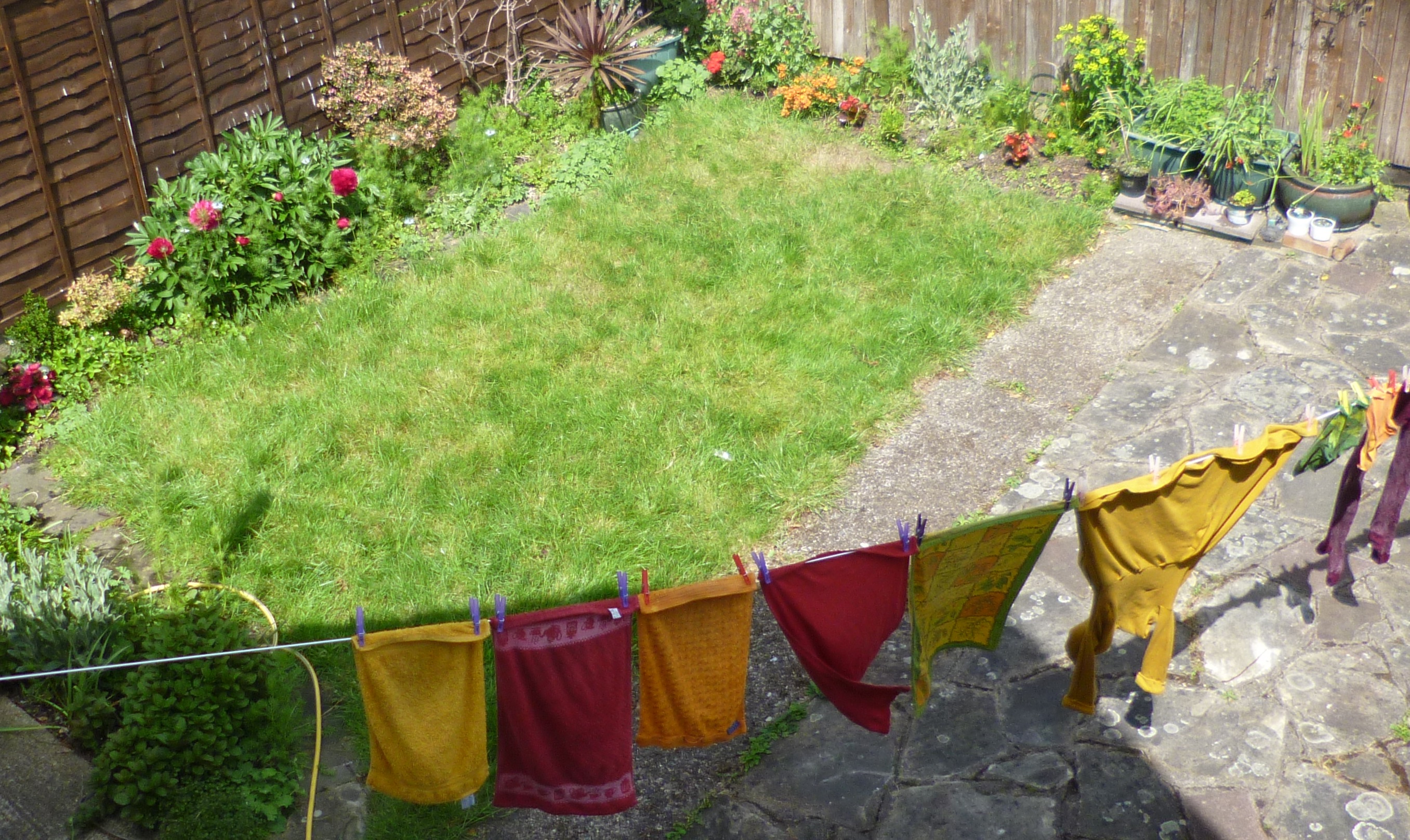
Washing-line with red, orange, yellow, green clothes, forming a triangle with the matching flower-beds behind.

These haiku about haiku were written looking at three picture postcards, where I instantly perceived patterns and metaphors.

Poetry – and painting or photography – are like rear mirrors which make hidden things visible and ordinary places special.

Photograph: Christina Egan © 2016.

trompetenlied

trompetenlied

ich liebe dich
mehr als das licht
das sich im sturz
des stromes bricht

Narrow gorge with stream skipping around boulders and some vegetation on the rocks.ich liebe dich
dein angesicht
in dem sich geist
mit fleisch verflicht

den klaren blick
die kühne hand
von allem anfang
mir verwandt

das dunkle haar
wie waldesrand
die helle haut
wie meeressand

ich liebe dich
mein nachbarland
zum ziel der zeiten
hingespannt

Christina Egan © 2014

Photograph: Atlas Mountains, Morocco.
Christina Egan © 2012.

Schläft ein Lied / Sleeping Choir

Schläft ein Lied von tausend Zungen

Schläft ein Lied von tausend Zungen
im geweihten Marmorrund;
und der Stein hebt an zu schwingen,
wenn die Orgel perlt und summt,
und der Stein hebt an zu klingen,
wenn die Orgel schwillt und braust –
Wird das Herz vom Ruf durchdrungen
und der Leib in Glanz getaucht.

Christina Egan © 2017


Sleeping Choir

Sleeping in the marble round
choir of a thousand tongues;
and the stone vibrates and hums,
when the organ wakes to sound,
and the stone pulsates and sings,
when the organ swells and roars –
In your heart the message soars,
steeped in splendour are your limbs.

Christina Egan © 2018


This poem is developed from a key verse of German Romanticism. Joseph von Eichendorff (popular to this day and one of my favourite poets) imagines the world dreaming and a song slumbering within; you need to find the magical word to awaken them.

Schläft ein Lied in allen Dingen,
Die da träumen fort und fort,
Und die Welt hebt an zu singen,
Triffst du nur das Zauberwort.

Joseph von Eichendorff

The lines were also inspired by a Pentecost service at Notre Dame de France at Leicester Square in London: when the organ plays at a high volume, its circular walls — not really marble, but snow-white — seem to vibrate and sing around the visitor.

The German version of this poem will be published in the calendar Münsterschwarzacher Bildkalender 2019 (available from mid-August).

Photograph: Catholic church Stella Maris, Binz on the Isle of Rügen, Germany. Christina Egan © 2016.