Quintessence

Quintessence

I’ll fill a crystal flask
with silver melodies,
a magic drop to last
for years and centuries.

I shall distil my days
to mellow poetry,
and distant lands will taste
the quintessence of me.

I’ll fill a crystal flask
with pearls of memory:
my solitary task,
my faithful alchemy.

The five pure elements’
fifth essence, finally,
their forces and their scents:
as fresh as fiery!

Christina Egan © 2016

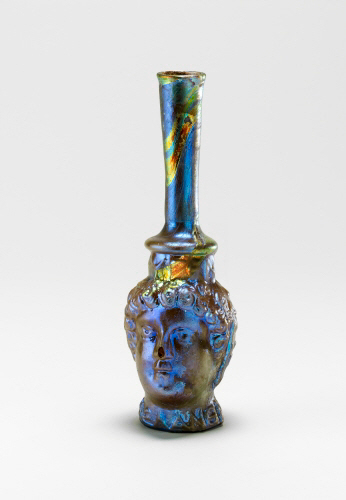
Photograph: Glass flask by Eugenes, found in Syria,
3rd c. AD. © The Trustees of the British Museum.
I  had similar flasks from the Roman era in mind
when I wrote the poem but did not know this one.

Die Wege von Malta

Die Wege von Malta

Über das zerrissene
blütensprühende Gestein
legt sich das zerschlissene
Fischernetz im Sonnenschein:
Eselswege, Autostraßen,
steil und krumm und oftgeflickt,
Klosterhöfe, Promenaden,
salzbehaucht und dufterquickt.

Netz von Stiegen, Steigen, Pfaden
wandelt flugs ein Wolkenbruch
zu Kanälen und Kaskaden,
füllt die ausgedörrte Schlucht,
tränkt die berstendgrünen Triften,
häuft den sonnengoldnen Sand,
formt den Lehm der stolzen Küsten,
höhlt die wilde Felsenwand…

Christina Egan © 2018

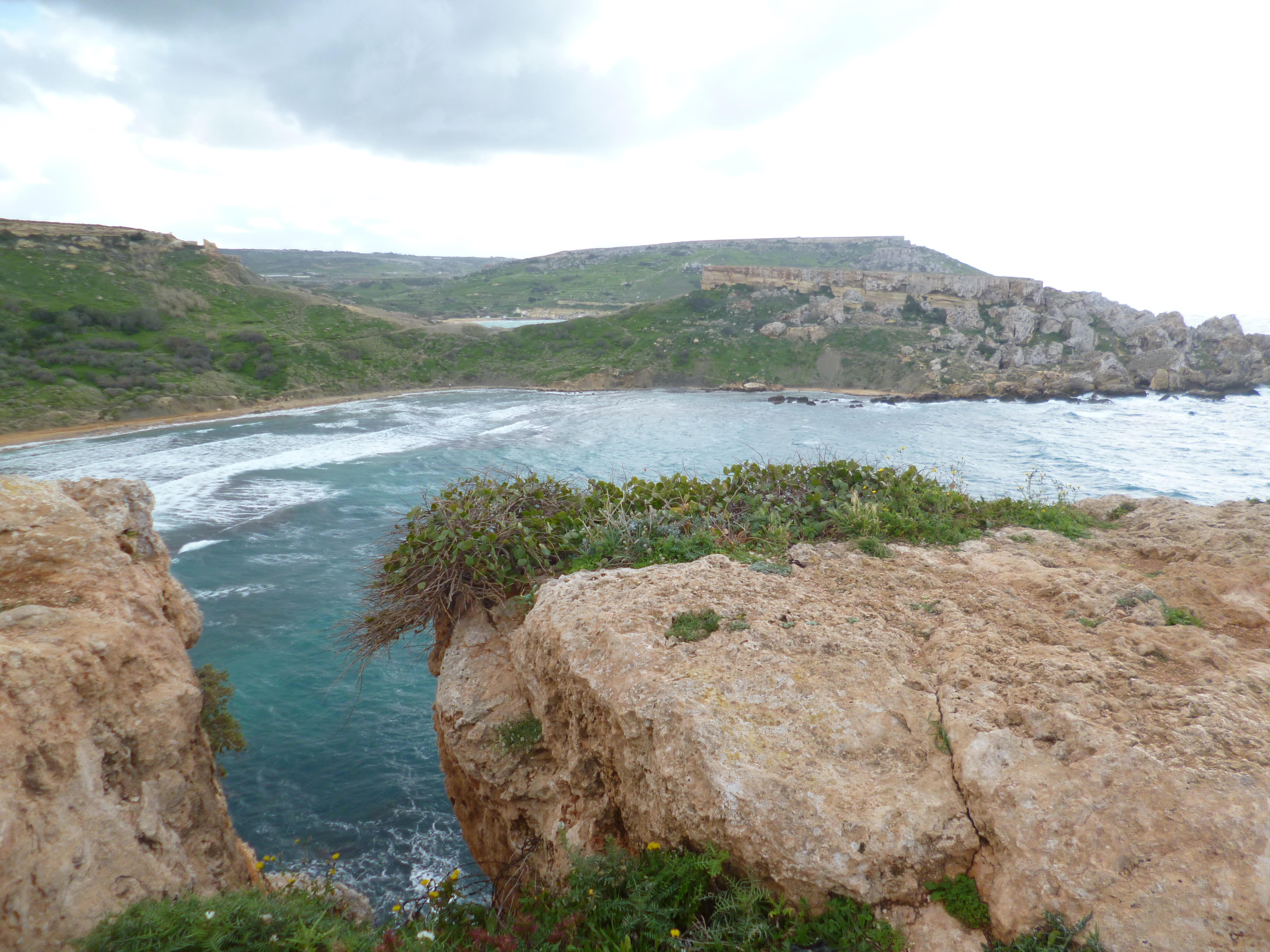
Small bays of limpid turquoise water, golden rock and sand, fresh green slopes.

A golden and green impression of Malta Island in February —
glorious spring! — Photograph: Christina Egan © 2018.

The Path of Luck

The Path of Luck

The burnished desk of the leader groaned
under the slap of his sturdy sandal:
he brandished it over the map of Europe,
as if he signed it, large, from the left.
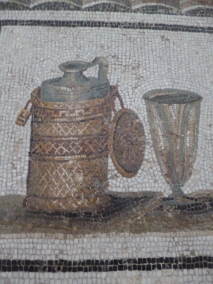
Roman mosaic of bottle and cupThe oil-lamp flickered, the officers frowned
and grinned and raised their cups of spiced wine:
“Don’t forge your luck while it’s hot and supple —

but fan your fate when you will it so!”
The earth would unroll like a scarlet carpet,
lavish her treasures before his feet:
the gold and the purple, sandalwood, snakeskin,
the pearl and the laurel, the wine from volcanoes.
His sandals mounting the snow-white steps,
he saw and saw not the pool of blood.

Christina Egan © 2008
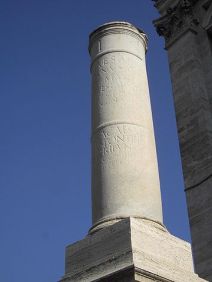
Massive smooth column with Latin inscription, including the name 'Caesar', against deep-blue sky.


Altae moenia Romae

Rome rose, looked round, and conquered all,
on loot and lies loomed square and tall,
and slowly crumbled towards its fall.
Time’s march defies the highest wall.

Christina Egan © 2008
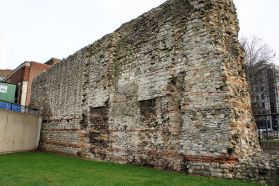
 

High wall of neatly piled stone and brick in the midst of the city

The first poem was written on the Ides of March and the second soon after. They reveal the dark side of Rome, the shadow of the imperial propaganda that the Empire had brought universal peace. Caesar is still celebrated as the greatest statesman ever; but he got to the top, and lifted Rome to the top, at a very great human cost.

For praise of ancient Rome, go to the narrative poem The City Lit Up about Roman London and the sonnets at The Hallowed City about the Eternal City itself.

The poem above follows the structure of an English sonnet, with three times four lines and then two in the end, with a conclusion or twist.


Illustrations: Roman mosaic, Bardo Museum, Tunis. Photograph: Christina Egan © 2014. — Milestone, Campidoglio, Rome. Photograph by Lalupa. — Roman city wall of London. Photograph by Mariordo (Mario Roberto Durán Ortiz) (Own work) via Wikimedia Commons.

Dankbar für die kleinen Dinge

Dankbar für die kleinen Dinge

Dankbar für die kleinen Dinge,
dankbar für die Jahresringe,
für die weißen Schmetterlinge
und den Sonnenblumenstrauch.

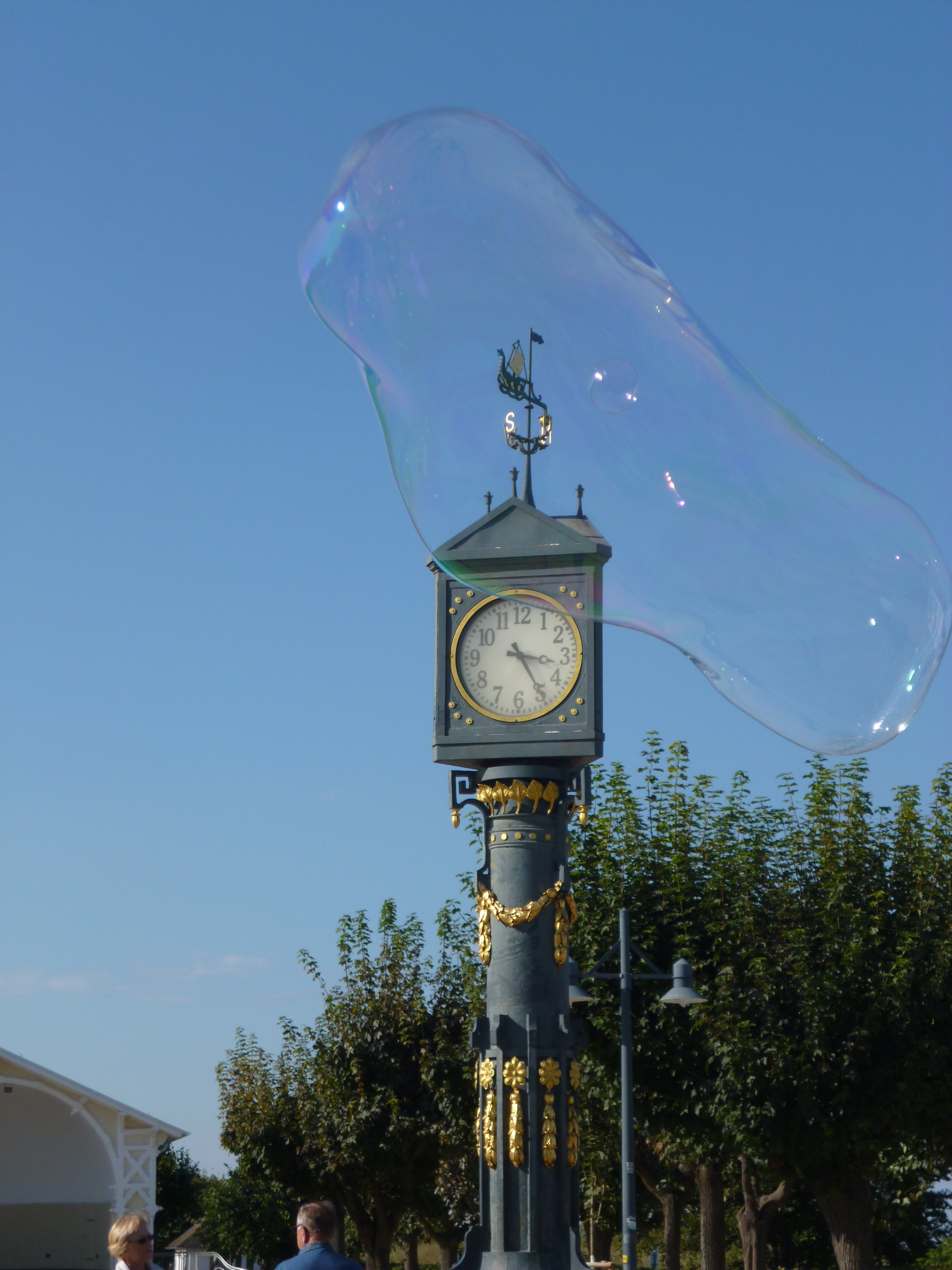
Large standing clock with heavy golden ornaments, with huge soap bubble floating across.Dankbar für die kleinen Wunder,
unverhofft und unbesungen,
für die sonnenfrohen Stunden
und die sternenstillen auch.

Dankbar für die kleinen Pausen,
für des Laubes sanftes Bauschen,
für des Meeres hehres Rauschen
und der Symphonien Rausch.

Dankbar für die kleinen Zeichen,
für ein rasches Händereichen,
für ein Lächeln ohnegleichen
und der Blicke echten Tausch.

Christina Egan © 2018


Clock on the beach promenade,
Ahlbeck on Usedom. Photograph:
Christina Egan © 2017.

Fürst Schnee und Fürstin Mond

Fürst Schnee und Fürstin Mond

Fürst Schnee und Fürstin Mond
verwandeln rings das Land
mit sanftem Silberglanz,
wenn König Winter thront
und lenkt mit weißer Hand
den stillen Flockentanz.

Verschwunden ist der Staub,
versilbert ist das Schwarz,
vorweg verklärt die Welt.
Da wundert sich das Aug,
da weitet sich das Herz
bis an das Himmelszelt.

Christina Egan © 2017

The Hallowed City

The Hallowed City

I.

Aliusque et idem nasceris

When last I looked upon that golden hill,
the only coal-grey clouds along its crest
were pine-trees of Mediterranean zest,
clear-cut against the blue, timeless and still.
When I surveyed the city from the west,
beyond the river and the seventh hill,
my thirsty eyes rejoiced and drank their fill…
A pilgrimage it was and pagan quest.
Behind me passed the Sun on wheels of fire,
accompanied by Mnemosyne’s lyre.
Was this my long-lost and recovered home?
Born here and buried, had I now returned,
the same and not the same? My eye-lids burned.
This is the hallowed city. This is Rome.

Christina Egan © 2018

Drawing of curving Roman aqueducts crossing over

II.

Pulchrae loca vertor ad urbis

My eyes have seen the marble halls of Rome,
resplendent like the mighty mistress Moon
and multi-coloured like a field in bloom;
I’ve watched the buildings grow in brick and stone.
I’ve stood beneath the proud and perfect dome
which emulates the heavens’ sparkling room
and holds our destiny from dawn to doom.
I’ve roamed those hills and called a roof my home.
I’ve heard the chanting children, sighing harps,
the darting chariots and creaking carts,
the swish of virgin water, purple wine,
I’ve seen the aqueducts descend and curve,
the roads roll into Rome, unite, disperse —
I’ve tasted all that splendour. It was mine.

Christina Egan © 2018


The first blogpost of the year deals, as always, with Roman roads!

The impression of aqueducts, which illustrated one of my parents’ books about ancient civilisations, informed my entire life. Unfortunately, I do not know the artist, but there does not seem to be a copyright on it.

The quotes are from two Roman poems about Rome, Horace’s Carmen saeculare and Ovid’s Tristia.

I apply Horace’s idea that the sun is daily reborn, another and yet the same, to a person who feels he or she was reborn into this world many centuries later, another and yet the same; and I reinterpret Ovid’s lament about remembering his home from exile as a modern person’s longing for antiquity. Mnemosyne is the Greco-Roman divinity of memory, and the Sun and Moon, of course, are mighty gods, or at least representations of gods.

Mild Christmas Eve

Mild Christmas Eve

My heavy gate to heaven
has got a secret crack,
and sometimes sunlike flashes
steal through the sudden gap.

Burning sparkler on black background, looking like a supernova!There are no stars this Christmas
but those in your sweet face,
no snow and sparkling crystals
but those in your embrace.

You are my splendid banquet,
you are the birth of mirth,
you’ll be my earth in heaven –
my heaven here on earth.

Christina Egan © 2004

Photograph by Gabriel Pollard [CC BY-SA 2.5].
Featured picture on Wikimedia Commons. 

Ein helles Heute / Bunte Gnadenspur

Morgengebet
(Ein helles Heute)

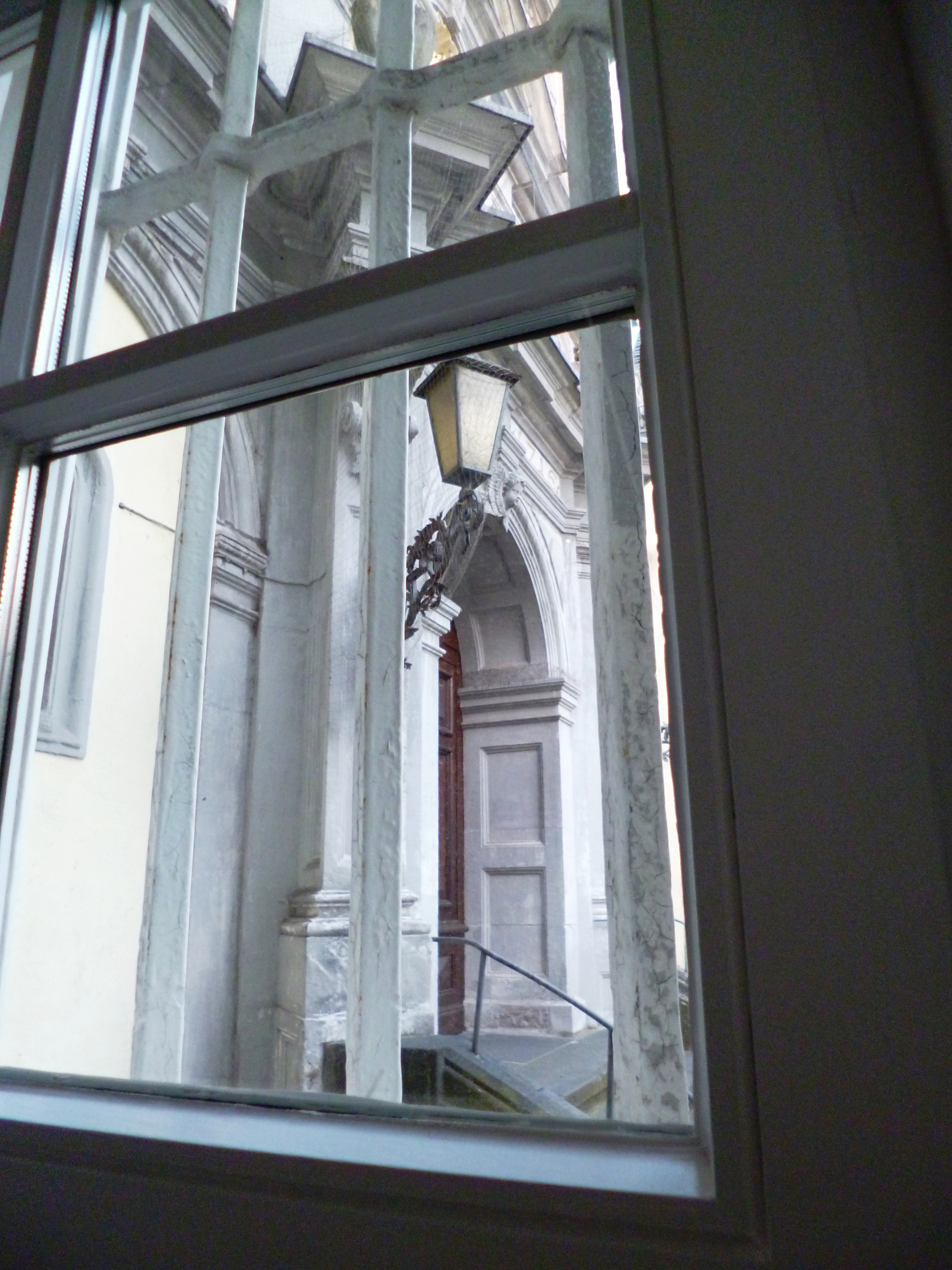
Church portal with iron lantern seen through window with grate; all light-grey and light-blueAus der Schönheit blüht uns Freude,
Freude grünt uns aus der Kraft.
Schenk’ uns, Herr, ein helles Heute,
das aus Freude Frieden schafft.

Aus dem Leiden wächst uns Glauben,
und Geduld reift aus dem Schmerz.
Schenk’ uns Stille und Vertrauen,
führ’ uns heimlich himmelwärts.

Christina Egan © 2019


Tischgebet
(Bunte Gnadenspur)

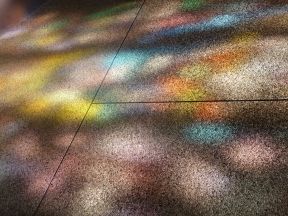
Wir halten inne, denn das Mahl ist buntTraces of colour on the floor from church windows: blurred bright patches.
an Farbe, Würze und Beschaffenheit;
wir halten inne, um mit Herz und Mund
zu danken für die satte Friedenszeit.

Wir danken für die reiche Frucht der Erde,
die unerschöpfte Urkraft der Natur,
für unsrer unentwegten Mühen Ernte:
Wir danken für die bunte Gnadenspur.

Christina Egan © 2019


Photograph of convent: Christina Egan © 2014. —
Photograph of light from church windows by 3268zauber.

Farbechte Hoffnung

Farbechte Hoffnung

Der Behälter enthält
eine bunte Matratze,
einen kleinen Fernseher
und eine Familie:
Mann, Frau und Kind.

Jeder von ihnen marschierte
durch Wüsten und Sümpfe
mit einem Rucksack voll Kleidern
und einer Tasche voll Träumen.

Träumen von Süßigkeiten
und Brot, von Spiel
und Arbeit, von Frieden.

Träume von Alltag.
Träume von Schlaf.
Träume von Heimat.

Der Behälter enthält
drei hungrige Menschen,
drei hungrige Herzen
und viele Ballen farbechter Hoffnung.

Christina Egan © 2016


“Dreams of everyday life. Dreams of sleep. Dreams of home.”

This poem was inspired by the photograph of a refugee family in the excellent newspaper Agora, at the end of a year of mass migration into Germany. See also my previous poem Kerzenbekrönt, which shows the idyllic side of Christmas in Germany.

The homeless family in the photo — a man, a woman and a child — will remind Christians of the ‘Holy Family’ of Joseph, Mary and Jesus, who were sheltering in a stall for animals when Jesus was born. I assume the editors of Agora chose this motif for their photo montage consciously.

This poem may work in a translation software.

Kerzenbekrönt

Kerzenbekrönt

Senkt sich die Dämmrung an frostigen Tagen
– früher denn jemals, doch zauberhaft blau –
hängt über stolzen gewölbten Mansarden,
hält über giebelgeschmückten Fassaden,
bannt aus dem Geiste das leidige Grau.

Stürzen Gestirne herab in Kaskaden
– feucht ist das Pflaster, doch goldengetönt –
spannen sich Perlen an Faden um Faden
blinkend und bebend von Laden zu Laden
bis an die Kirchtürme, kerzenbekrönt.

Christina Egan © 2016


This poem was inspired by a front page photograph of the superb newspaper Agora  in Fulda, Germany, which I had folded over. Then I noticed that beneath the idyllic historical street lit up for Christmas, an industrial container had been inserted through photo montage: as a makeshift home for a refugee family. I felt I had to write a second poem, which you can find at Farbechte Hoffnung.

The street shown is Friedrichstraße, which gives you quite a good impression of past centuries, despite severe damage during the Second World War and ensuing changes. Fulda is quite good for midwinter holidays because of the Christmas Market, the nativity scenes in the churches, numerous festive events… and the snow in the mountains.