restloslächeln

restloslächeln

von dem blütengesicht
wendest du dich ab
vor der glockenstimme
läufst du davon

denn du willst dich nicht
wundsehnen
nie mehr willst du dich
krankfragen

es ist dir zu teuer das
restloslächeln
zu gefährlich ist dir das
endlosküssen

und dein eignes blütengesicht
versteckst du sorgfältig
samt deiner glockenstimme
in deinem kopfkissen.

Christina Egan © 2012


Observations of the fear of love, the fear of falling in love, the flight from a person you would love to love…

In German, you can more easily invent new words which will be written in one word: here, it is ‘making yourself sore with longing’, ‘making yourself ill with asking’, ‘smiling without leftover’, and ‘kissing without end’. Occasionally, German is more concise than English!

Jetzt und jenseits / Now and Beyond

Jetzt und jenseits

In der Stille, in der Helle,
wo die Kerze steht und blüht
oder Welle über Welle,
Wolke über Wolke zieht,

in der Stille, in der Hülle
des Gewölbes oder Walds
quillt der Friede, quillt die Fülle
jetzt und jenseits unsres Alls.

Christina Egan © 2015

Shallow sandy beach and blue sea water filling lower half of picture, sky-blue sky with a few clouds above. Exudes tranquillity.

Now and Beyond

In the stillness, in the light,
where the candle blossoms bright
or where wave flows after wave,
cloud on cloud and breeze on breeze,

in the stillness, in the cave
of the vault or wooded pond
flows the fullness, flows the peace
of the now and the beyond.

Christina Egan © 2015


In the Hebrew bible, ‘peace’ (‘shalom’) is defined ex positivo, as it should be, not ex negativo: it means abundance and fulfilment, not absence of war or conflict.

Similarly, in the Christian tradition, ‘quiet’, ‘silence’, ‘solitude’ often imply awareness, peace of mind, presence of God, rather than absence of sound or lack of company.

Photograph: Beach of Wyk on Föhr, Germany. Christina Egan © 2014.

Suburban traffic jam / Vorstadtstau

Suburban traffic jam

It’s raining, the traffic is creeping,
the morning is seeping away…
The bus windows seem to be weeping
at boundless suburban grey.

Yet should a grenade or a comet
now strike us, as if to sift –
I’d meet my death as a poet,
I’ve smiled and I’ve breathed and I’ve lived!

Christina Egan © 2015


Vorstadtstau

Es regnet… Minuten verrinnen
im Vorstadtstau, Stoßzeitstau…
Die Autobusfenster verschwimmen
im uferlos traurigen Grau.

Und sollte der Tod uns jetzt lichten
– Granate oder Komet –
so hab’ ich gelächelt, gedichtet,
so hab’ ich geatmet, gelebt!

Christina Egan © 2015


These thoughts came to me on a bus near the spot in London where a man was shot dead by gangsters in 2015; no one has been charged with the crime. In 2016, another man was shot dead nearby by police. Later that year, another man was stabbed to death just down the road, near Wood Green Station.

Moreover, many terrorist attacks have happened in Europe, and many more have been prevented in London alone; but more are bound to afflict us.

Aprilabend

Aprilabend
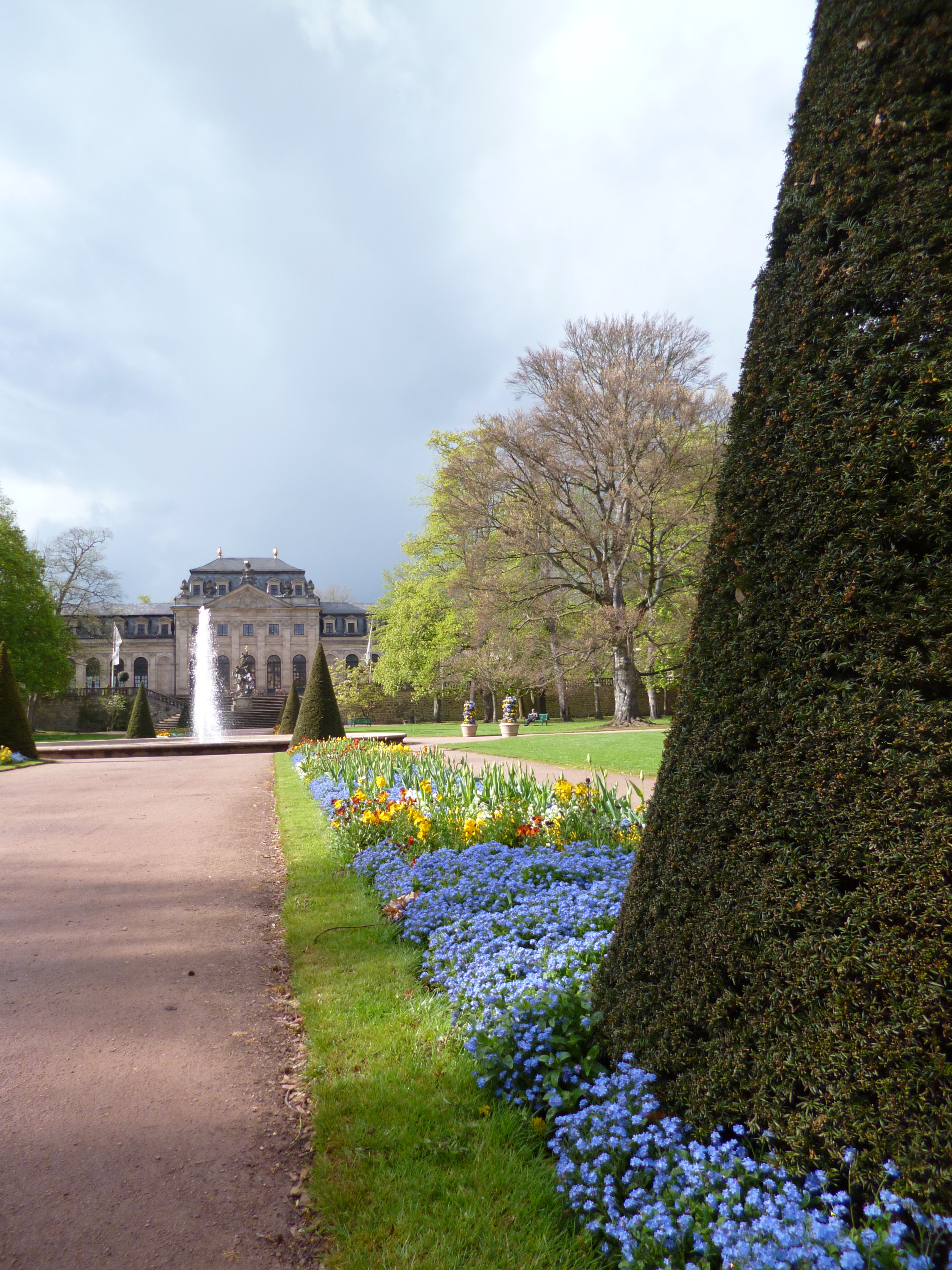
(Schloss Fasanerie bei Fulda)

Der Tag ist hoch; das Licht liegt leicht und lange
auf Moos und Gras und neugebornem Laub,
das jetzt in namenlosem Lebensdrange
fast fühlbar vorwärtsdrängt und blind vertraut.

Das Tal ist weit; die fernen Kuppen ragen
schon wieder kühn und unbeirrbar blau.
Zuletzt sind Schnee und Nebel doch begraben
und alle Linien farbig und genau.

Christina Egan © 2012


This impression of a spring evening with its unstoppable urge to live has been published in a previous edition of the Rhönkalender.

The view goes from Schloss Fasanerie (Eichenzell near Fulda, Germany) across the wide valleys towards the Rhön Mountains. You have to have lived in a northern country and suffered through the snow and fog to appreciate the rebirth of light and colour, grass and leaves!

An automatic translation can render most of the meaning, but not the music of the words, which emulates the beauty of nature.

See also the word cloud “Warten/Garten” at Warten ist der Winter, framed by keywords from Aprilabend: “nameless” and “unwavering”, “pressing forward” and “vital energy”.

Ich fülle das Papier

Ich fülle das Papier

Caterpillar, very bright green, with crumpled leaf and edgy stone on sand.Ich fülle das Papier
mit langen schwarzen Kringeln,
die sich von mir zu dir
wie lauter Raupen ringeln.

In Wörtern schicke ich
mein Lächeln und mein Zwinkern
und jenes Frühlingslicht
gleich hinter meinen Wimpern.

Christina Egan © 2012

I had the poem and font colour before I found the caterpillar…!
I send a lot of handwritten letters; last year, it was exactly 100!

Photograph:  Christina Egan © 2016.

Ich knabbre an Träumen

Ich knabbre an Träumen

I.

Ich knabbre an Träumen,
sie machen nicht fett,
sie machen den Mangel
an Leben nicht wett.

Sie füllen die Augen
mit flüchtigem Licht,
zerreißen das graue
Gewölk aber nicht.

Ich trinke Erinnrung
wie Tropfen von Gold
und spür’, wie die Zukunft,
die Zeit mir entrollt.

II.

Bundle of daffodils in front of a wooden fence in bright sunlight.

Ich klammre die Hände
um Murmeln aus Glas
und flüstere Wünsche
ins glitzernde Gras.

Die Murmeln sind tief
in den Taschen versteckt:
Noch nie hat ein Mensch
meine Träume entdeckt,

noch nie hat ein Freund
meine Träume geteilt,
am gläsernen bunten
Geäst sich erfreut.

III.

Es leuchten Narzissen
wie Sterne am Zaun,
wie stille Versprechen
im quellenden Raum.

Doch rinnt mit dem Regen
das Heute dahin…
Mir knistern wie Flammen
die Träume im Sinn,

wie blaßblaue Geister
und hellrote Glut –
O wehe den Menschen
mit Sehnsucht im Blut!

Christina Egan © 2012

Photograph: Christina Egan © 2017.

Persephone (die quellenden blüten)

Persephone

die quellenden blüten
Bundle of mauve crocusses, seen fro mthe side, transparent in the sunlight.die rollenden wolken
wie flüchtige schrift –
die dürstenden blätter
der perlende regen
das spielende licht –

der sprühende frühling
das leuchtende lächeln
gesicht zu gesicht –
die atmende erde –
das leben – das leben –
und dann das gedicht –

Christina Egan © 2015

Here is this fortnight’s poem in the
photo calendar
Rhönkalender 2017!

Photograph: Christina Egan © 2017.

King Spring / König Frühjahr

King Spring

The highway under my window is suddenly flooded with sun.
I see a strange person passing – his face is greenish and long,
his hat is purple and pointed – and followers thronging, hatless.
Is it a pharaoh? A druid? A dancer in fancy-dress?
I’ve spotted a spearhead of petals, magenta pushed up into blue,
the first magnolia flower: King Spring and his retinue!

Christina Egan © 2016

Large long buds above a road, with one opening in bright magenta, the folded petals looking like a hight hat.

König Frühjahr

Die Landstraße unter dem Fenster liegt plötzlich im Sonnenlicht.
Da geht ein fremder Geselle mit grünlichem langem Gesicht
und purpurner spitzer Mütze; Barhäuptige folgen ihm.
Ein Pharaoh? Heidenpriester? Ein Tänzer im Narrenkostüm?
Es ist eine Lanzenspitze, rosenrot hochgereckt,
die erste Magnolienblüte: Ich hab’ König Frühjahr entdeckt!

Christina Egan © 2016

Photograph:  Magnolia buds (England, February). Christina Egan © 2016.

Mitte Februar / Schnee über Nacht

Mitte Februar

Die Welt hat allen Glanz verloren
wie eine ganz verwelkte Frau.
Am Himmel Wolken, Schnee am Boden –
ein Leichentuch von blassem Grau.

Dahinter kämpft mit langem Atem
das fern verbannte Feuerrund:
Unmerklich schmelzen schon die Schatten,
und Farbe braut im Untergrund.

Die schwarzen Zweige sind lebendig,
das nasse Moos voll neuem Saft,
und das ermattete Gelände
wird auferstehn mit satter Kraft.

Christina Egan © 2012


Schnee über Nacht

Der Schnee hat wie ein Federbett
die kahle Erde zugedeckt,
begräbt die Schuld,
begräbt den Schmerz
in Gottes gnädiger Geduld,
in Gottes unbegrenztem Herz.

Christina Egan © 2012


Mitte Februar was published in the Rhönkalender 2015 (entitled Ende Februar). The 2017 calendar includes three poems by me and is still available.

Siegeskranz

Siegeskranz

Vor fünfzehnhundert Jahren,
da hab’ ich einen Kranz
aus Lorbeer und aus Ölzweig
gelöst und eingepflanzt.

Mein einst mit dunklem Lorbeer
gekröntes goldnes Haar
blieb fortan ungefeiert
und bleichte Jahr um Jahr.

Nach sieben Sommern aber
bot meine Ölbaumschar
die  bittersüßen Früchte
mit stolzem Lächeln dar.

Und Völker schwollen, ebbten,
und Rom verging in Rauch;
doch aus dem Kreis von Zweigen
entsproß noch Strauch um Strauch.

Und Bäume blühten, dorrten
und sanken in den Staub;
doch immer wieder grünte
das zähe Ölbaumlaub.

Nach fünfzehnhundert Jahren
betret’ ich einen Hain
aus silberhellen Hölzern
und spüre: Er ist mein.

Christina Egan © 2015

Olive grove, trunks and tree-tops silvery grey, like ashes.

Someone plants an olive grove towards the end of the Roman Empire, comes back to earth fifteen hundred years later — and recognises the descendants of her or his trees, which have survived the Dark Ages and are still thriving.

The narrator had taken the original olive shoots from her (more likely, his) victory garland, for instance for a poetic contest; so they could be an image for a contribution to civilisation in late antiquity which is relevant to this day.

For an English story about the end of Rome and its afterlife, go to The City Lit Up.

Photograph: ‘Olivenbäume in Umbrien’ by Adrian Michael.