Roof-Tile / Plateau

Roof-Tile
(Béziers)

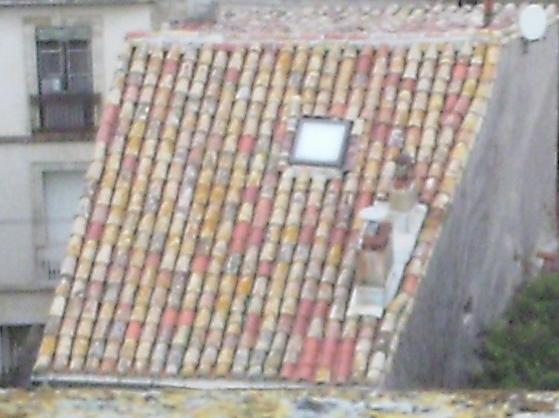
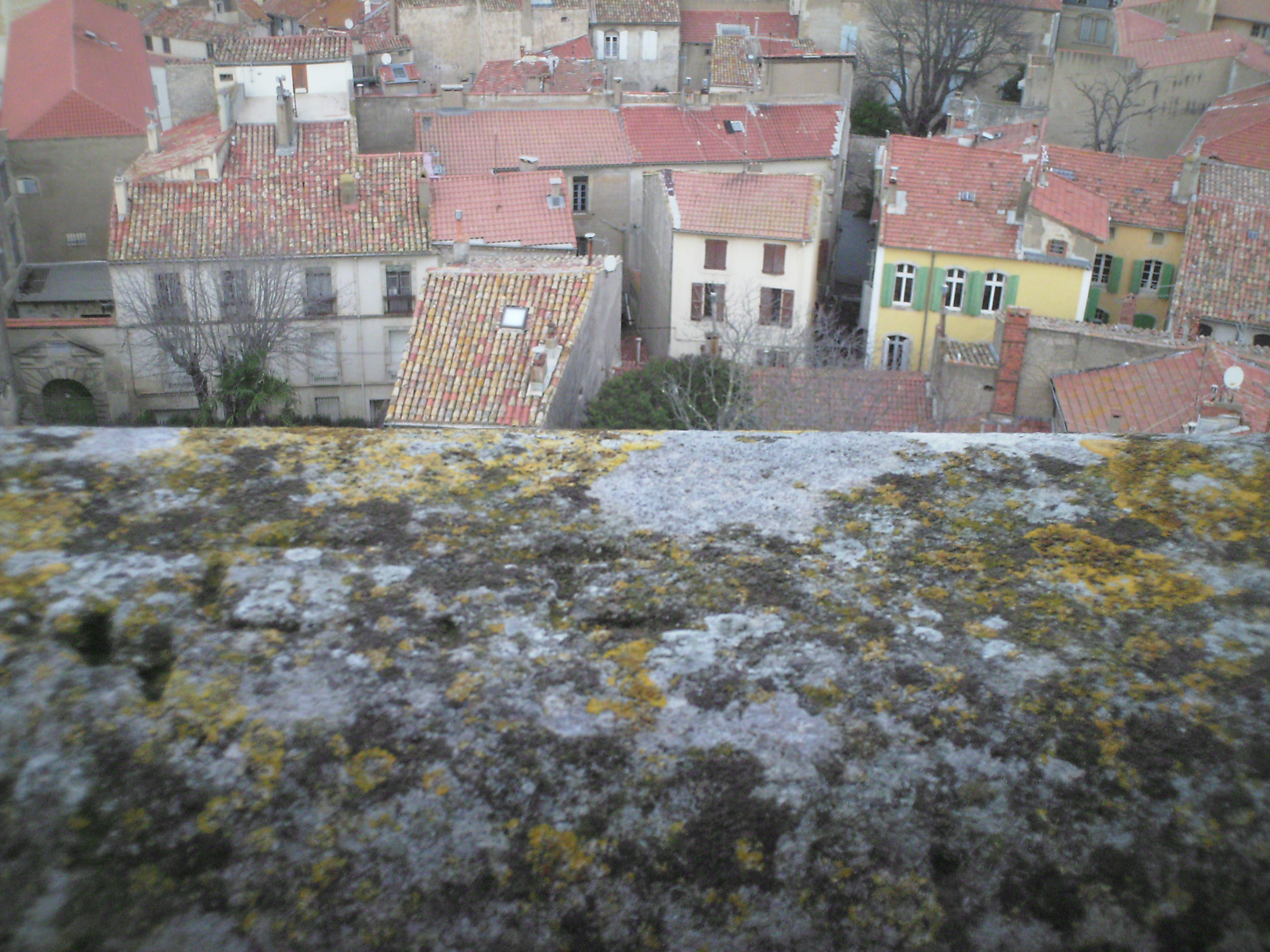
Lower half shows ancient wall with lichen and moss, upper half houses and roofs with motley tiles

A roof-tile, grooved: a hill, a dell,
in broken ochre, earthy red,
with greenish circles in between;
a piece of world, of time a shred.

And then I see: the whole old roof
is such a patch of orange clay –
the whole old town in weathered brown,
resplendent in a tender ray!

Christina Egan © 2016

Plateau
(Béziers)

Roof with motley tiles - Detail of above photo

Life is a gnarled and narrow hill,
so steep as scarcely to be climbed:
you scramble, stumble, slide or fall,
you stay below, you stay behind.

Then opens, through a hedge or wall,
a gap, a gate, an avenue,
a whole plateau, a spilling well,
a plain beneath your startled view!

Christina Egan © 2016

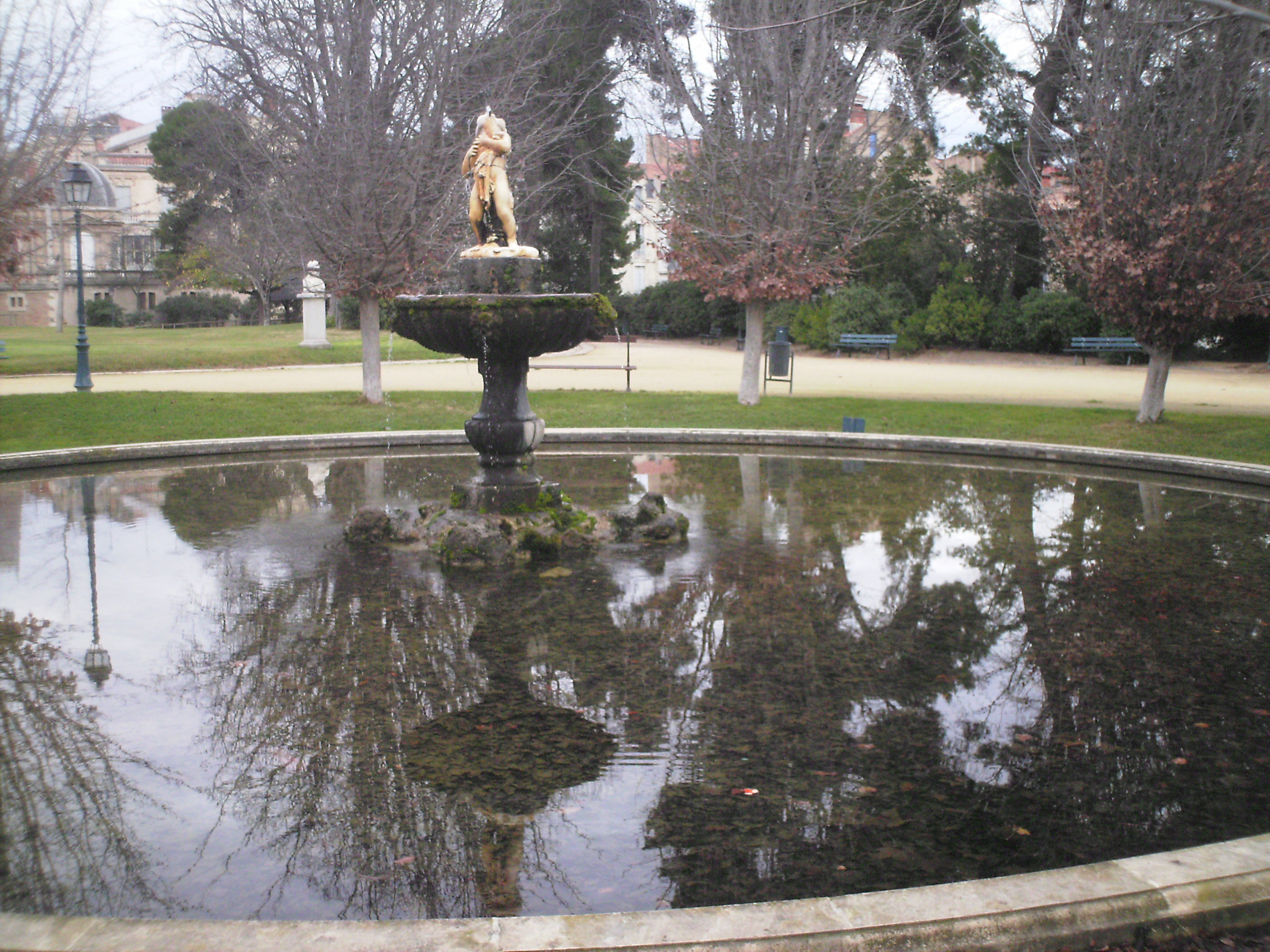
Round basin in park, with trees, houses and statue mirroredTwo views from the ancient city of Béziers in France, which is piled up
on a couple of steep hilltops: the first view is from
the Cathedral tower; the second, from the park called Parc des poètes / Plateau des poètes.

Well… the respite after struggles and setbacks might be found in enjoying or creating art — or in life itself!
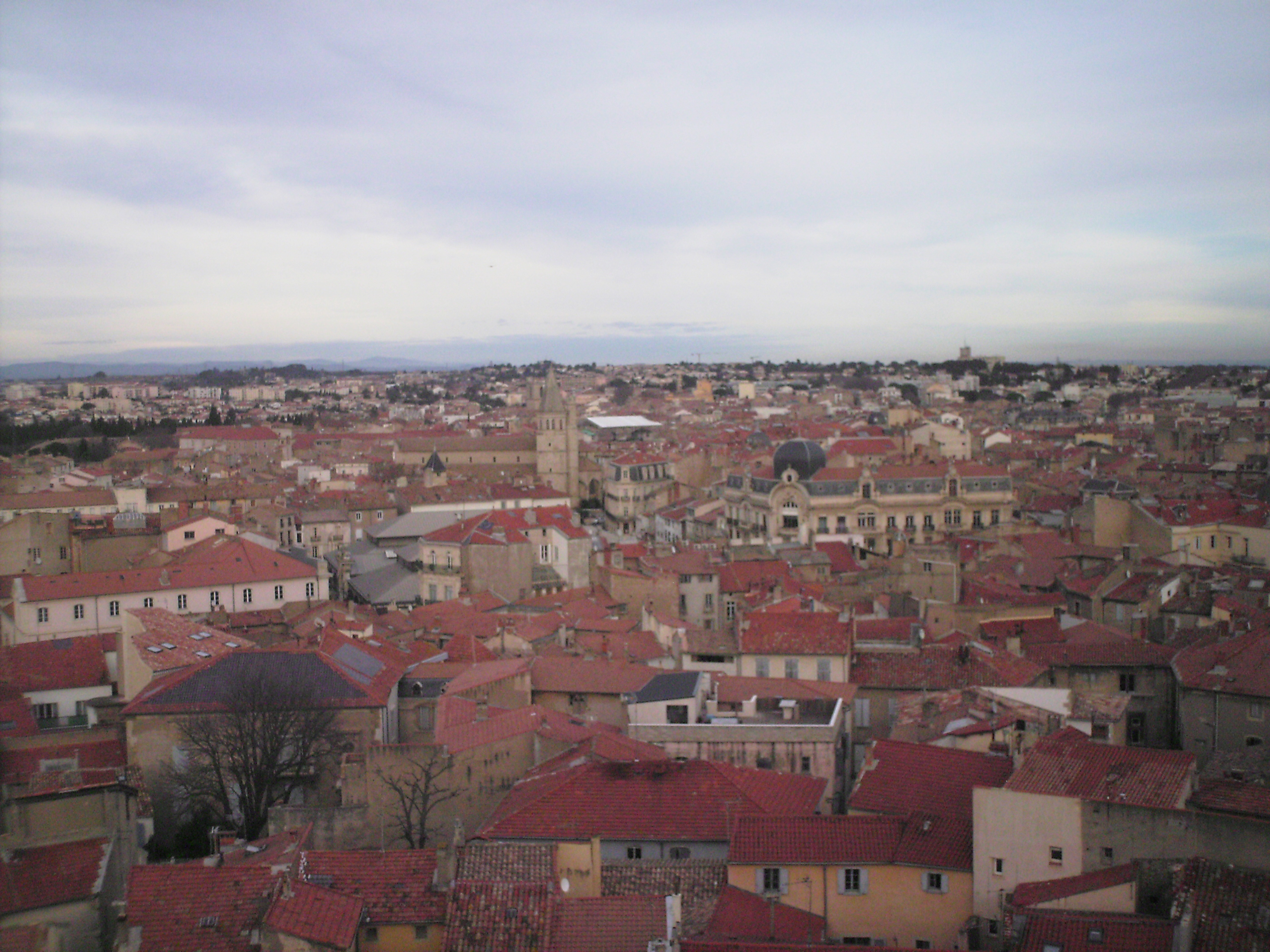
Old Town of Beziers, with red roofs dominating, landscape round horizon.While getting lost and strained in the lanes of Béziers reminded me of nightmares, exploring the Cathedral like a giant Crystal Rock  induced me to create the word ‘lightmare’!

Photographs: Béziers from the Cathedral roof ; Parc des poètes. Christina Egan © 2016
A breath

A breath

A breath – to draw, no, to invite
the sky into your thirsty chest!
A splash of air – a spark of life –
a space of freedom, quiet, rest.
A sigh, a word, a simple rhyme –
a flash of meaning on your quest.

Christina Egan © 2016

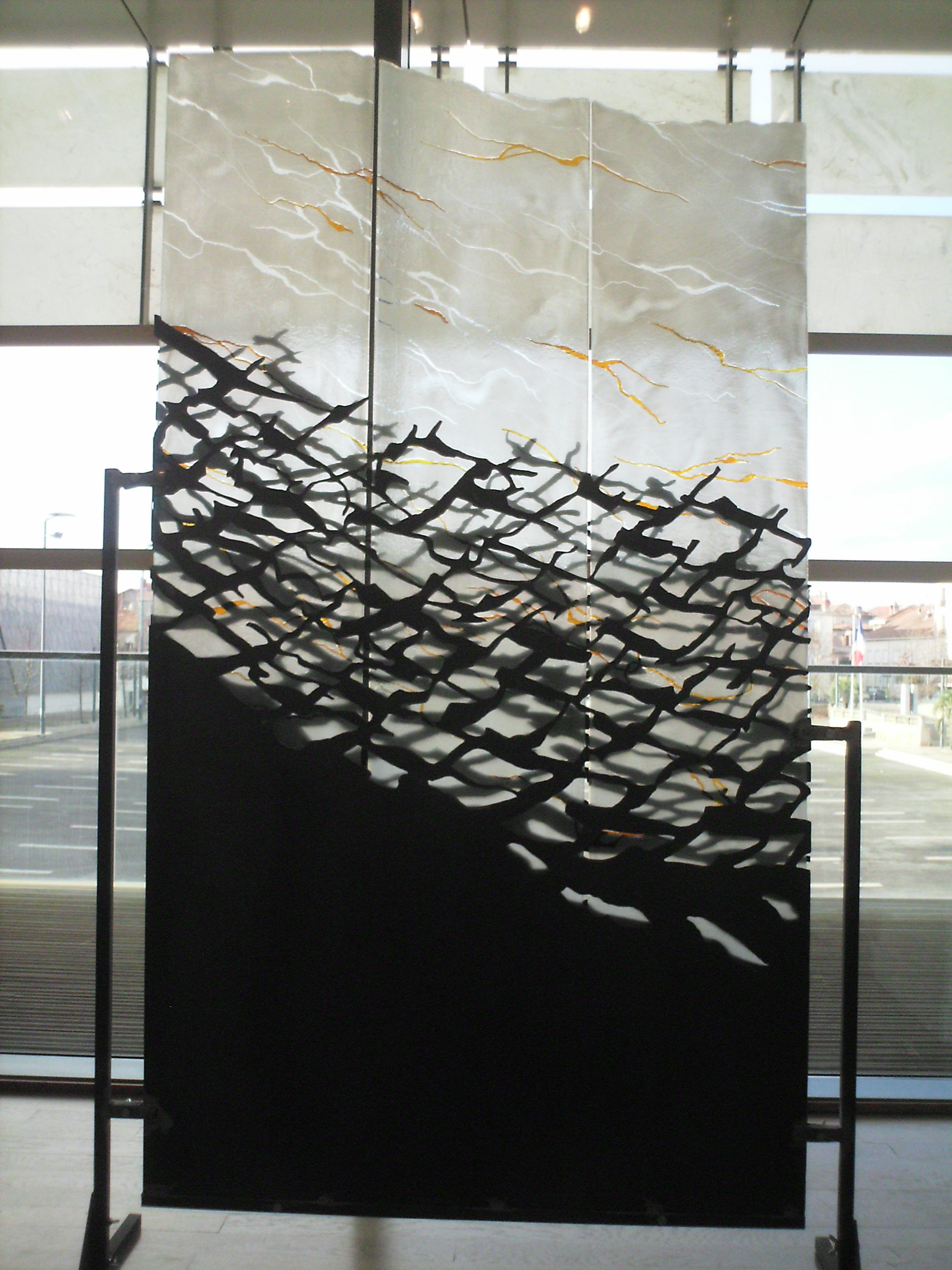
Glass screen with patterns in black, white and gold, resembling surf and seagulls.

Un poème, de l’air, un peu de liberté,
un peu de sens dans la vie furieuse…

Jean-Marc Barrier

Ein Wort  ein Glanz, ein Flug, ein Feuer,
ein Flammenwurf, ein Sternenstrich –

Gottfried Benn


‘Rhizome’. Sculpture by
Laurence Bourgeois (Lô).

The Purple Sea / Das lila Meer

The Purple Sea

I’ve seen the sea turn indigo
and greyish green and brilliant blue:
the wine-red sea that Homer saw
was not a blind man’s dream — it’s true.

I’ve swum in waves of indigo,
I’ve swum in eyes of greenish grey:
the fair-eyed gods that Homer saw
may just for moments cross your way.

Christina Egan © 2015

Das lila Meer

Auch indigo färbt sich das Meer
wie gräulichgrün und leuchtendblau:
Wahr war das Weinrot des Homer –
nicht eines blinden Dichters Schau.

Im Indigo schwamm ich sogar
und auch in Augen von Grüngrau:
Ein göttlich lichtes Augenpaar,
das gibt es manchmal noch genau.

Christina Egan © 2015

The Wine-Dark Sea

Where sky and ocean form a line
of glassy indigo,
the water looks indeed like wine,
a strong and sweet Merlot.

This is the sea that heaped up rocks
and beckoned walls to rise,
the ageless mother of these flocks
of sun-enchanted isles.

This is the sea that brought the fleets
to Carthage and to Troy
on silver-green and bright-blue sheets
which wayward gods deploy.

Christina Egan © 2012

These poems refer to the debate around Homer’s strange colour names: e.g. ‘wine-coloured’ (‘oinops’) and ‘purple’ or ‘maroon’ (‘porphyreos’) for the sea; ‘green-eyed’ (‘glaukopis’) for a person or god with eyes of any fair colour.

While people in antiquity were not yet interested in describing colours and 
despite their sophisticated languages — had only very few words for them, I
believe that on occasion, these can be taken literally.

The first two poems are translations of each other. The colour adjectives oscillate between the languages, and within, just like the sea does…

Fiery Flowers for Valentine’s Day

RedFlowers_2015Dec15_06

To My Valentine

The lily licking like a fire,
the lily luminous like snow:
I find them both in you, my flower,
I bask in their contrasting glow!

Christina Egan © 2016


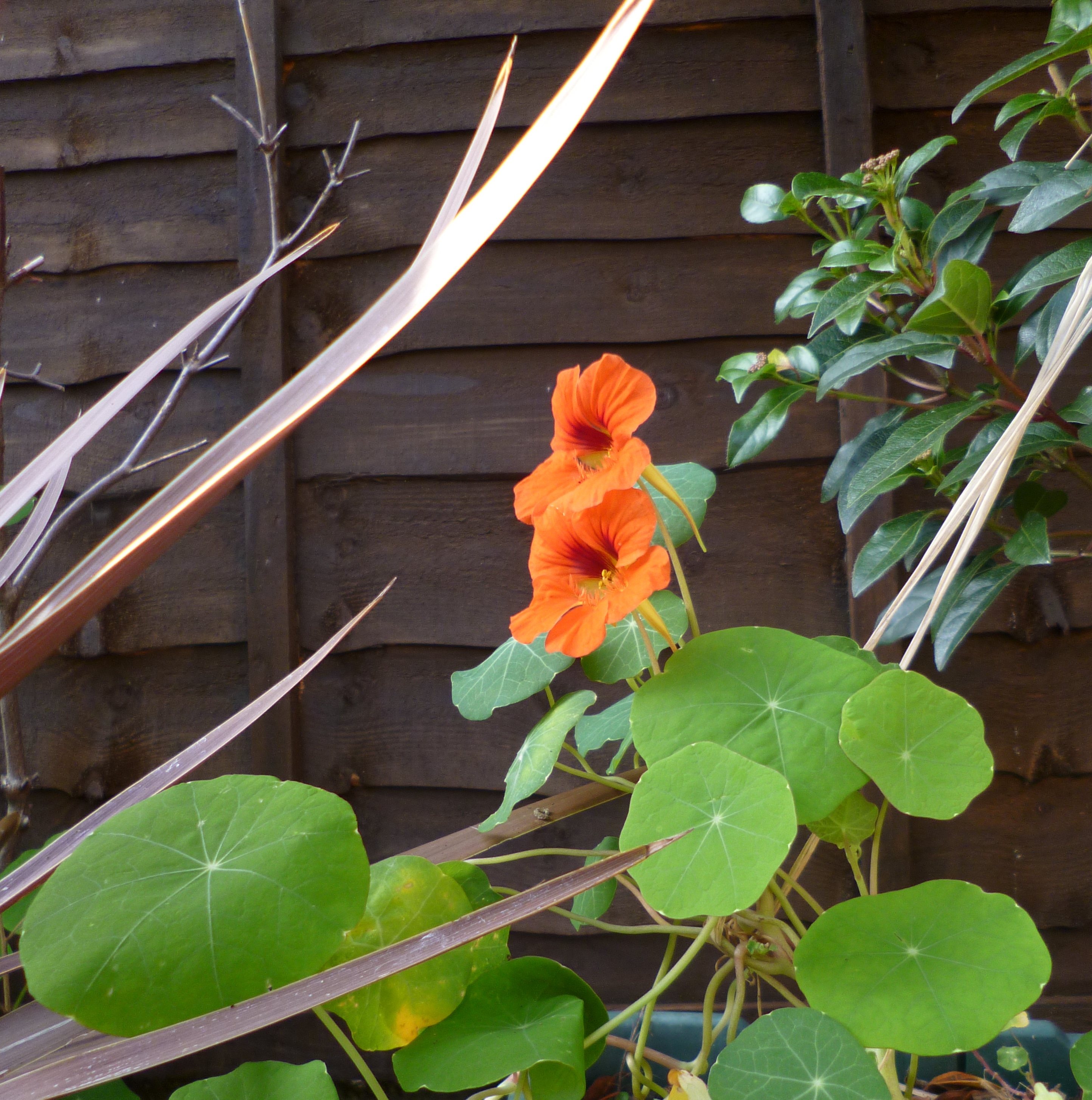
Two nasturtium flowers in very strong orange with some of their large round leaves in fresh green


Zum Valentinstag

In dem feuerfarbnen Blumenstrauß
hab’ ich dir die Sonne eingefangen,
hab’ sie hingezaubert in dein Haus,–
hast du meine Botschaft mitempfangen…?

Christina Egan © 2012

Often, I translate my own verse, but these are two different Valentine poems.

Photographs: Flowers just before Christmas! Christina Egan © 2015

February Sparks

February Sparks
(February Haiku)

Grey on grey the street…
Lightning strikes – the sun reflected
in a windscreen.

*

Stalks thrusting upwards
like spears with golden points:
armies of daffodils.

*

The crocus carpet
is being woven for us
by day and by night.

Christina Egan © 2014 

I wrote these haiku, and am posting them, at the hardest time of the year: when cold and darkness have used up our reserves and spring has not arrived yet. However, bright signals of light and life surround us!

Winter Views from the Bus

Winter Views from the Bus

*

Pink watering cans
lying flat in the drizzle,
dreaming undisturbed.

*

The yellow front door
in the long row of houses:
It stands out. It smiles.

*

The moon, veiled in mist,
floats in the darkness above
the bright white clockface.

*

Christina Egan © 2012

I was looking at the clocks of St Pancras Station at
King’s Cross, but you could equally observe Big Ben.

There is no ‘London fog’ any more since coal fires were
outlawed — 
yet there are still a lot of mist and fumes…

In northern countries, there is very little colour in winter,
so you need to look out for splinters of colour and rejoice!

Le vent de la mer se lève

Le vent de la mer se lève
(Alyscamps, Arles)

Tout doux, le vent de la mer se lève
parmi les colonnes à l’aube de l’an,
dans mon esprit réjouissant
ressuscitant mon ancien rêve,
un rêve de tuiles couleurs du couchant,
un rêve de murs couleurs océan.

Le vent se renforce et lève la sève
des hauts platanes le long de la rue,
ces forts piliers du ciel du Midi…
Mais quel tombeau révèle le rêve,
lieu lumineux et réapparu ?
Ô vent de la mer, Ô vent de ma vie !

Christina Egan © 2015

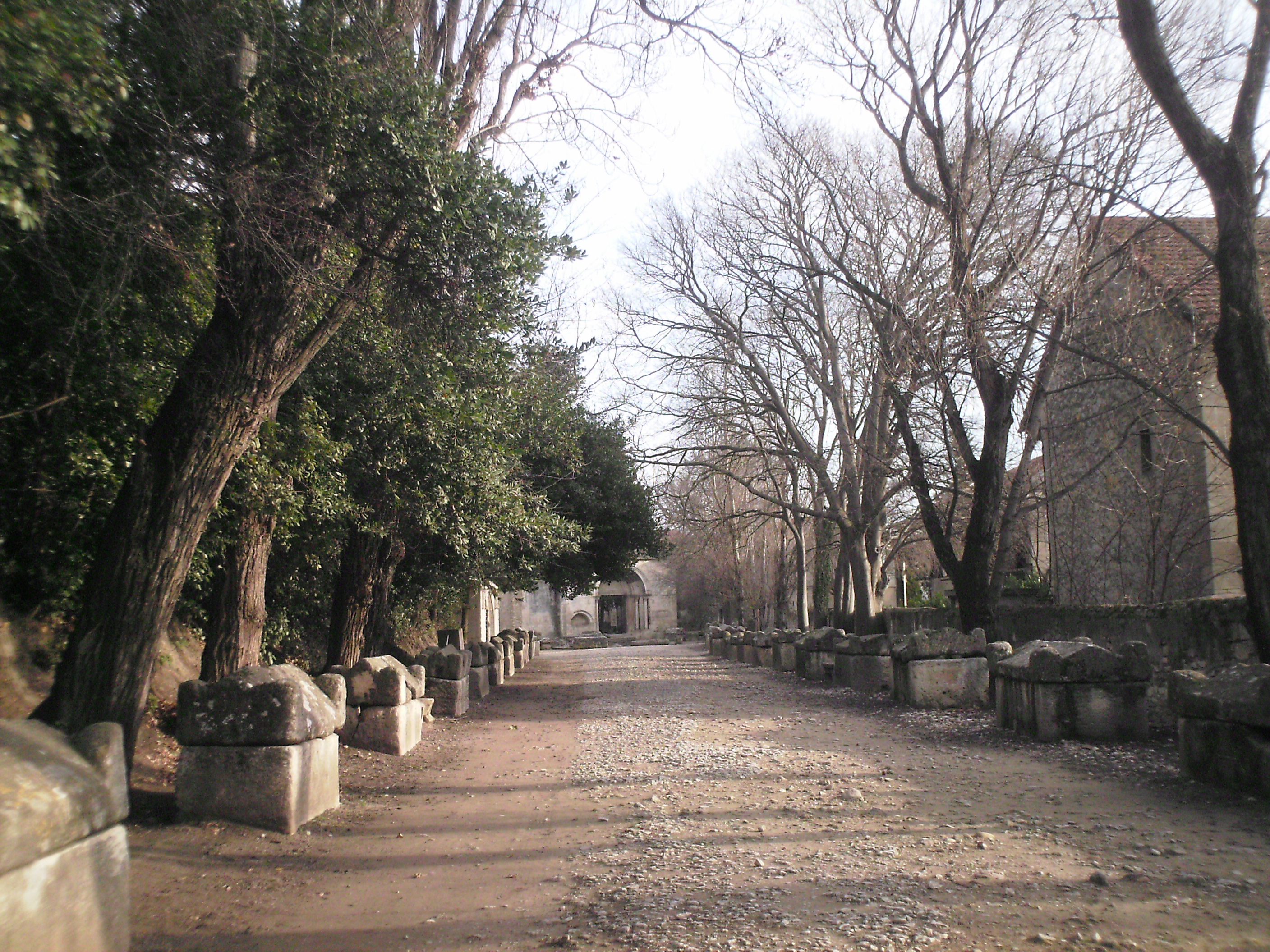
Wide avenue with sarcophagi to the left and right,leading to a mediaeval portal. Winter scene in fair weather, light-brown and light-blue.

Alyscamps, Arles. Photograph:  Christina Egan © 2010


The Wind from the Sea is rising
(Alyscamps, Arles)

The Wind from the Sea is rising, all mild,
between the columns and graves at the dawn
of the year, stirring up in my jubilant mind
my resplendent dream of antiquity,
a dream of tiles resembling the sun,
a dream of walls resembling the sea.

The wind is now swelling and ready to rouse
the sap in the plane-trees along the wide road,
those pillars supporting the sky of the South…
Which tomb may hold my mystery of old,
the luminous place that has just reappeared?
O Wind from the Sea, O wind of my soul!

Christina Egan © 2016

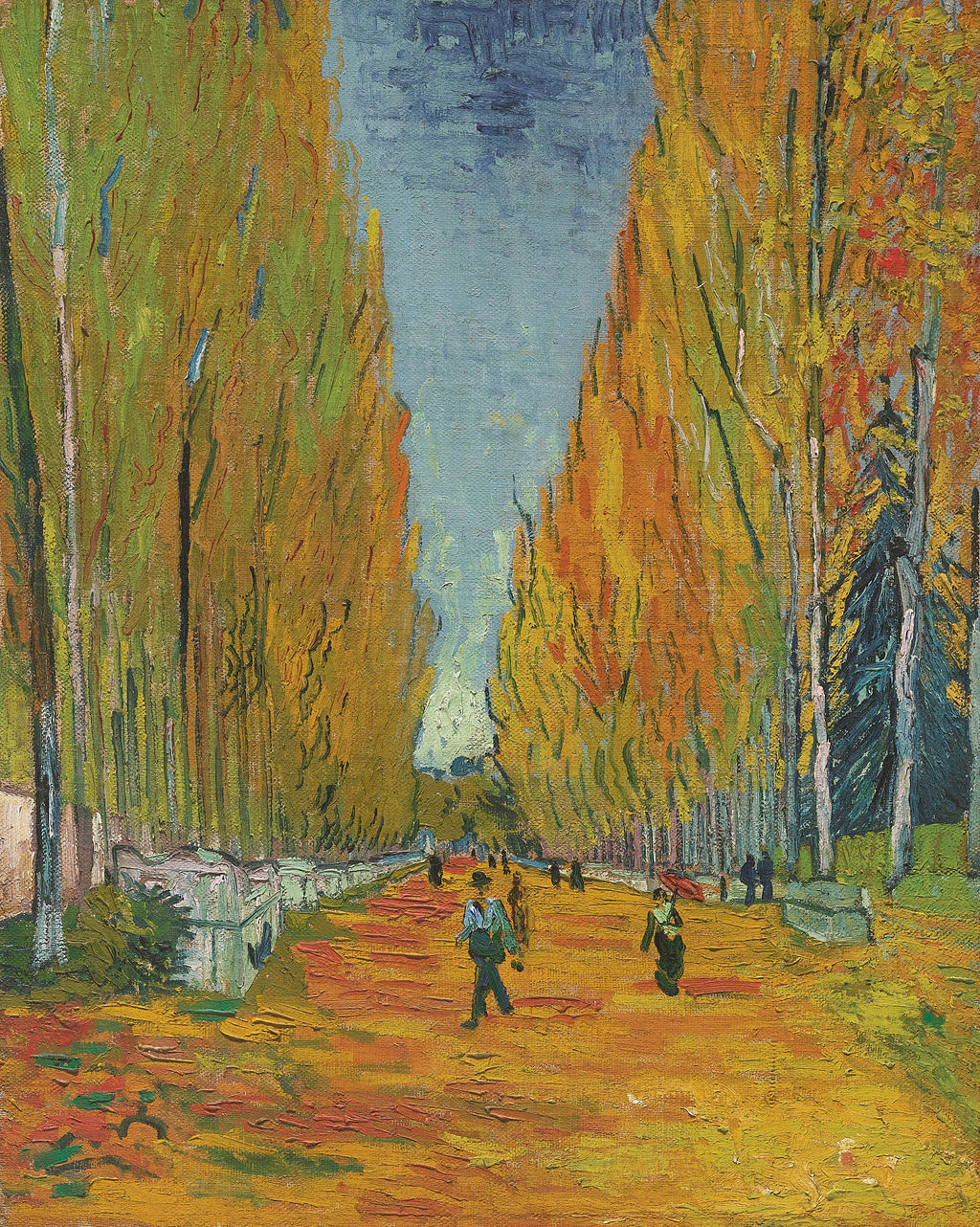
Painting by van Gogh: Avenue with very high trees, with path and foliage in bright orange, sarcophagi and sky in blue.

The Roman cemetery known as the Alyscamps has been immortalised by Paul Gauguin and Vincent van Gogh.

Vincent van Gogh: L’Allée des Alyscamps (1888). Photograph: Public domain, via Wikimedia Commons.

You can read an English and German poem about a Roman road in France at Where Road and River Meet / Überm Fluß . 

In Praise of Darkness / Lob des Dunkels

In Praise of Darkness

This winter, when the day shrinks
like a lake swallowed by desert,
my lyre shall not praise the light
but the darkness.

When I rise before the sun
and a candle dazzles the eyes,
I will give it space,
watch it dance, entranced.

We have switched on the bright light
and the non-stop stereo sound:
we have switched off the darkness,
the silence, the peace.

Christina Egan © 2015

Lob des Dunkels

Diesen Winter, wenn der Tag schrumpft
wie ein See, von Wüste verschlungen,
lobe meine Leier nicht das Licht,
sondern das Dunkel.

Wenn ich mich vor der Sonne erhebe
und eine Kerze das Auge blendet,
werde ich ihr Raum gewähren,
wie sie tanzt, entzückt betrachten.

Eingeschaltet hat man das helle Licht
und den unablässigen Stereoton;
ausgeschaltet hat man das Dunkel,
die Stille, den Frieden.

Christina Egan © 2015

Much of my work  praises light: sunshine,
summer, solstice; sunrise, noon, sunset…

Yet we need darkness, too: to make the light
shine brighter, to make other sources of light
visible, to gain inner peace.

My previous post, Januarsonne, rejoices in
sunshine in midwinter!

Screen

Screen

Last night, at last, beside
your arms, you opened wide
your lips – and in the stream
of quivering delight
below the lifted screen
I touched your silver soul –
One moment, I felt whole –
But then you sank away,
it was already day:
you had been but a dream.

Christina Egan © 2015

Where Road and River Meet

Where Road and River Meet
(Ambrussum, France)

I hold the echo of a thousand feet,
of hob-nailed sandals and of dainty boots;
I hold the echo of a thousand wheels,
of carts and coaches and a thousand hooves.

My inside holds the echo of the waves,
the splashing of the oars, of hands and feet,
the shouts and sighs of children and of slaves:
I am the arch where road and river meet.

I have withstood the floods, withstood the storms;
of once eleven comrades, I’m the last.
I guard the memory with sturdy arms:
I’ll hold your voices, too, when you have passed.

Christina Egan © 2015

Überm Fluß
(Ambrussum, Frankreich)

Den Nachhall halte ich von tausend Schritten,
Sandalen grob und Stiefeln elegant,
den Nachhall auch von tausend Rädern, Ritten,
von Karren und von Kutschen über Land.

Mein Hohlraum widerhallt vom Wellenschlagen,
vom frischen Klatsch von Ruder, Hand und Fuß,
von Seufzer oder Ruf von Kindern, Sklaven:
Ich bin der Brückenbogen überm Fluß.

Ich widerstand den Fluten und den Stürmen;
elf Kameraden einst,nur ich blieb stehn.
Gedenken sammle ich mit starken Armen —
und eure Stimmen im Vorübergehn.

Christina Egan © 2015

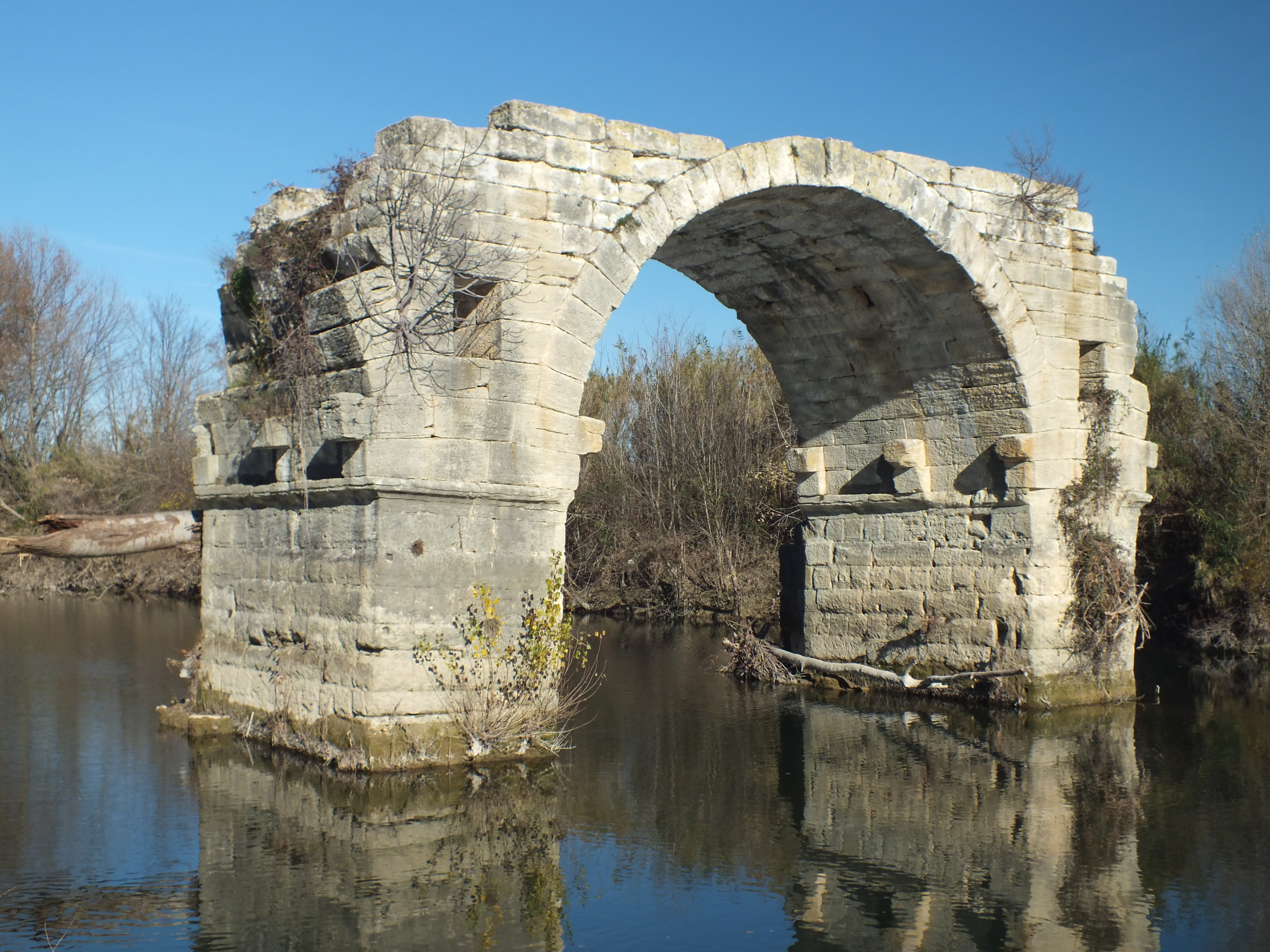
Grey Roman arch on two bridge pillars between blue water and blue sky

The remaining arch of the  Pont Ambroix at Ambrussum, once part of the Via Domitia from Italy through France to Spain.


Photograph: By Clem Rutter, Rochester, Kent, via Wikimedia Commons.

I begin this year’s posts like last years’: with a Roman road !