Orange Beads

Orange Beads

I.

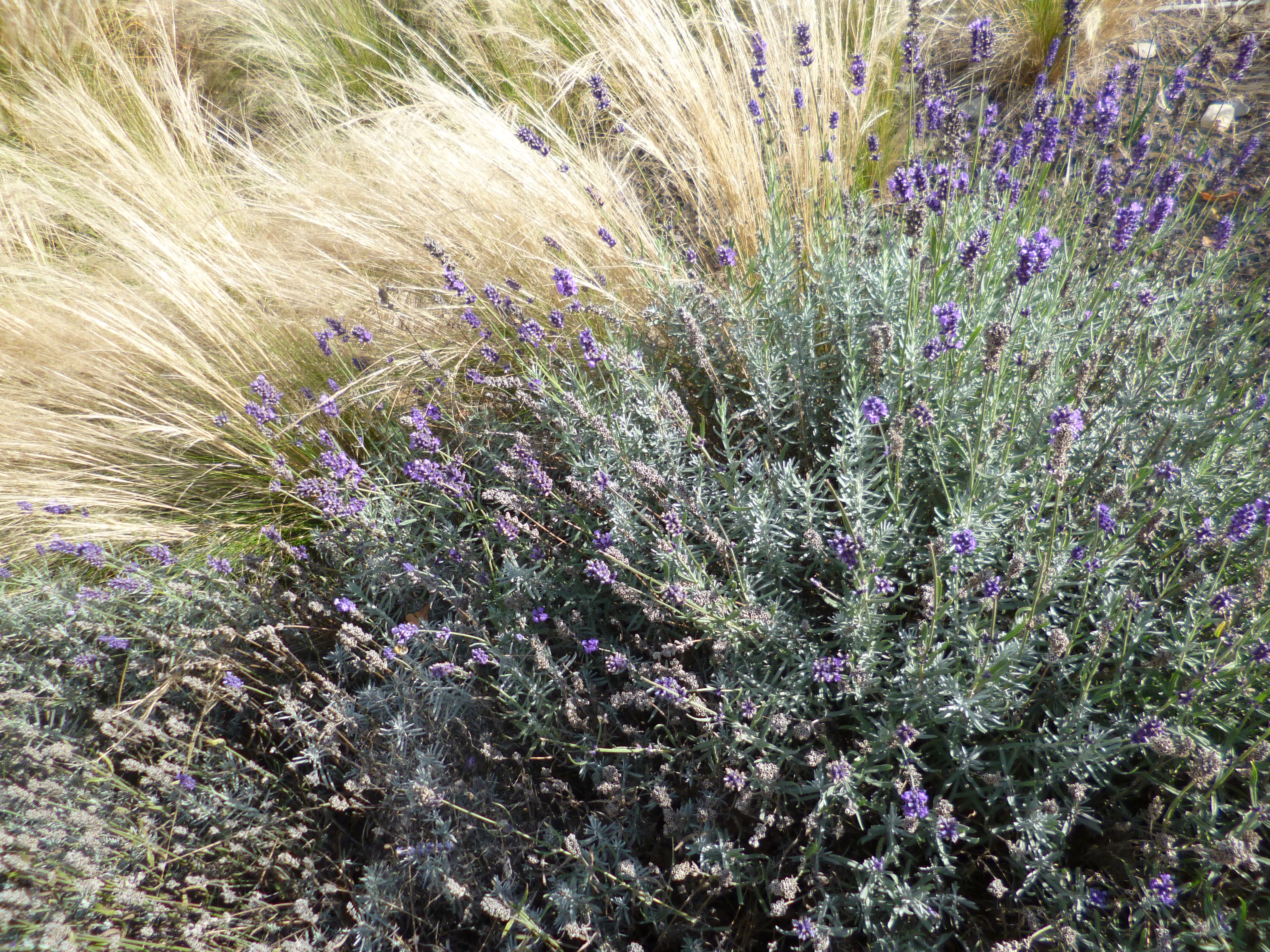
I nod to the flower
the colour of dark wine
stalks and spikes that tower
above my legs and spine

twin doors an orange spill
the only one in town?
why is my own door still
an ordinary brown?

O sweet day!

II.

All these parallel roads
the orange doors are where?
again the suburb soaks
in sunshine hello there!

they smile and say hello
all else though stays behind
their sturdy frames and so
I keep my orange find

two bright beads

III.

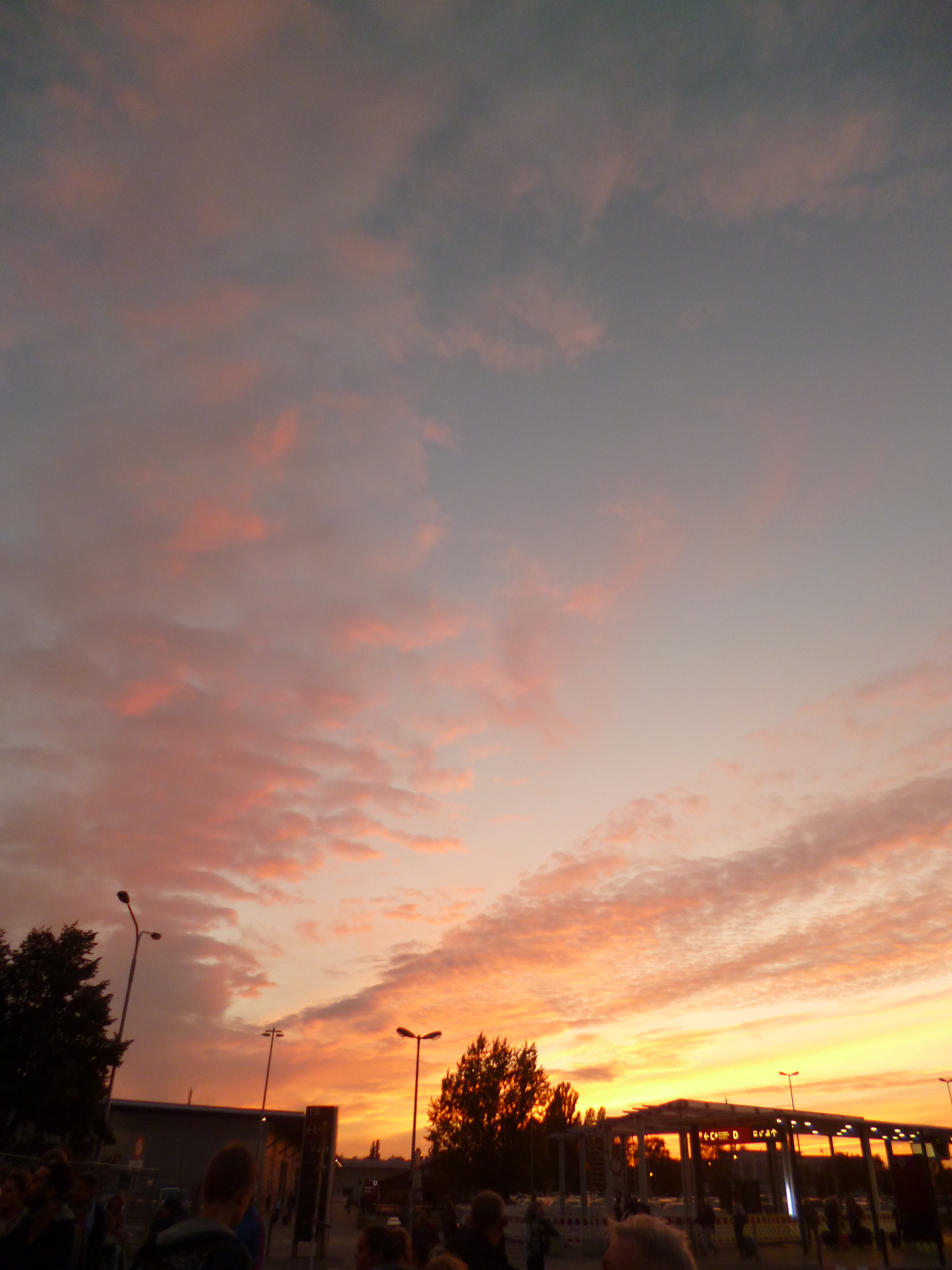
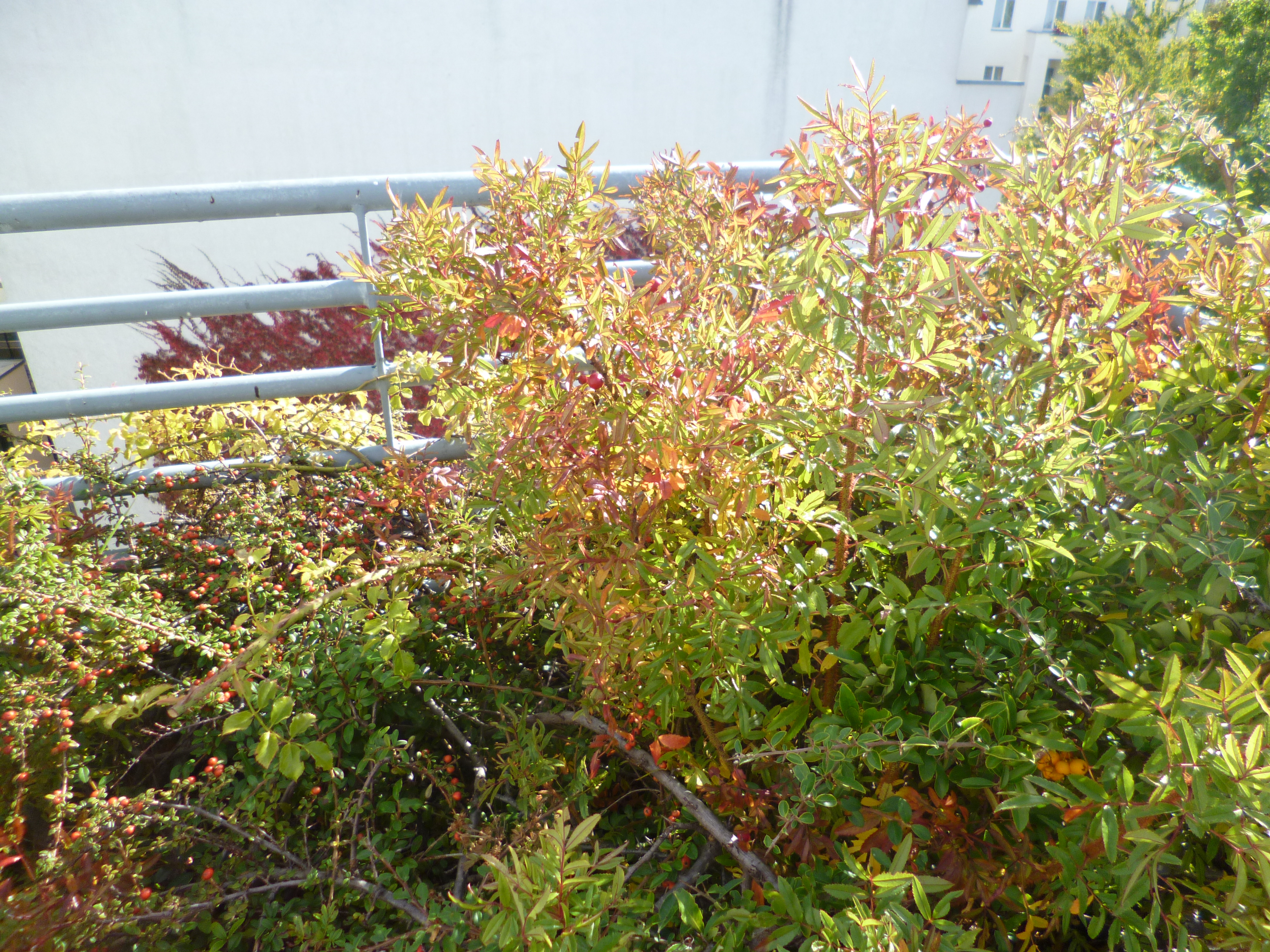
The hawthorn turns orange
the blackberry turns black
mingling at the park’s fringe
behind the cycle track

the sky is blue as if
this were a normal state
as if we could just live
beyond the iron gate

of summer

Christina Egan © 2016


In London, you can find many front doors painted in red, blue, or green, but I had never spotted an orange one. I have mentioned a striking yellow door elsewhere. I usually go out without a camera, but I capture impressions with my pen!

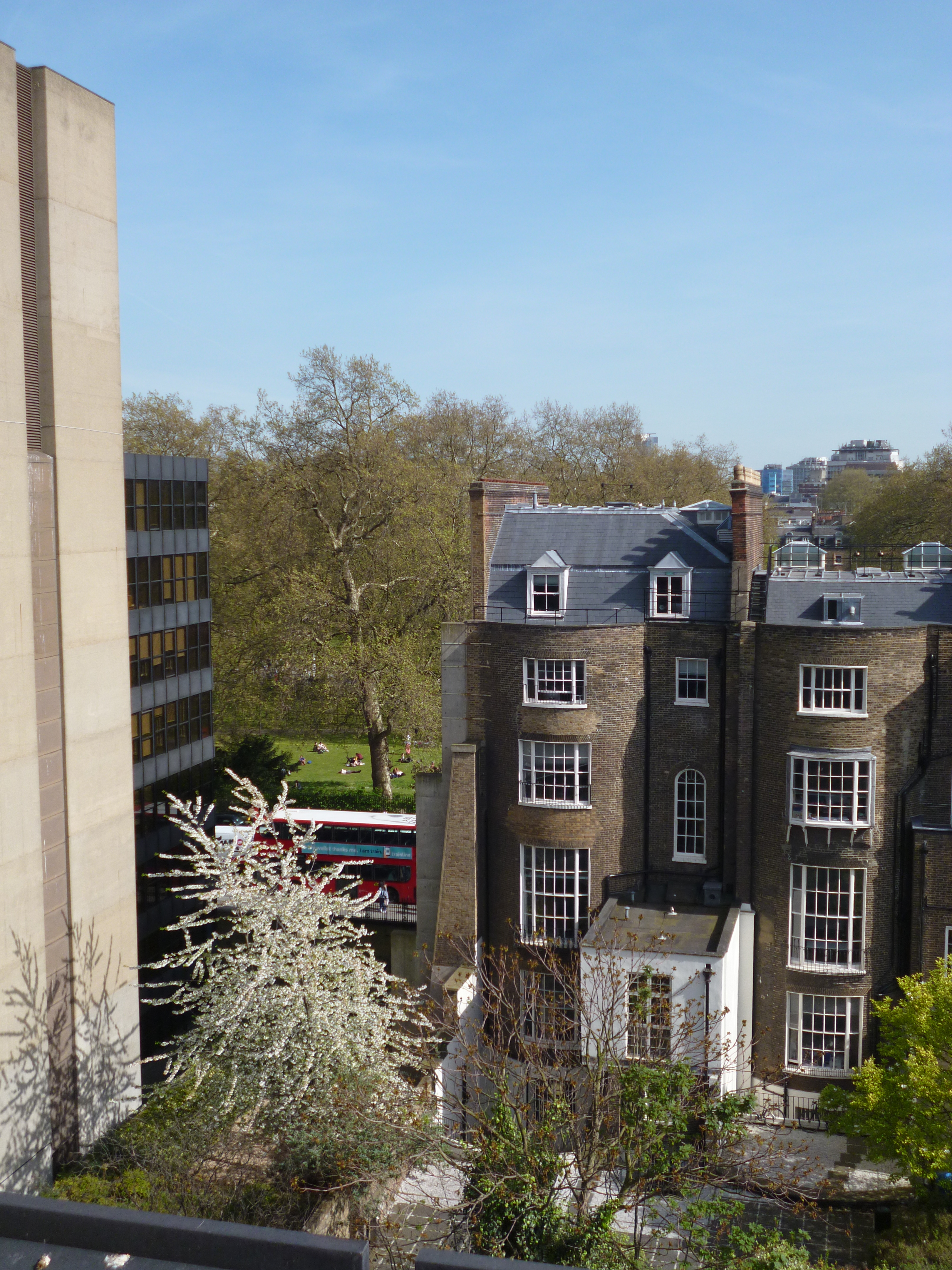
There are so many green spaces in London that you can walk through parkland for hours. To find blackberries and hawthorns tucked between a duck pond and a little copse is quite normal in this vast city of over eight million people.

The verse pattern is borrowed from the French poet, Jean-Yves Léopold, who does not have a website. Eight short rhymed lines, almost without punctuation, are followed by a ninth line which is even shorter and does not rhyme at all, so it stands out.

dans le verre / Mother-of-Pearl

dans le verre

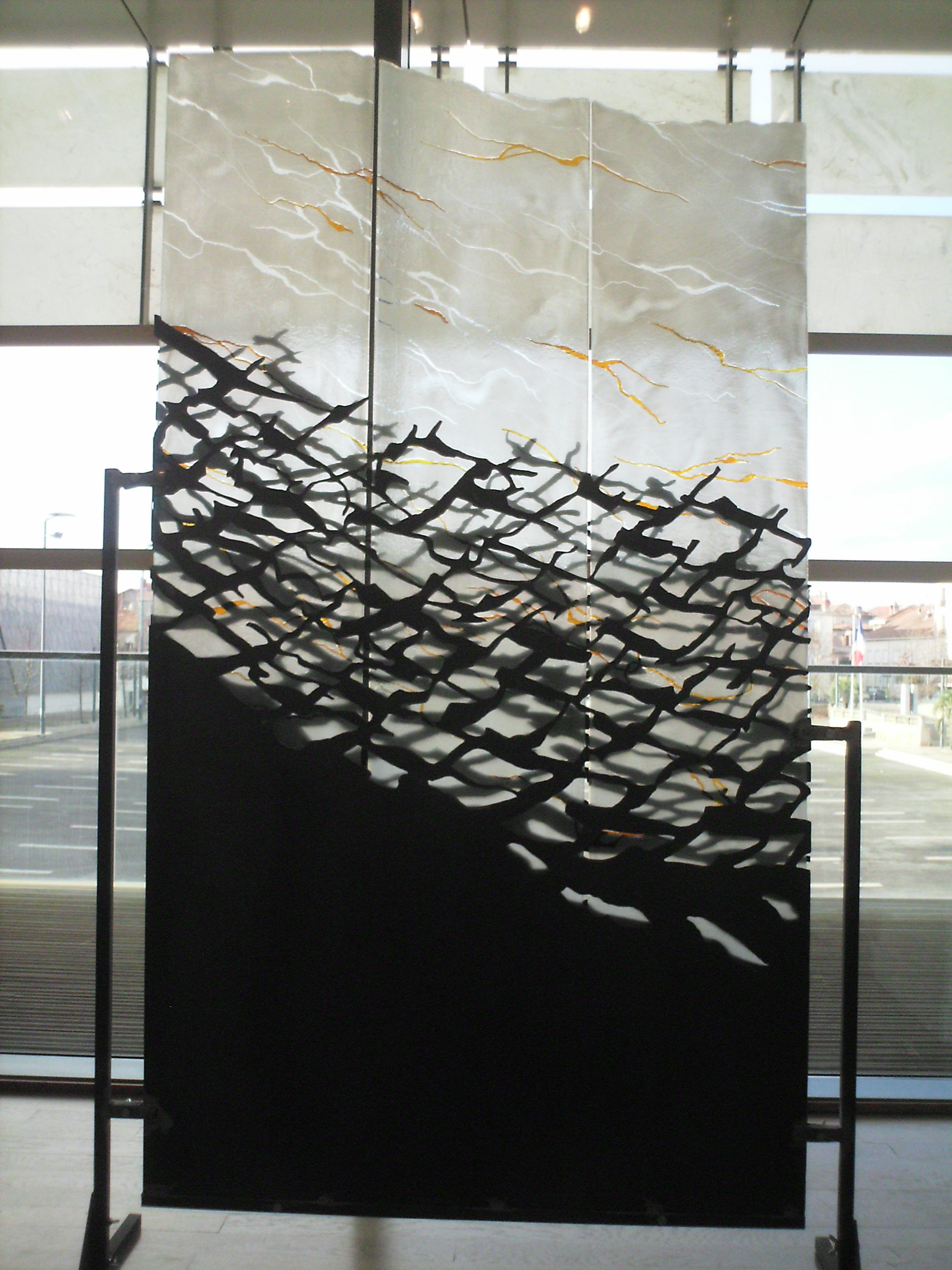
Glass screen with patterns in black, white and gold, resembling surf and seagulls.les couleurs de la mer
sont versées dans le verre
du présent du souvenir
faites-les resurgir

les couleurs de la mer
de l’argent jusqu’au vert
améthyste et saphir
laissez-les reluire

dans ce vers

Christina Egan © 2016


Mother-of-Pearl

The sea is not blue,
no more is the sky:
that is a child’s view,
a picture-book’s lie.

Whenever the rainbow
touches the sea,
it sprinkles a faint glow
of eternity.

From indigo ink,
to raspberry pink,
with peppermint green
and gold-leaf between…

The sea is not blue,
or grey of some hue:
the sea is a swirl
of mother-of-pearl!

Christina Egan © 2016


Photograph: ‘Rhizome’. Sculpture by Laurence Bourgeois (Lô).
Verse pattern of French poem after Jean-Yves Léopold (J. Y. L.).

The Dittany of Crete

The Dittany of Crete

I’ve found the place where red and blue,
where earth and sea and sky all meet;
I’ve even climbed the ashen rock
to pick the dittany of Crete:

to weave a spell about your eyes,
to wake your smiling silent mouth,
to share with you the flaming light
and heavy flavours of the south.

Christina Egan © 2012

Hanging oblong flowers in bright green with bright pink.


The ‘dittany of Crete’ is a rare wild plant, gathered as a flavouring, medicine, aphrodisiac, or love token. I tried it on Crete in a delicious and wholesome tea!

The red colour in the poem could be the pink and orange surf in the sunset, or the pink and orange beaches of Crete. The sea might be bright blue and then again bright green

Origanum dictamnus.
Photograph:
HelenaH via Wikimedia.

Word Weaver

Word Weaver

More purple clouds than I can count
or weigh or paint for you
or snatch and send them underground
with some surrounding blue…

To one whose windows do not stretch
to spy the heaving sky,
I’ll weave my syllables to fetch
the purple passing by.

To one whose dusk and marble moon
are filtered through a rail,
I must thread silver on my loom
to leave a shiny trail.

I must request the best black silk
to mark the balmy dark…
By day I’ll stitch a roaring quilt
to catch the city’s heart!

Christina Egan © 2016

Drawing of the mechanics of a loom (yarn on rolls, without the frame)The poet describes the world to a prisoner who can barely see the majestic ever-changing sky and the bright busy city surrounding them. The sound and rhythm of the lines emulate the warp and weft of life, so that the words reflect the world — read the poem aloud and you will see!

The other person may be imprisoned by a totalitarian state or indeed by a democratic state, or locked up by their employers or indeed their own family, behind walls and perhaps under a garment. There are many millions of human beings who de facto are prisoners or slaves without being called so.

For poems about time (for instance ensuing generations) and space (for instance a big city) as a tissue, see my post Geflecht / Geflechte. All of civilisation and all of humanity is one web.

Zwei Zauberkugeln / Bright Grey Eyes

Zwei Zauberkugeln

Zwei Zauberkugeln, Spiegel
von Wolken, Fluss und Feld
enthalten unter Siegel
die Zukunft, matt erhellt:
Zwei blanke graue Augen
erwecken neuen Glauben
an diese alte Welt.

Christina Egan © 2004


Bright Grey Eyes

With you, there is no waning light
of day, of season or of life;
there’s growing glow and growing sight
of bright grey eyes in bright grey eyes.

With you, there is no wasted time
doomed to oblivion or decay;
each day is gained, each year a line
of our winding, climbing way.

Christina Egan © 2009


These two poems have a similar topic,
but are not translations of each other.

The colour of the writing on this page
emulates the eye colours of the couple.

This is the Northern Land

This is the Northern Land

This is the northern land
of loose and juicy ground
where fern and forest glow
and wheat and fruit abound.

This is the continent
where mound responds to mound
and wind resounds on rock –
this is the home we found.

This is the realm of dusk
and star-embroidered night,
of fog caressing lakes…
and then the roaring light!

Christina Egan © 2013

Mountain meadow filling lower half of picture, high trees right behing and mountain range in the distance along the middle, pale blue sky above.

Dammersfeld mountain ridge, Rhön (Central German Highlands).
Two of my great-grandparents grew up with precisely this view. —
Photograph
 by GerritR via Wikimedia Commons.


This poem was inspired by the Czech national anthem, Kde domov muj, which entirely refrains from politics and warfare and mainly describes the lush landscape of Central Europe. The Czech Republic abounds with hills and lakes, forests and fields.

My lines cover the whole of Central Europe or the whole continent (including the British Isles): my home is my region, or my country, or Central Europe, or all of Europe — none more so than the other.

The claim that even those who were born there ‘found’ their land may sound strange: yet their ancestors did immigrate one day, even if it was a thousand years or two thousand ago. No one just grew out of the ground. Moreover, most people are arguably of mixed ethnic origin, in our case, Celtic, Germanic, Slavic, Jewish, Hungarian, and more. No nation is an island.

Bow and Arrow

Bow and Arrow

The arrow itself
is love,
it is shot through my eyes,
and you know it.

The bow, however,
is lust,
it is built from my bones,
and I know it.

The string, it’s the string
of pain
which gives me my power,
the pain underneath my skin.

Christina Egan © 2013


On the overwhelming
natural force of falling in
love, see also my previous
post
‘The Mechanics of Love’ .

The Mechanics of Love

The Mechanics of Love

the mechanics of love
have tolled the hour
have chained my heart
are pulling me towards you

the sunlit hills
of your guileless face
the turquoise surf
of your quiet voice

I cannot distinguish
what determines my steps
the mechanics of love
or your silvery forcefield

Christina Egan © 2012


These lines record some of the fundamental insights of my life: that falling in love is always a blend of true fascination with another person and of sheer emotional and physical need; and that one of the main factors attracting a woman to a man is his voice — utterly underrated throughout history! Perhaps because history has largely been written by men, and so have science and literature ? Well, I hope men are at least subconsciously drawn to a melodious voice, too!

Views of North Sea Islands

Views of North Sea Islands Ansichten von Nordseeinseln

White cottage, steep thatched roof, covered with moss


Thick patches of moss
clustering on rippled thatch
like verdant islands,
like the islands we stand on:
growing in the rough grey sea.

Diagonal horizon, entirely flat between green and blue, with house in middle

Dicke Moospolster
auf dem welligen Reetdach,
gleich grünen Inseln,
gleich diesen Inseln hier,
wachsend im wilden grauen Meer.

Thatched roof, covered with moss

Red clover blossom:
tiny magenta lanterns
in the green and blue,
feeding on the salty floods
across these flat floating disks.

Diagonal horizon, entirely flat between green and blue, with house in middle


Rosaroter Klee:
winzige Laternen
in all dem Grün und Blau,
genährt von Salzfluten
über schwebende Scheiben hin.

Thatched roof, covered with moss


Huge ships approaching,
or space-ships – or are they hills,
or houses on stilts?
They are houses, hamlets, islets…
a necklace of glass beads.


Satellite image of a cluster of small emerald green islands


Da – Riesenschiffe –
Raumschiffe – oder Hügel,
Häuser auf Stelzen?
Häuser, Dörfchen, Inselchen…
eine Glasperlenkette.

English texts: Christina Egan © 2015
German texts: Christina Egan ©2016

Photographs: Christina Egan © 2014
Galerie Nieblum on Föhr; Hallig Hooge.
Satellite picture: NASA via Wikimedia.


From the flat, small, oval island of Föhr, you spot the even flatter, even smaller islands known as ‘Halligen’: their clusters of houses and trees on little dells are visible on the horizon far across the ocean.

The Halligen still get regularly flooded and are occasionally menaced by devastation. All these islands change shape over time, when the forces of wind and water eat away at their edges or add new land.

I wrote about a similar phenomenon observed on the Baltic Sea island of the Darss in Schöpfung (Darß).

Orange Butterflies

Orange Butterflies
(Monarch Butterflies)

Brittle ochre leaves…
No – sinewy butterflies,
waiting through winter!

*

Orange butterflies,
tiny, tender, untiring,
crossing continents.

*

A swift golden cloud:
a million bright butterflies
following their stars.

*

Christina Egan © 2016

Clusters of deep-orange butterflies on deep-green leaves, similary shaped.

Monarch butterflies cluster in Santa Cruz, California.
Photograph by Brocken Inaglory via Wikimedia Commons.