geh aus mein herz

geh aus mein herz

die braunen bauklotzhäuser
mit farbenkastentüren
die weißen blütenkelche
die sich versonnen rühren

im wind aus samt und seide
die schweren purpurrosen
in Salomonis kleide
die deine finger kosen…

der sommer will dich füllen
die erde lädt dich ein
zu laufen und zu schaffen
zu schauen und zu
sein

Christina Egan © 2011


Salomonis Seide

In Purpur zog der Kaiser einst,
in Scharlachrot der Kardinal,
in Violett die Kaiserin
in einen grüngeschmückten Saal.

So prunken die Geranien
in ihrer Sommerprozession
und rufen in das Gartenrund:
“Wir übertrumpfen Salomon!”

Christina Egan © 2014


The appeal ‘Go out and seek joy’ and the metaphor of King Solomon’s silk are taken from the jubilant hymn and folksong Geh aus, mein Herz, und suche Freud, written by Paul Gerhardt in the middle of the 17th century.

The houses in uniform dull colours with front doors in different bright colours are typical for London. So are the little private gardens with geraniums.

The first poem is contemplative and intense, the second one humorous and light. The last line of the first poem is cut up on purpose: to let the word ‘to be’ resound on its own.


For an English poem about the pageant of summer see Lilac and Lime.
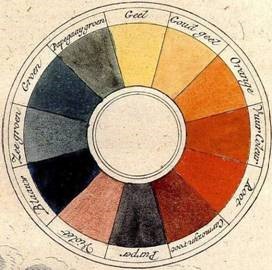
 

Tiefgelb / Tieftürkis

Colour wheel with 18th century labels: clockwise from yellow over red to blue and green; one purple field has paled to pink.Tiefgelb

Die tiefgelbe Blume vor wollweißer Wand,
die frohrosa Büschel vor lehmbraunem Zaun,
der vollblaue Tag über kraftgrünem Land –
der rundbunte Sommer, ein tiefgelber Traum!

Christina Egan © 2016


Tieftürkis

Tieftürkis und lässig prächtig,
sonnensatt und sonnenträchtig
steht der Horizont noch spät.
Schwarze Flammen, schwanken Bäume,
stumm gestaltgewordne Träume,
wenn der wirre Nachtwind weht.

Liegt die Erde endlich nächtig,
scheint der Himmel übermächtig,
unerschöpfter Helle Quell.
Alle Sehnsucht kann noch fruchten
in verborgnen Gartenfluchten
oder einer höhern Welt.

Christina Egan © 2017


Colour adjectives develop only very slowly in languages all over the world. There are still not nearly enough! I don’t see why in German, we have the words ‘deep red’ and ‘deep blue’ — written as one word, even — but no ‘deep yellow’ or ‘deep turquoise’; so I am introducing them. I also made up a number of unusual descriptors for the first poem, leading up to the internally rhyming ‘rundbunt’ for multi-coloured in all colours of the earth or of the colour wheel.

Colour wheel with 18th century labels: clockwise from yellow over red to blue and green; one purple field has paled to pink.


Image: Arnoldus Lobedanius, Utrecht, 1744. (One purple field must have paled to pink.)

Reproduced with kind permission of the Library of Cologne University of Applied Sciences (Fachhochschule Köln).

Snow-White Patches

Snow-White Patches
(July Tanka)

Daisies, buttercups,
scattered across the lush green
like two galaxies:
humble, ephemeral and
full of the glory of God.

*

Those snow-white patches,
patterns on the lawn, the mulch:
hortensia flowers,
as if cut out from the world
of colours and of motion.

Christina Egan © 2012


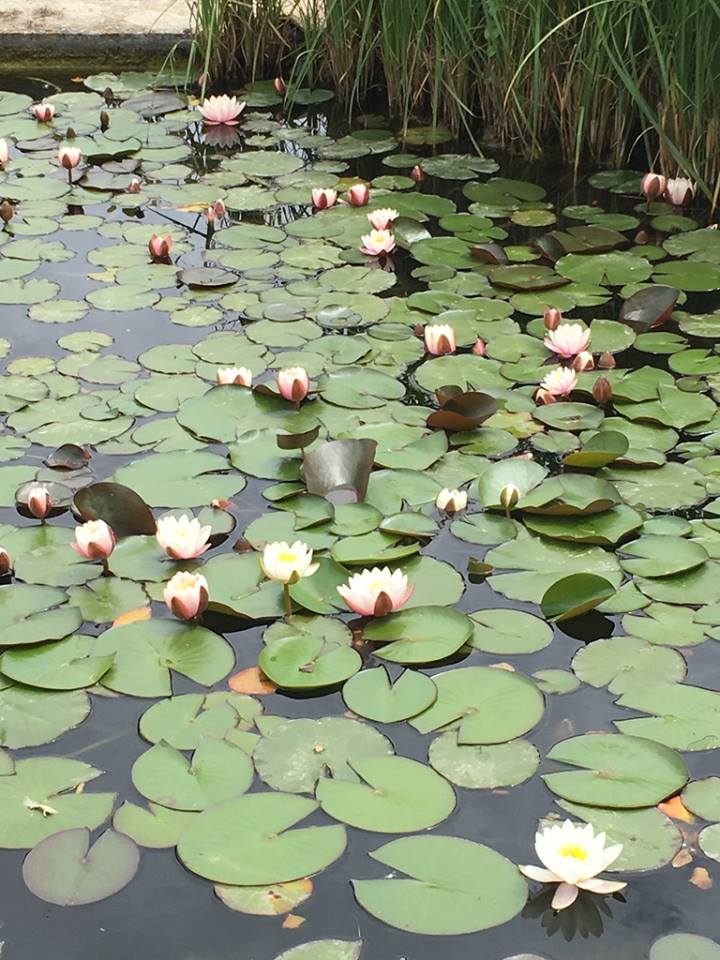
Waterlilies with half-open luminous pink and white flowers.

These poems describe the world as an ensemble of patterns. They also try to make sense of the world, and perhaps the act of discovering order also unveils meaning…

Something tiny resembles something gigantic, the whole of the known world, in fact. Something white appears as a hole or an island in the colourful picture: like a shadow of death or a gate to eternity.


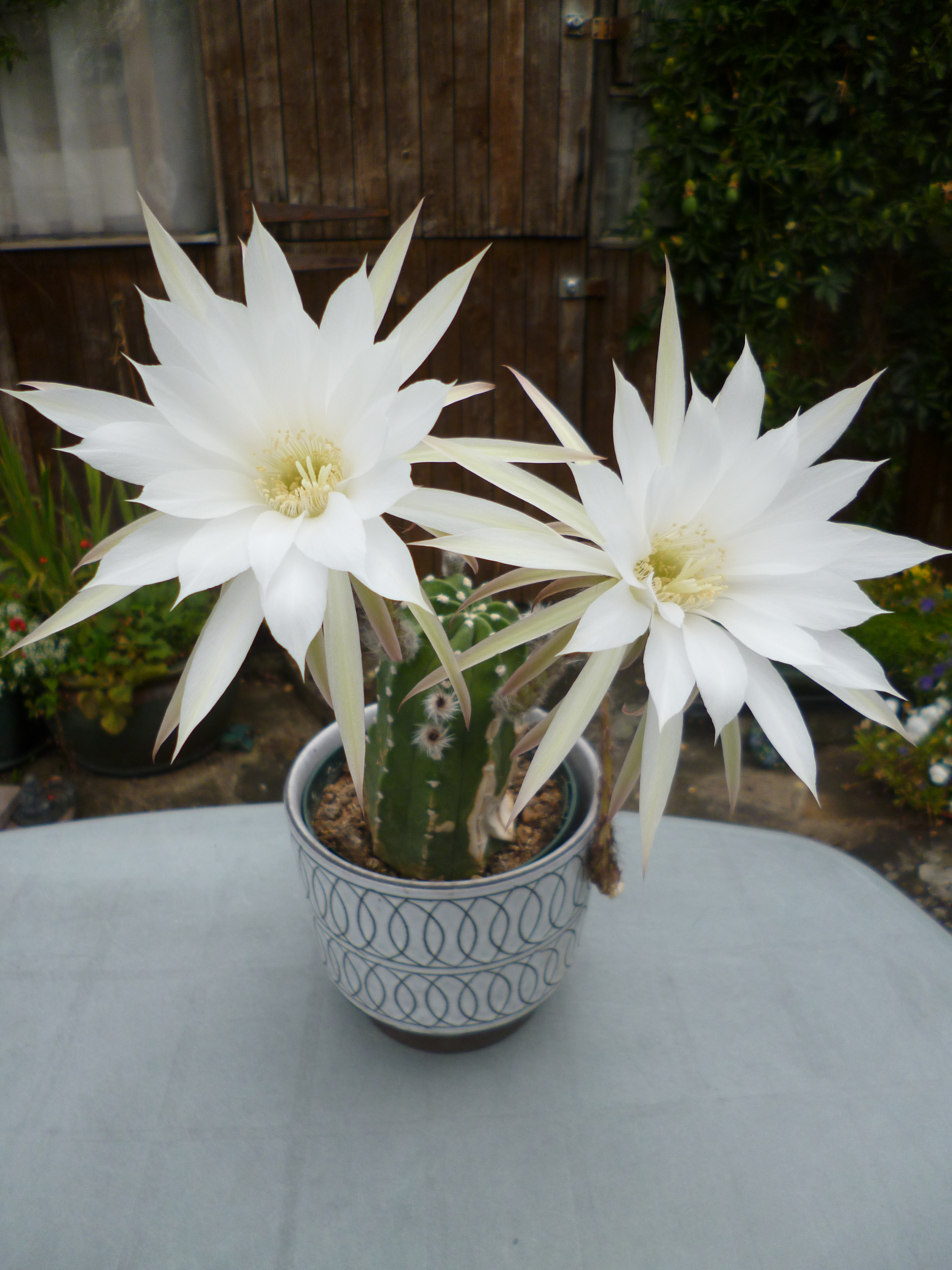
Cactus seen from above, with two star-like flowers bigger than the body of the cactusThe line ‘full of the glory of God’ was inspired by the verse ‘The world is charged with the grandeur of God‘ by Gerald Manley Hopkins.

You can truly ‘see a world in a grain of sand / and a heaven in a wild flower’, as William Blake claimed!

Photographs: Water-lilies. Liu Ye (Ye Liu) © 2016. — Queen of the night. Christina Egan © 2014.

gedichte über blumen

gedichte über blumen

Buds and fresh leaves on top of shoots above a parkein jeder blumenkranz
ein jedes sommerlied

jede hochgemute knospe
ja jeder nadelfeine halm

ist eine kriegserklärung
an den krieg

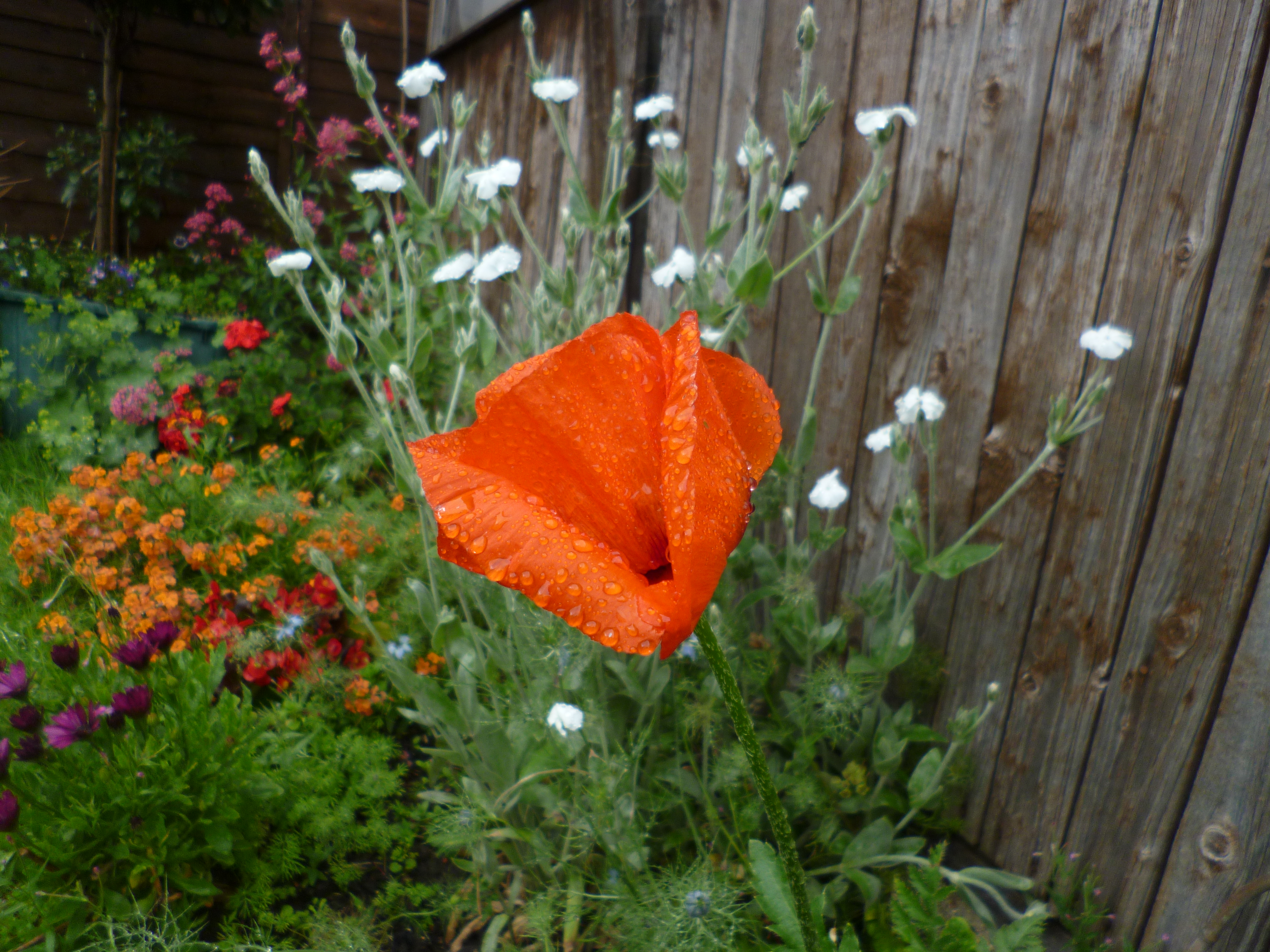
Close-up of poppy flower with dew or rain on it, above other red, orange, purple, and white flowers.

eine nichtigkeitserklärung
des nichts

eine liebeserklärung
an die liebe

an alle
ans all

Christina Egan © 2014

Photographs: Christina Egan © 2014 / 2016.


My insistence on writing poems about flowers is a reaction to Bertolt Brecht’s often-quoted suggestion that a conversation about trees borders on criminal negligence because it is silent about atrocities. In the poem An die Nachgeborenen from the 1930’s he exclaims:

“Was sind das für Zeiten, wo
Ein Gespräch über Bäume fast ein Verbrechen ist
Weil es ein Schweigen über so viele Untaten einschließt!”

Brecht’s idea is  startling and ingenious; but I hold that all praise of a flower or a bud is a praise of life and peace: ‘a declaration of war / against War… a declaration of love / to Love.’

Also, if you have read a few of my poems, you will have noticed that they do not describe flowers and trees alone, but use them as images for human life and joy, suffering and death. ‘Poems about flowers’ has 35 words — but amongst them are ‘nothingness’ and ‘the universe’!

Under the Blue Bloom of the Tree

Under the Blue Bloom of the Tree

Under the blue bloom of the tree,
O little mouse, I buried thee.
I heard thee often run until
I saw thee lying, small and still.
So high the sky, so late the light
ascending to midsummernight…
The deep warm earth is now thy bed,
with snow-white petals for a spread.
Fresh spikes of lavender I chose
and last, a minuscule red rose.
Tonight, the ceanothus tree
will scatter sky-blue dust on thee.

Christina Egan © 2017

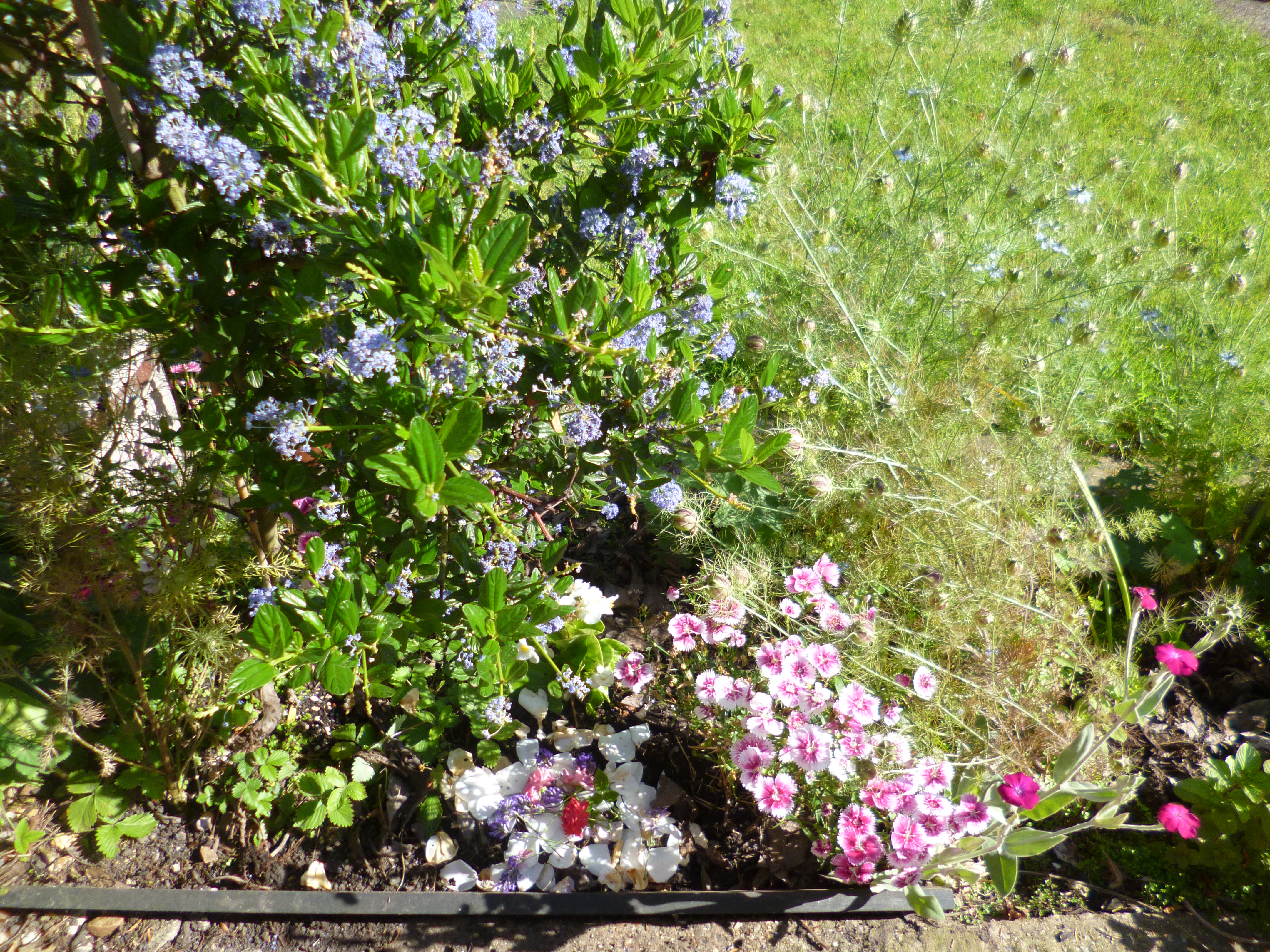
White and coloured petals on the ground, beneath ceanothus and carnation.

The mouse grave in the poem. Photograph: Christina Egan © 2017.

Der Sommer verglüht

Der Sommer verglüht

Der Sommer verglüht
in Purpur, Gold und Lapislazuli.

Die Straße erhebt sich
wie ein Tempel der Vorzeit.

Die Dinge sind rund und reif,
getränkt mit Regen, gesättigt mit Licht.

Feuchtes Gras flammt grün,
üppiges Moos überkleidet den Stein.

Wie Weihrauch steigt
der weiche Atem des Lavendel.

Die Wolken gleißen, gleiten,
Flotte ins offene Blau.

Brüchiger Backstein, zerknitterndes Laub:
Altes blättert ab, zerfällt in tausend Brauns.

Herbst, Kelter des Jahres,
Zeit, Fest der Verwandlung.

Christina Egan © 2001

A very descriptive and colourful poem with a philosophical note:

“Autumn: wine-press of the year.
Time: feast of transformation.”

Cimmerian Summer

Cimmerian Summer

This lifeless gloom: is it the dusk?
This pale white disc: is it the moon?
Is this a mild day in November?
No: in the land of ceaseless mist
this is the sun; the afternoon;
the lightless first day of September.

Christina Egan © 2015


“ἔνθα δὲ Κιμμερίων ἀνδρῶν δῆμός τε πόλις τε,
ἠέρι καὶ νεφέλῃ κεκαλυμμένοι.”

There are the land and city of the Cimmerians,
wrapped in mist and cloud.”  

Homer, Odyssey, 11:14-15


“Britain is set in the Sea of Darkness.
It is a considerable island. This country is most fertile,
its inhabitants brave, active and enterprising….
but all is in the grip of perpetual winter.”

Muhammad al-Idrisi of Sicily, ca. 1154


Homer never ceases to inspire us. Incidentally, I saw a retelling of the Odyssey  last night, at a London playhouse, or rather, amphitheatre! (On this first day of September, the weather is in fact glorious.)

The memory of four clearly marked seasons, full of bright leaves and fruits, and the sorrow about the apparent confusion of the climate are depicted in My Pack of Cards.

Sunface

Sunface

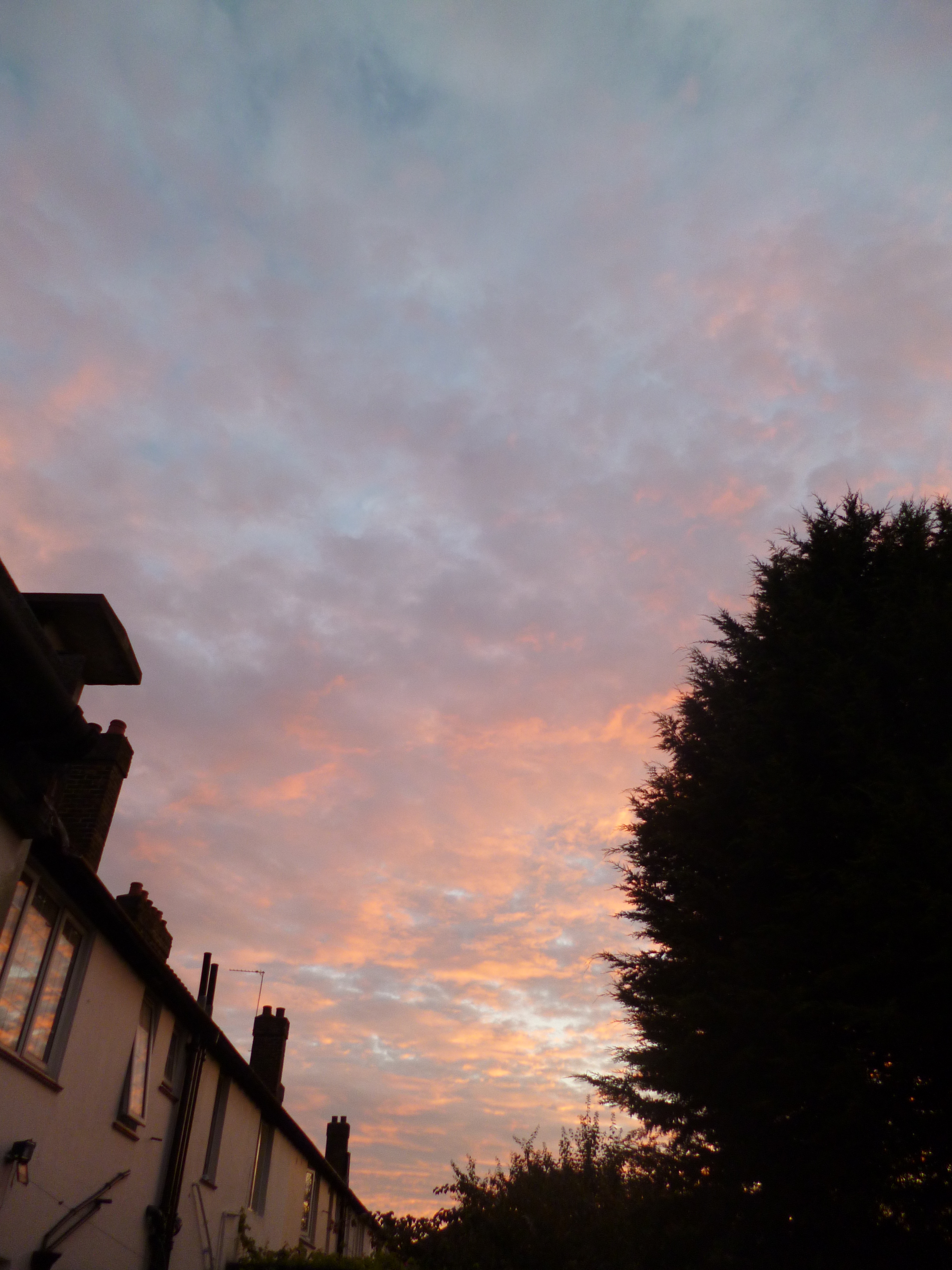
Orange clouds on blue sky, mirrored in windows of terraced houses to the left, with silhouettes of large trees to the right.

I smile at the sunface
and soak up the rain
I gather a garland
and wait for the grain

I forage the forest
and furrow the earth
I gaze at the sunset
and wait for the bird

I follow the swallow
its call and its course
it cries and it circles
it sinks and it soars

Christina Egan © 2016

Photograph: Christina Egan © 2014.

This was the tree the bird sang from so sweetly… It has since been felled, so that my garden gets much more light and thrives; so the tree behind it, the bird’s new home! 


Tausend blaue Sterne

Tausend blaue Sterne

“Tausend blaue Blumen –
eine Galaxie!”
Liest du es und lächelst:
“Welche Phantasie…”?

“Bläulichweiße Sterne
himmelfarbne gar,
lila strahlt die Sonne,
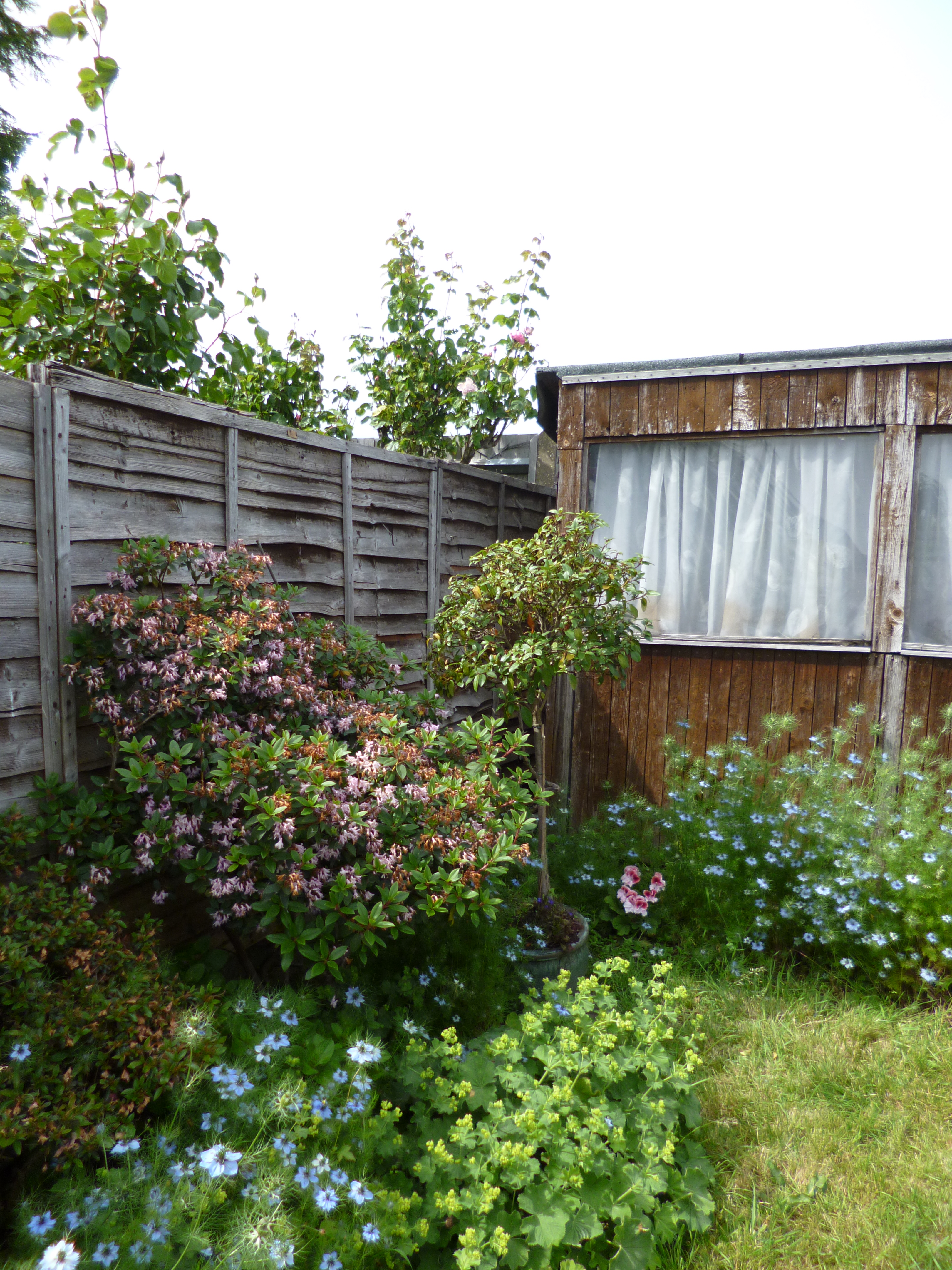
alabasterklar…”Rhododendron (pink blossom), lady's mantle (yellow blossom), nigella (blue blossom) in front of old shed and fence.

Meinst du nicht, ich sehe
was, was du nicht siehst,
der du in der Ferne
diese Verse liest?

Federfeine Blüten
aus der Kümmelsaat,
erste Passiflora
wie ein Wagenrad!

Und die runde Blume
lächelt in das Licht
wie ein schattenloses
Kinderangesicht…

Christina Egan © 2014

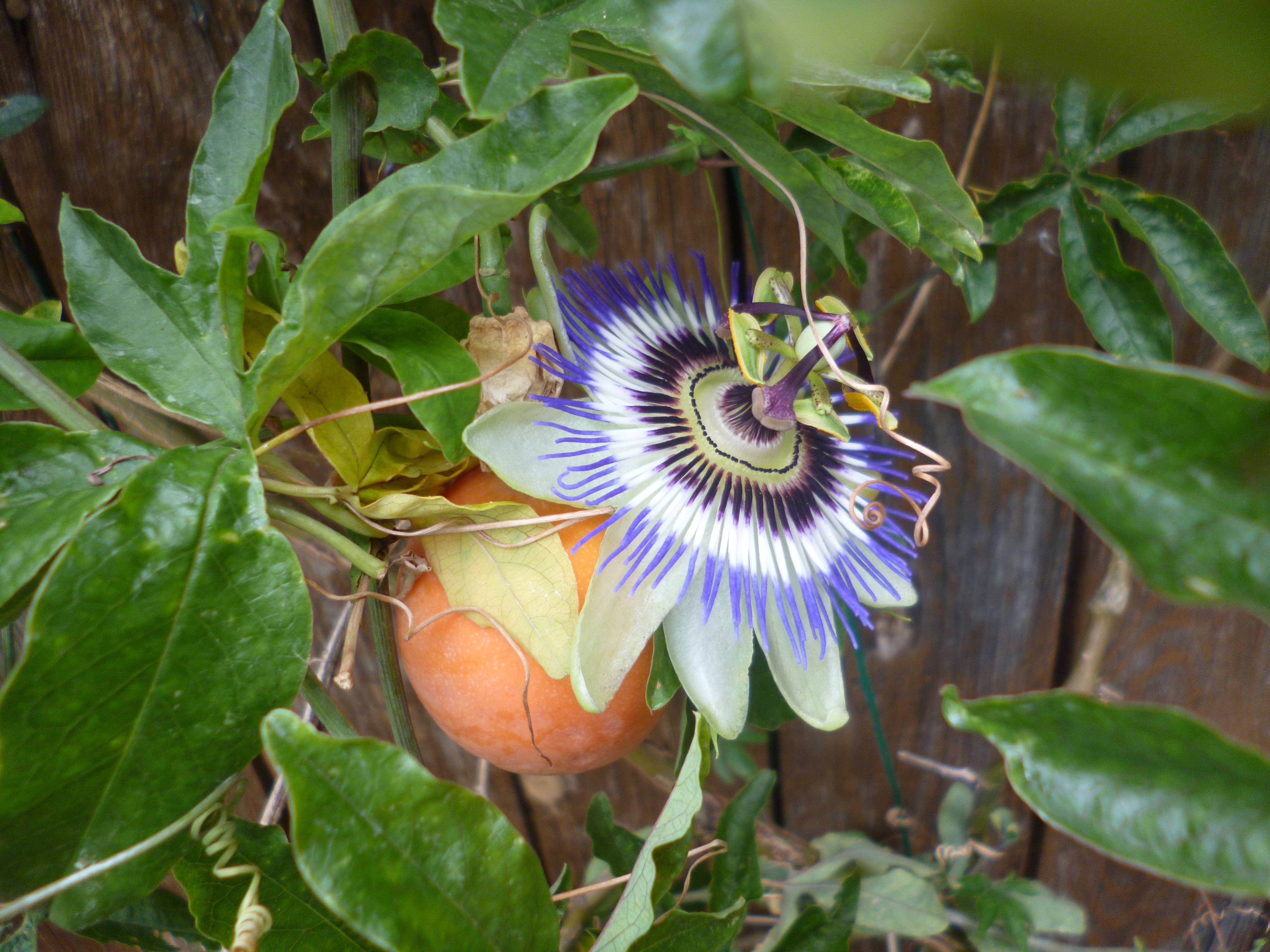
Large flat flower in white and purple, with long purple stem, small orange fruit, shiny green leaves.


The sky-blue galaxy and purple and alabaster sun of the verse!

Photographs:
Christina Egan © 2013/2016.

Early July (The vast transparent vessel)

Early July

I.

The vast transparent vessel of the sky
is filled at last with light up to the rim.
The twigs and leaves and petals wave and cry:
“The feast of heat and harvest can begin!”

II.

The days are still long, the sky is still light
and already strong the glorious heat,
the grass is still lush, the flowers still bright
and already ripe the sweet golden wheat!

Christina Egan © 2015


Those magical weeks just after summer
solstice are also captured in the German
poems Erster Juli / Eimerrand.