The Last Advent

The Last Advent

The rolling emerald hills,
the towering topaz rocks,
the earth-girding ocean
in its royal blue roar,
even the starred sky
in its silvery silence –

Like a sumptuous silk robe
and an embroidered curtain,
they will be drawn aside
to reveal the true splendour –
Then they will be discarded
like rough grey sloughs.

And new worlds will arise,
circles of festive fire.
Shadeless, doubtless,
deathless, boundless.
And we shall be alive
for the first time, forever.

Christina Egan © 2012

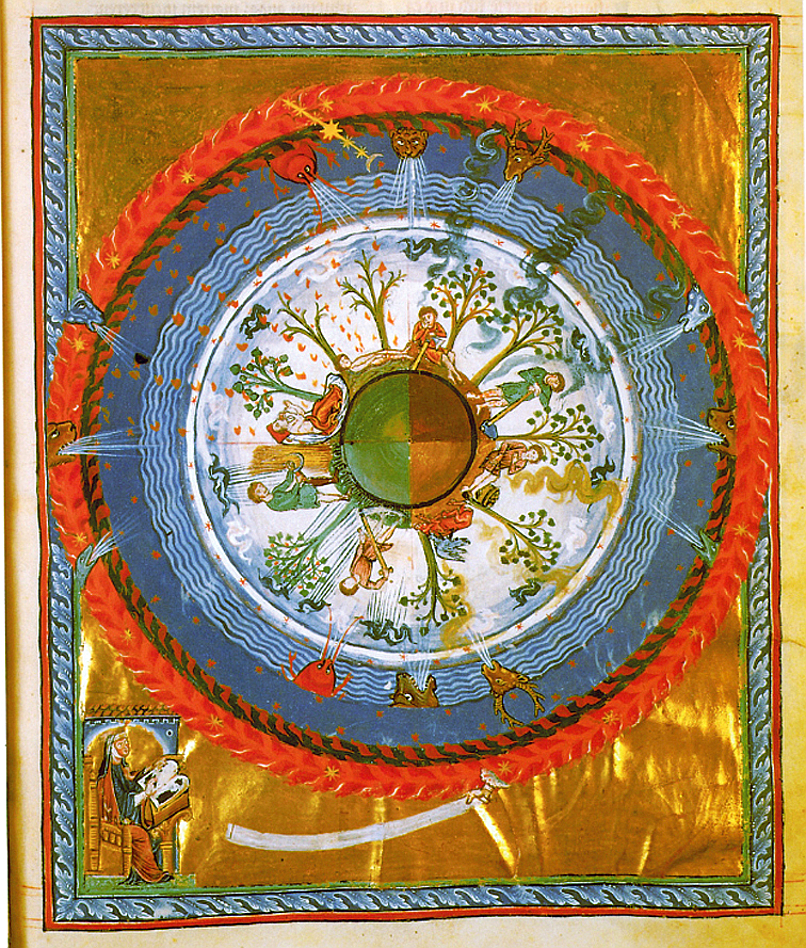
Hildegard_WerkGottes_12Jh_


These lines remind us of the double meaning of ‘Advent’: the first coming of Jesus, when he  was born to Mary, and the second coming at the end of times, when this world will be replaced by an eternal one beyond imagination.

Picture: from a 12th century codex of  Hildegard of Bingen’s Book of Divine Works.

Kretische Küste

Kretische Küste

I.

Vor mir ein grünes Meer, ein roter Strand
und hinter mir die himmelhohe Wand
der Weißen Berge, mit Gesträuch schraffiert,
mit Schluchten aufgeteilt, vom Mond berührt.

Es schwindelt mich, so schroff ist es und schön…
ich möchte mitten ins Gebirge gehn,
als sei es eines Mannes Wohlgestalt
und berge sein Gemüt in jedem Spalt.

II.

Der kupferfarbne Sand wird doch zu Gold,
wo er in steiler Woge niederrollt
und sich mit jenem Brennendblau benetzt,
das kommt und nochmals kommt… und jetzt… und jetzt.

Und Disteln starren in dem dürren Strand,
die plötzlich strahlen wie von Zauberhand,
wenn erster Regen flüchtig niedersteigt
und Brautkleidblüten aus den Blättern treibt!

III.

Wo täglich Himmel sich mit Meer vermählt
und Landes Rand von anderm Strand erzählt,
wo trockne Erde wie der Tagstern loht
von silbriggold bis zu orangerot,

wo noch bei Nacht das Wasser, kaum bewegt,
den Leib in schwerelosem Zauber trägt,
bis in das sanfte Schwarz ein Schweifstern stürzt –
dort laß uns warten auf den milden Herbst.

IV.

Mit riesenhaften grünen Pranken greift
das Meer hinein in den geschützten Kreis
des kleinen Hafens, daß die Mole schäumt
und sich die bunte Schar der Boote bäumt.

Des späten Herbstes erstes Fauchen fährt
in letzte schwere Hitze wie ein Schwert.
Fünftausend Jahre aber ragt die Stadt
ins Element, gelassen, sonnensatt.

Christina Egan © 2014

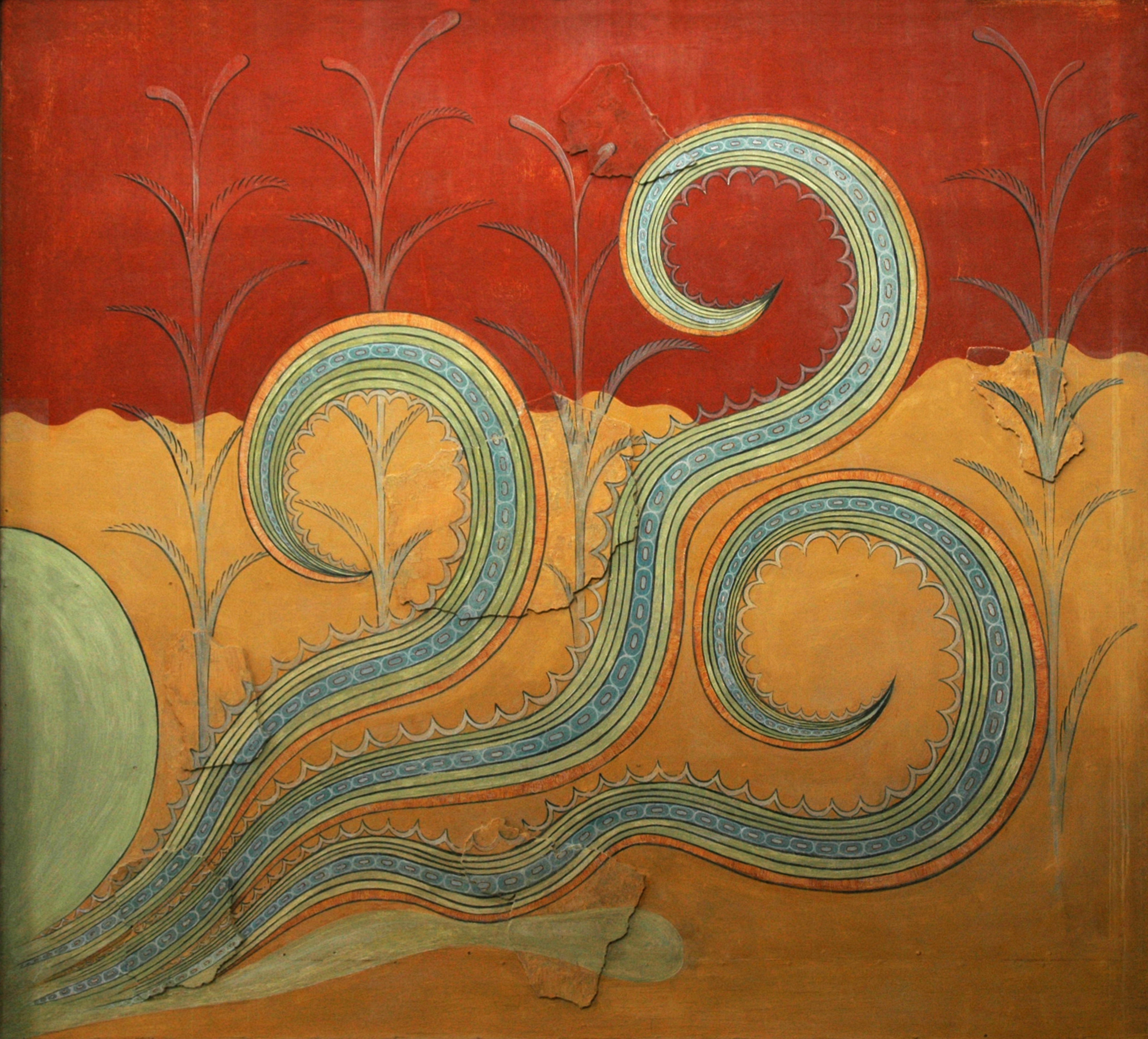
Flourishes on a mural, turquoise on luminous red and yello

For more poetry and information
on Knossos 
and Chania on Crete
see my English poems
The Pattern of a Yesterday and
Golden Dell.


Frieze in the royal palace at Knossos, Crete.
Photograph: Harrieta171 via Wikimedia.

Spätherbst (Feuer der Erde)

Spätherbst

Feuer der Erde
trieft aus den Früchten,
fließt aus dem Efeu,
sprüht aus den Dahlien,
fächert in Blättern,
schießt in Raketen,
fällt in Gestirnen,
tropft in Laternen.

Dann wandert die Sonne
nach innen,
in kerzenverzauberte Kirchen,
in wundererwartende Mienen,
in goldbestickte Musik.

Christina Egan © 2010

These lines refer to German winter customs,
which actually go far beyond Christmas:
after the fiery glow of autumn leaves, berries,
and flowers has gone, at certain times between
November and February
paper lanterns, real
candles, fireworks,
and bonfires are summoned
to dispel the gloom and cold!

November (Im dunkelblauen Nebel)

November

Im dunkelblauen Nebel liegen
gelöst mein Haus und Park.
Mein Herz hat einen Traum erstiegen
und hebt sich still und stark.

Der Herbst hat Gold um Gold gewonnen
mit schmerzloser Gewalt.
Das Mondlicht ist für mich geronnen
zu lieblicher Gestalt.

Christina Egan © 2010

This must be one of the happiest late-autumn poems ever:
exuding peace, evoking beauty, steeped in blue and gold!

Zest

Zest

In splashes of fresh golden-green
the leaves cascade down the tree,
a banner of zest!
However warm, though, it grows,
however late the light flows,
still gilding the west,
the promise of lemon and lime
will never turn green in good time,
green true to a tree.
From nascent glow through the length
of summer and on to the strength
of ripe revelry,
the waves of the leaves will pour
not-yet or not-any-more
convincingly green:
The graceful acacia-tree
has the dubious destiny

of virginal sheen.

Christina Egan © 2015

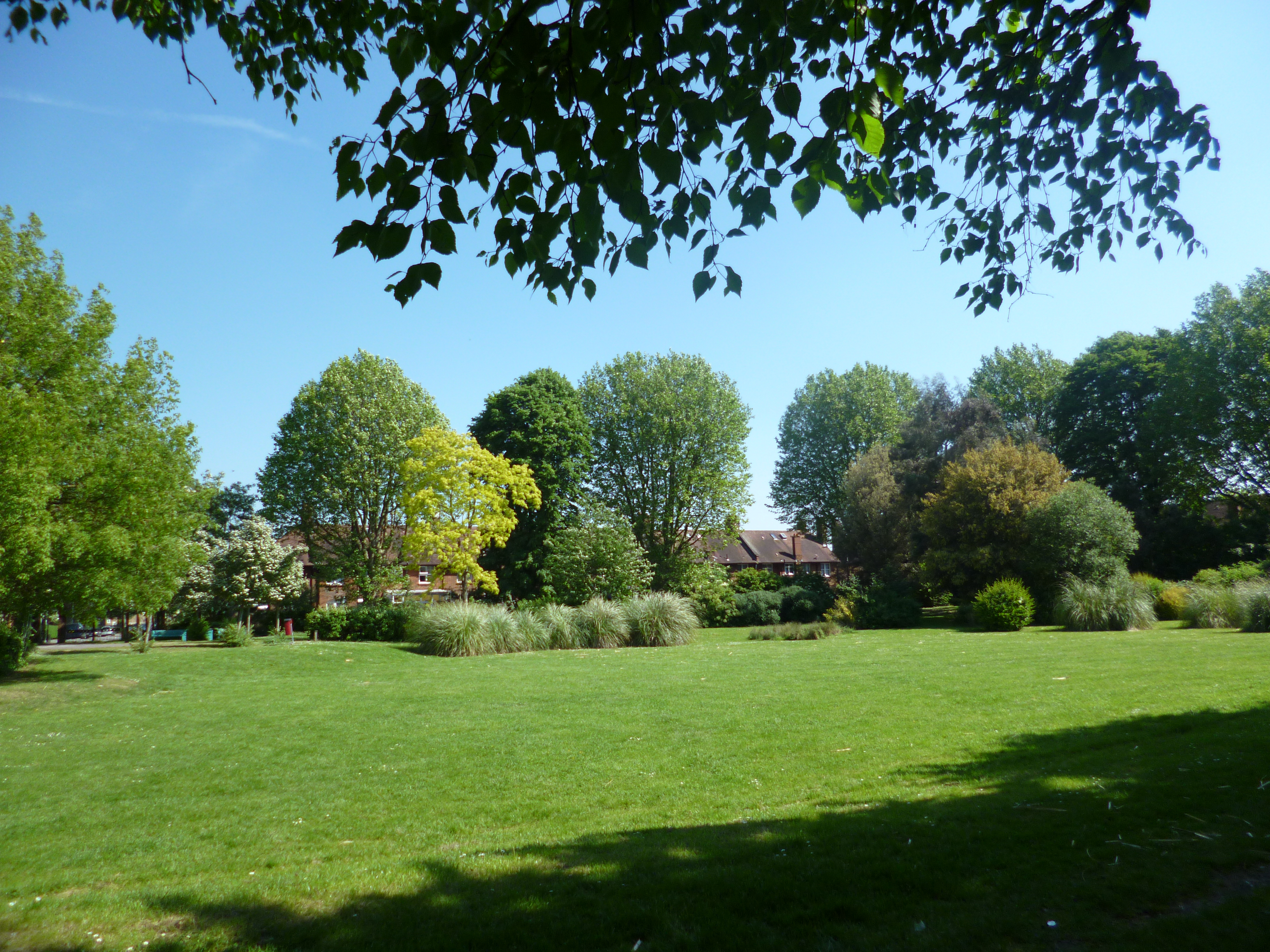
Little tree with apple-green leaves in a park in average summerly green

Photograph: Christina Egan © 2015

It was a poem by Hermann Hesse that drew my attention to the acacia tree:
September (Der Garten trauert)  is online with my rhymed English translation.

Sommergewitter am Meer

Sommergewitter am Meer

Das Meer lag wie ein Teppich,
die Sonne sank mit Prunk.
Die Nacht fiel lau und lieblich,
der Mond stieg stolz und rund.

Der Himmel rührt das Wasser
und zaust den Wald – und jetzt –
ein Tropfen, Klopfen, Prasseln –
und jetzt – der erste Blitz!

Doch in die wilden Zacken,
Licht sonder Maß und Zahl,
dreht eine Leuchtturmfackel
den stillen breiten Strahl.

Christina Egan © 2015

This composition of bright moonshine, wild lightning,
and flashing lighthouse fire recalls the Darß (Darss) at
the very edge of Germany.

You can find more verse on the Baltic Sea in summer
at ostseeschlaflied and Midsummernight Far North,
and when you type ‘Darss’ into the search box.

On the Volcano’s Rim

On the Volcano’s Rim

Goldstaub
(Lanzarote)

Hoher blauer Himmel,
weißer Wolkenflug,
ungestüme Winde,
rascher Schattenzug

über rote Halden,
über graue Höhn,
über grüne Matten,
wo schon Sterne stehn:

abertausend Blüten
wie ein Frühlingslied,
Goldstaub, den die Sonne
aus dem Erdreich zieht!

Christina Egan © 2015

Gold Dust
(Lanzarote)

Blue sky, ever higher,
white clouds in full flight,
winds wilful and forceful,
swift change of the light

across the red boulders,
across the grey height,
across the green lichen,
where stars tremble bright:

a flourish of flowers
and spring in a splash,
the gold dust the sun
can draw out of the ash!

Christina Egan © 2015

Dreaming Dragon
(Lanzarote)

Dew-drops sparkling in all colours
on the mighty coal-black craggy
shoulder of a dreaming dragon:
so these tiny tender flowers
perch on the volcano’s terrace –
fire, earth and wind distilled
to a dainty dotted quilt.

Ceaseless gales and sleepless fire,
ashes fed with salty dew –
ocean and volcano brew
flora’s early, lacy layer,
magic carpet in the air,
in the boundless brown and blue…
Dreams are real. Dreams come true.

Christina Egan © 2015

The Hoard
(Lanzarote)

As the mountain bears the flower,
as the giant holds the gem,
so the hour bears my poem:
purple speck on silver stem.

Where a myriad wild flowers
sprout behind the dry-stone wall,
I must gather all my powers
till the heavens hear my call.

Christina Egan © 2015

Valentine on the Volcano
(Lanzarote)

We dance on the volcano’s rim –
although its low and sunken side,
although extinct for centuries –
tossed partly by the wild wind’s whim
and partly drunk with liquid life –
suspended over sky-blue seas!
(I found my love above Teguise!)

Christina Egan © 2015
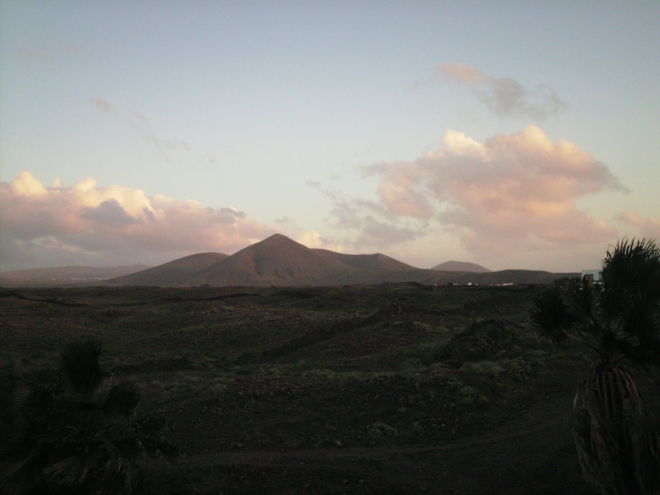
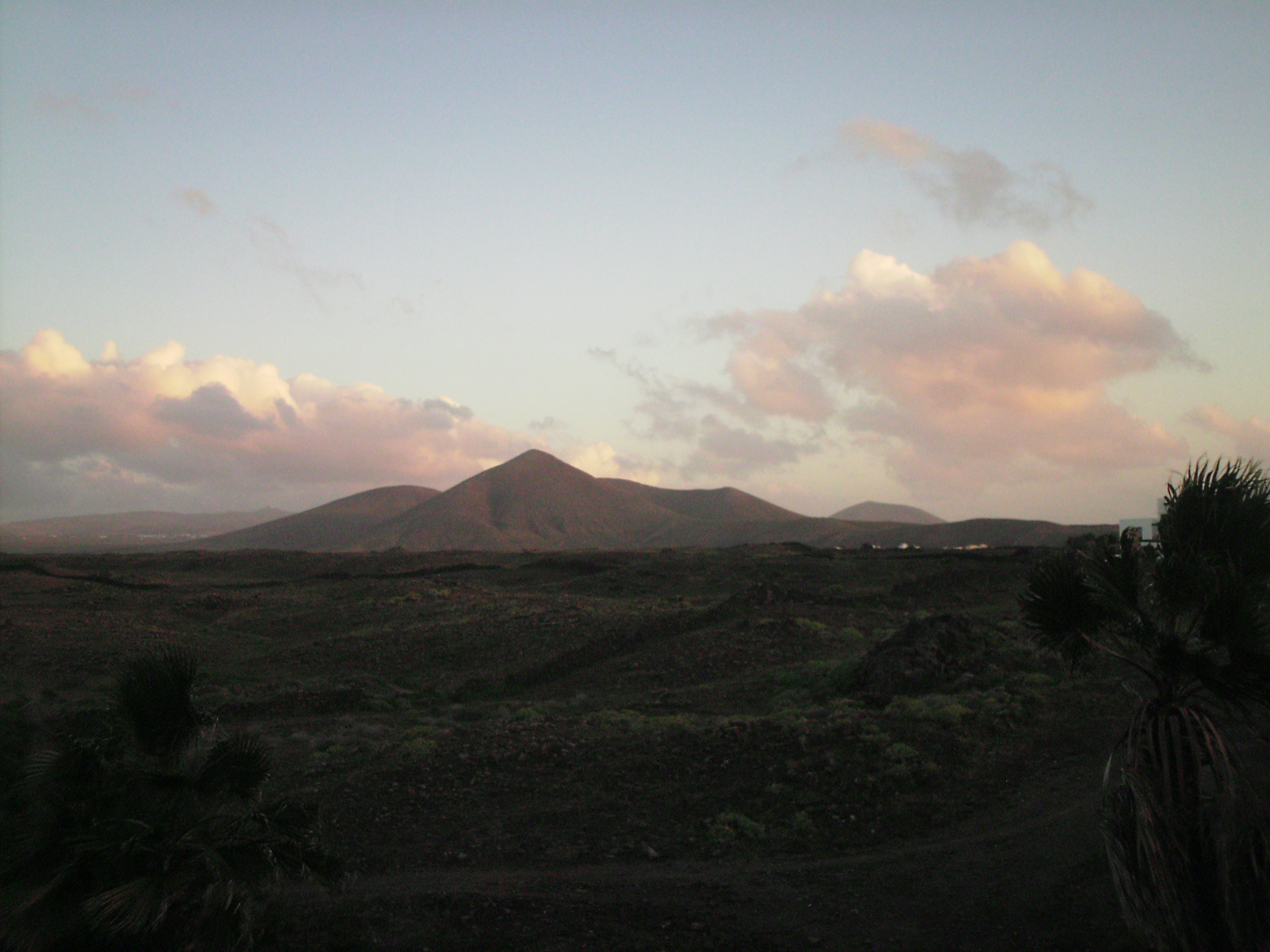
Plain and mountain range with very dark surfaces, rosy clouds in sky

The little volcano. Photograph: Christina Egan © 2015

These lines all sprang from one of the greatest experiences of my life: climbing a little volcano on the isle of Lanzarote, about which you can find a poetic description in German and English at Isle of Bliss / Insel der Seligkeit.

Gold Dust and The Hoard could equally be set in my native Rhön Mountains, also of volcanic origin, but very far inland and much greener.

The three poems in English only may work quite well in an automatic translator. The first two poems are translations of each other, or rather, parallel creations in German and English, where rhythm and rhyme required some changes in wording. It is better to do it this way, since the message is partly conveyed by rhythm and rhyme!

You could leave out the line in brackets to use the poem for a Valentine’s or anniversary card. Copy that line, though, into your list of places to see — both little towns, Teguise and Costa Teguise, because one has got the history and the other one the beach!

This handful of poems almost sums up my work: they describe plants and mountains and the sea; they refer to most basic colours; conclude with thoughts on art and religion and love; and use the beauty of language to capture the beauty of the world.

Epithalamium (A Hundred Snowflakes)

Epithalamium

A hundred snowflakes melting in your hair,
and every one a different ornament;
a hundred swallows weaving in the air,
each on its own encrypted message bent;
a thousand roses, beauty pure and bare,
each goblet filled with subtly varied scent;
a thousand leaves consumed in festive flare,
each spelling out its special testament…
So how much more are you – a human face –
unheard-of and unequalled in your blend?
I chose you from a thousand for your grace,
fulfilling and surpassing what I dreamt.
So by your side I take today my place,
while unnamed blessings blossom and descend.

Christina Egan © 2014

An epithalamium is a wedding song; a Continental sonnet
has 8 + 6 lines. Here, the first eight lines present images
from the four seasons; the last six lines state that humans are
more complex and individual than any natural phenomenon.

Some German poems on the uniqueness of each person can be
found at
Einer von Millionen and Hieroglyphe.

First Autumn Days / Erste Herbsttage

First Autumn Days
(September Haiku)

*

Fiery flower,
still sucking sunshine, still scaling
the wooden fence.

*

The sky turns deep pink
above the first rusty leaves
and burning berries.

*

The moon, low and large,
a knob of solid silver
on heaven’s sceptre.

***

Erste Herbsttage

*

Feurige Blume,
noch saugst du die Sonne ein,
kletterst den Zaun hoch.

*

Tiefrosa Himmel,
erste rostrote Blätter,
brennende Beeren.

*

Der Mond, niedrig, groß,
solide Silberkugel
am Himmelszepter.

*

Christina Egan © 2015

*

Haiku have 5 + 7 + 5 syllables.
The German haiku are translated
from the English ones.

ich liebe dich

ich liebe dich

ich liebe dich
ich suche dich
am apfelbaum
der geißblattbusch
umduftet mich
mit weiß und gold
ich liebe dich
ich finde dich
im fiebertraum
ein runder mond
verschwendet sich
verheißungsvoll
ich liebe dich

Christina Egan © 2015

These lines were inspired by my favourite poem ever,
the magical
Ich liebe dich by Adelheid Bienmüller, which
once struck me
 on a calendar. Unfortunately, I have not yet
found this poet and her poem on the world wide web!

Later, I translated these lines as I love you well (I look for you).