Ich steh’ im Felde wie der Lindenbaum

Ich steh’ im Felde wie der Lindenbaum

Ich steh’ im Felde wie der Lindenbaum,
im Frühlingswind verloren und im Traum…

Ich schaue auf die blauen Höhn,
die kühn wie Vorzeitbauten stehn.
Ich lausche auf den Vogelsang,
in meinen Adern steigt ein Drang!
Ich schaue auf den Horizont,
von dem mir meine Hoffnung kommt.

Ich steh’ im Felde wie der Lindenbaum,
in Frühlingsnacht verloren und im Traum…

Ich schaue auf die Stadt im Tal
mit Erdensternen ohne Zahl.
In meinen Adern steigt der Saft,
ich streck’ mich mit versteckter Kraft!
Bevor noch süß die Linde blüht,
blüht früh und süß der Linde Lied.

Christina Egan © 2012

The mountain range on the horizon is the Rhön and the city in the valley is Fulda, Germany. There are more lines to this poem to make a song of it: part wistful and part hopeful, part heavy-hearted and part light-hearted!

The phrase ‘Town in the valley’ is echoed in the poem of the same name, Stadt im Tal.
April Rules the Land

April Rules the Land
(April haiku)

April rules the land,
leaden and golden in turns,
wayward as we are.

*

Oxford Street, busy,
a splintered rainbow, patterns,
shaken and broken.

*

The white narcissus 
sings with a voice as sweet as
her brother blackbird.

Christina Egan © 2000

The last haiku originally referred to ‘the ivory rose’, although in England, outdoor roses do not blossom yet in April. When I changed the wording to ‘the white narcissus’ to link it to the season and month, I did not know that the flower’s official name is Narcissus poeticus, or Poet’s Narcissus!

The ivory rose
sings with a voice as sweet as
her brother blackbird.

ostermorgen

ostermorgen

der schwere aschenfarbne vorhang
aus wolken zerrissen und weggefegt
spätmärzhohe morgensonne
ergießt sich als murmelnde orgelfuge

etwas ist geschehen
etwas ist dennoch geschehen
etwas
ist

lösende
lockende
gegenständliche
gegenwart!

Christina Egan © 2013

This poem about Easter morning was published in a previous edition of the Rhönkalender. It does not work in translation machines because the language is unusual and innovative.

For Christians, the resurrection of Jesus is not a myth or symbol but a historical and cosmic event; and God is not a distant force but a living presence.

For more on the symbolism of Lent and Easter, see my previous post Fastenzeit / Lent.

Fastenzeit / Lent

Fastenzeit

An bitterem schwarzen Brot
nagt mein Mund.

An bitterer schwarzer Erde
nagt mein Herz.

Grauer Wind
fegt die Fluren rein.

Alles fastet
der Farbenfülle entgegen.

Christina Egan © 1985

Lent

My foot sinks
into bitter black earth.

My heart gnaws
on bitter black bread.

Grey wind
sweeps the fields clean.

Everything fasts
towards the flood of flowers.

Christina Egan © 1999

The church year mirrors the natural seasons  and symbolises our life events: voluntary renunciation in Lent corresponds to the hardships of winter or to emotional deprivation.

I shall shortly post a poem about Easter at ostermorgen, where faith in God and resurrection is linked to the renewed sunshine of spring and to the experience of communion and fulfilment.

Winter Sunrise in Morocco / in England

Winter Sunrise in Morocco

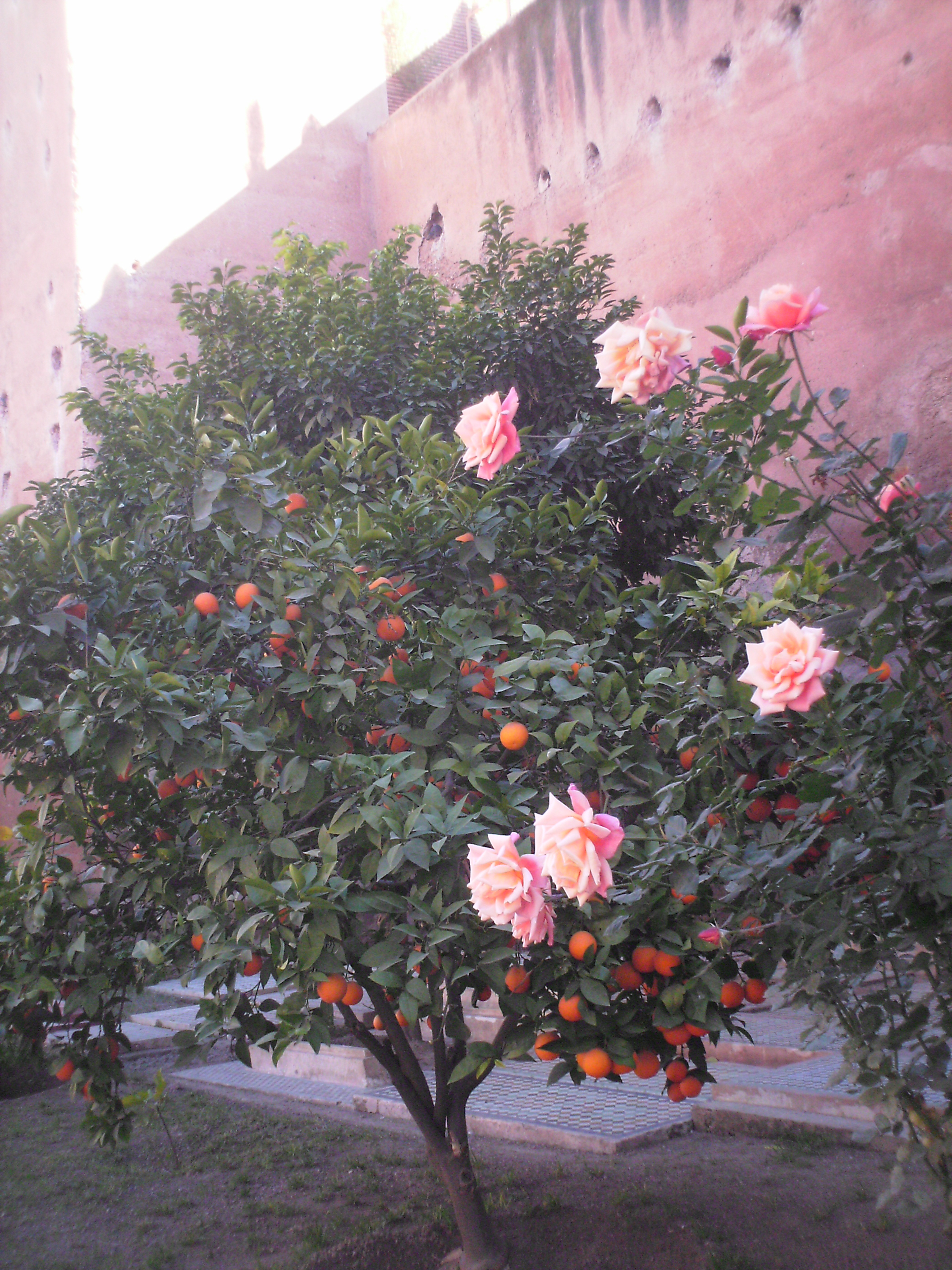
Orange tree full of fruit and rose tree with large roses in front of high pink wallsthe rainbow scarf of the sky
stretched out above the battlements

awesome and unnoticed
by the markets which never sleep

and millions of golden roses
rolled out along the highways

in the carved and inlaid caskets
of the powdery-pink courtyards

strings of peach-coloured roses
clusters of orange-blossom and fruit

Christina Egan © 2012

Photograph: Christina Egan © 2012

You can read a German poem about a Moroccan city at In Marrakesch. The buildings and walls of Marrakesh are pink by law!

Around the turn of the year, I found it warm and sunny by day and pleasantly mild by night. In fact, people were hoping for some rain…

Winter sunrise in England

at the edge of the orb of the earth
a mighty web of finest twigs

painted onto leaf gold
by a master’s hand

and then the blob of molten gold
so bright that it seems to melt them too

like a favour from the heavens
like the face of a god

as if life were possible
one more day one more winter

Christina Egan © 2012

In northern Europe, the winter is so hard that by the beginning of spring, you may feel, even if you are not at all old, that it was the last one you reached.

In Germany, it is cold by day and by night for many months, there is snow and ice, and above all, the nights are long and the days often dull so that you may not see the face of the sun for days; in England, the cold is less bitter, but — which is worse it reaches indoors…

Nonnenkloster

Nonnenkloster

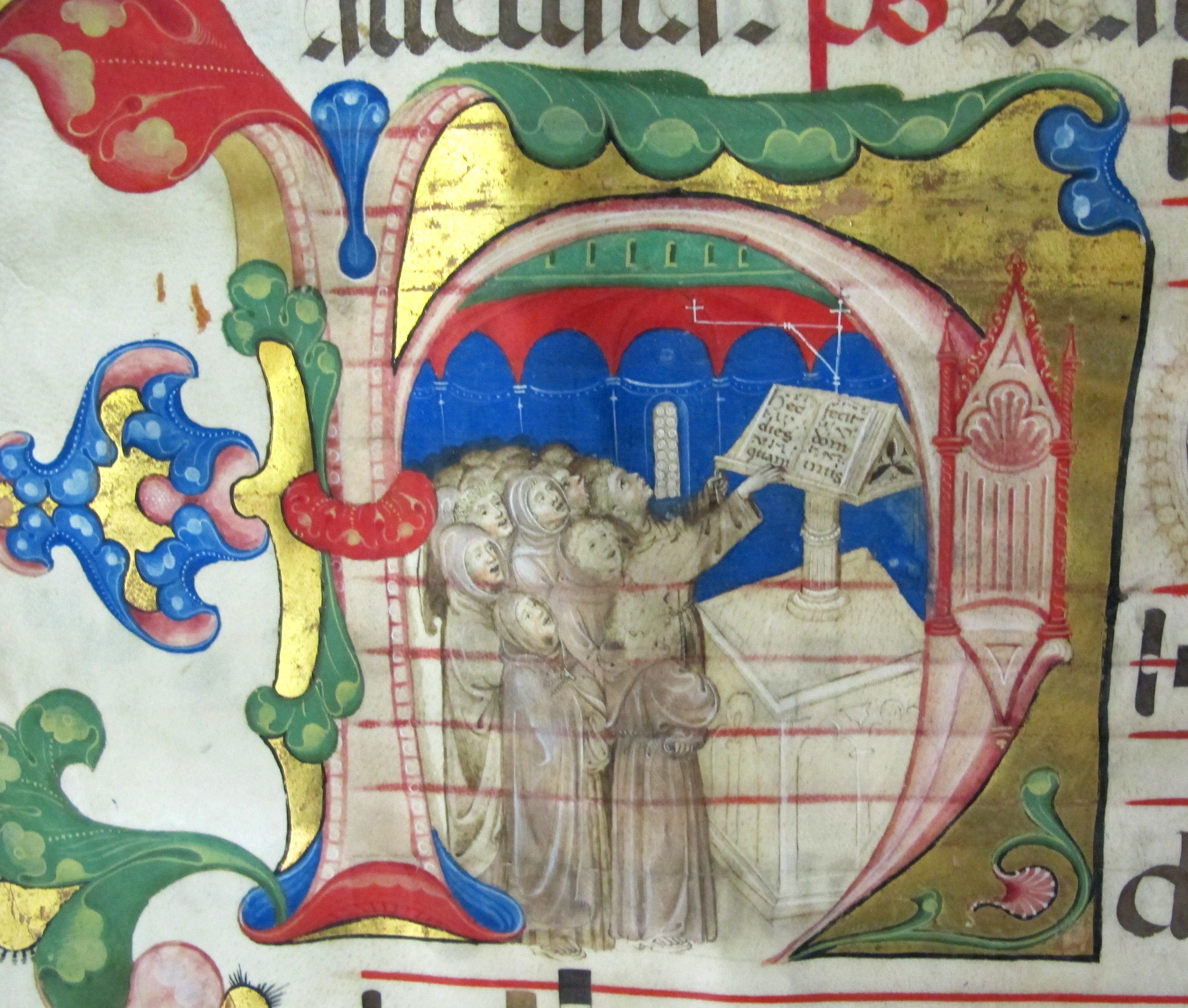
Initial of mediaeval manuscript, filled with monks and nuns singing from such a missal on a lectern above them; in gold and bright red, blue and green

Schneegleich
steigt Schweigen
aus den steilen Wänden,
aus den gefalteten Händen,
den vornübergeneigten Schleiern.
Und doch ist alles ein Feiern,
als sei, wenn es schneit,
ein Staub von Gold
über die Gärten gestreut…

Zeit, Zeit
tickt hier laut
in den langen dunklen Uhren,
in den blankbefliesten Fluren,
weil die Ewigkeit
sie so beschwert
wie Wasser eine weiße Schüssel.
Und jeder geschmiedete Schlüssel,
der gegen ein Gitter klappert,
klingt
wie ein Versprechen,
das Gott nicht brechen will.

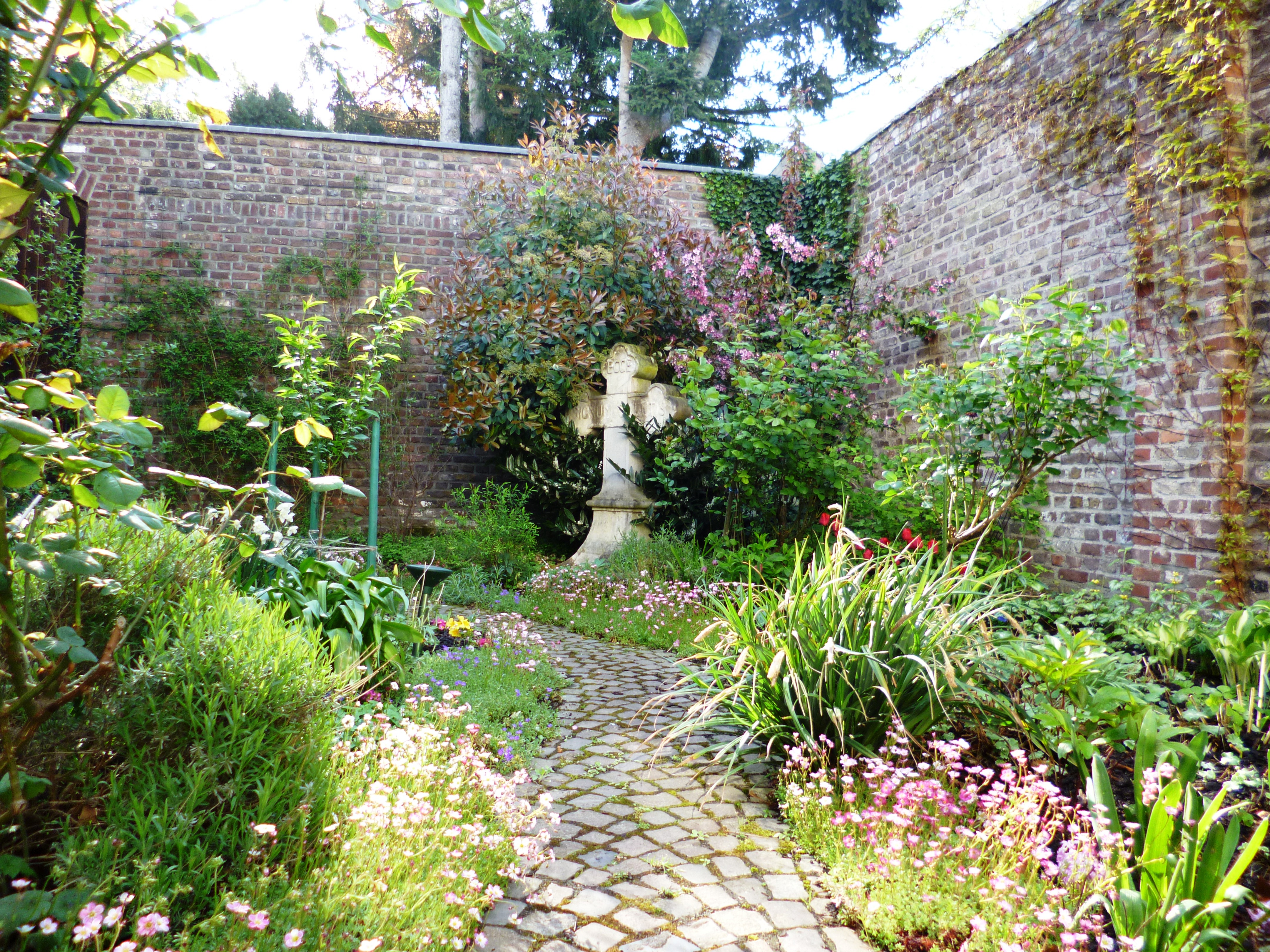
Sunlit walled flower garden with sturdy stone cross in corner

Es singt
am Rasenrand
der Schneeglöckchenchor,
ein besticktes Band.

Und jede ungeschmückte Wand
durchdringt
das goldne Schweigen
wie der Frühlingssonne sanfte Hand.

Christina Egan © 2006

I owe this overpowering experience of peaceful silence to the Carmelite monasteries of London (Most Holy Trinity) and Cologne (Maria vom Frieden), which are based on a philosophy of shared “silence and solitude”.

Photographs:
Liturgical book for Eastertide (1450s).
Sailko via Wikimedia Commons. —
Nunnery garden, hidden in the midst of a big city. Christina Egan © 2014

February Sparks

February Sparks
(February Haiku)

Grey on grey the street…
Lightning strikes – the sun reflected
in a windscreen.

*

Stalks thrusting upwards
like spears with golden points:
armies of daffodils.

*

The crocus carpet
is being woven for us
by day and by night.

Christina Egan © 2014 

I wrote these haiku, and am posting them, at the hardest time of the year: when cold and darkness have used up our reserves and spring has not arrived yet. However, bright signals of light and life surround us!

vermächtnis

vermächtnis

und wieder dünen. wieder hohes gras.
und meer und himmel hier mit urgewalt.
und wieder du in deiner wohlgestalt.
und mein verlangen sanft und ohne maß.

ich tauch in deine lichten augen ein…
das meer entweicht. es war nur wellenschaum.
der tag verbleicht. du warst ein sommertraum.
ich bin allein am strand. ich bin allein.

wie mars in seinem kupferfarbnen glanz
entsteigt dem wall des kiefernwalds dein bild.
die brandung klopft. und klopft. der boden quillt.
ich kröne dich mit meiner verse kranz.

Christina Egan © 2015

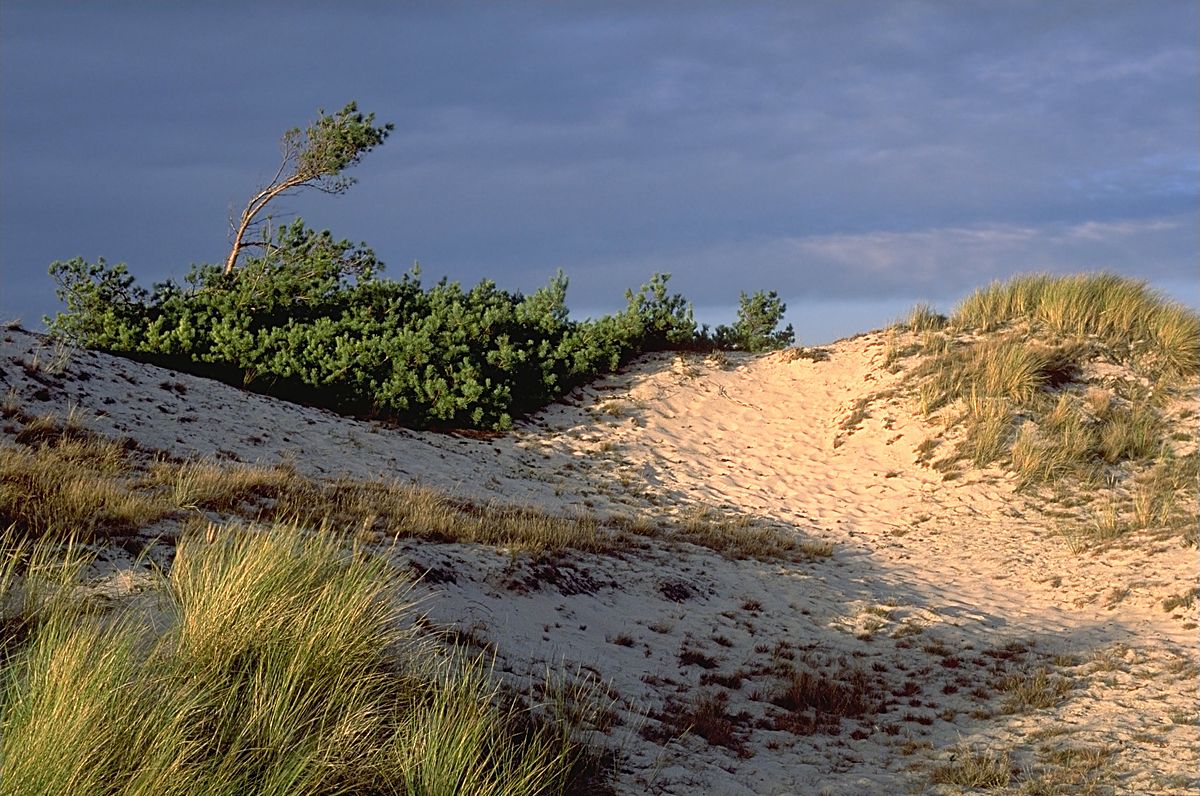
Golden dune, green grass and shrubs, deep-blue sky.


This is my poem of the year 2015! It is, as the title states, my Bequest.

Like many other poems, it was inspired by a holiday on the Darss.


“Dune in Nature reserve Darßer Ort, Baltic Sea”. Photograph: Andreas Tille via Wikimedia Commons.

Winter Views from the Bus

Winter Views from the Bus

*

Pink watering cans
lying flat in the drizzle,
dreaming undisturbed.

*

The yellow front door
in the long row of houses:
It stands out. It smiles.

*

The moon, veiled in mist,
floats in the darkness above
the bright white clockface.

*

Christina Egan © 2012

I was looking at the clocks of St Pancras Station at
King’s Cross, but you could equally observe Big Ben.

There is no ‘London fog’ any more since coal fires were
outlawed — 
yet there are still a lot of mist and fumes…

In northern countries, there is very little colour in winter,
so you need to look out for splinters of colour and rejoice!