Loss (Rounded is My Life)

Loss

Rounded is my life, a jewel
sparkling in the summer rain,
spinning round the hollow axis
of a loss without a gain.

Will you for one moment only
silently pick up my pain,
hold it in your gentle hands and
watch the white and biting flame?

Will you say: I’ve seen you suffer?
Will you say: I’ve felt the same?
If you know me and you tell me,
then I have not lived in vain.

You alone can see the beauty
of this tall and forceful flame,
of this shadow of abundance,
of this ghost of life’s full game…

Shall I pass unknown, unnoticed,
shall I die in pointless pain?
You alone can read my eyes and
call me by my real name.

Christina Egan © 2013


The first half of this poem describes a bereavement or a loss akin to it, like a miscarriage or a divorce. The second half turns this work into a love poem or a religious poem; as often in my work, I keep it open. Some of these lines could therefore be read at a funeral.

It is June again, and in northern Europe, rain is as characteristic of this month as sunshine is, and it can be as pleasant! The season might also relate, as often in my poetry, to the person’s age: someone afflicted by loss in the midst of life, when they should be thriving.
Theodor an Emilien

Theodor an Emilien

Mit tausend dicken weißen Kerzen
Prangt der Kastanienbaum am Tor;
Ich steh’ mit hoffnungshellem Herzen
Im späten Dämmer stumm davor.

Der Vogelsang ist längst versickert
Wie Silberspur ins Dunkelblau…
Doch aus dem Gutshaus tröpfelt, zittert,
Quillt das Klavier wie Abendtau.

Ich mach’ im hohen Gartensaale
Den flinken schlanken Schatten aus –
Und werf’ nach jenem Ankerpfahle
Mein Tau mit einem Male aus.

Christina Egan © 2016


The old-fashioned names and inflections signal that this is a scene which happened long ago, a romantic story from the times of Jane Austen, set in Germany. There is a true story behind it, and the ending is happy and sad: the young man waiting hopefully outside the manor house in the summer night, Ernst Theodor Echtermeyermarried Lady Emilie, and they had a child, but they both died very young.

May Haiku (Bruce Castle)

May Haiku
(Bruce Castle)

Glowing orange orbs,
cluster of new-born planets:
this year’s first roses!

*

Dusk, delayed, scented:
the earth emerged from the dark,
bedecked like a bride.

*

Below the half-moon
a low-flying aeroplane
slices up the sky.

*

The tower-clock strikes,
bright, as if an angel called:
Be alive! Alive!

Christina Egan © 2013

You can see a photo of Bruce Castle, Tottenham, London and read some similar poetry in German at Himmelblaue Uhr.

Himmelblaue Uhr (Tottenham)

Himmelblaue Uhr
(Schloßpark zu Tottenham)

Die Dämmrung senkt sich auf die Flur.
In Vogelsang
tropft Glockenklang
von einer himmelblauen Uhr
an einem himbeerfarbnen Turm.

Die Rosen schimmern wie Laternen.
Von ringsum her
summt der Verkehr.
Ein Flugzeug funkelt zwischen Sternen
und segelt durch Kornblumenfernen…

Die Wetterfahne blinkt am Mast.
Ein Ruf, Gebell,
der Uhrschlag, hell –
Und alle Sorge, alle Hast
kommt zwischen Tor und Tor zur Rast.

Christina Egan © 2016

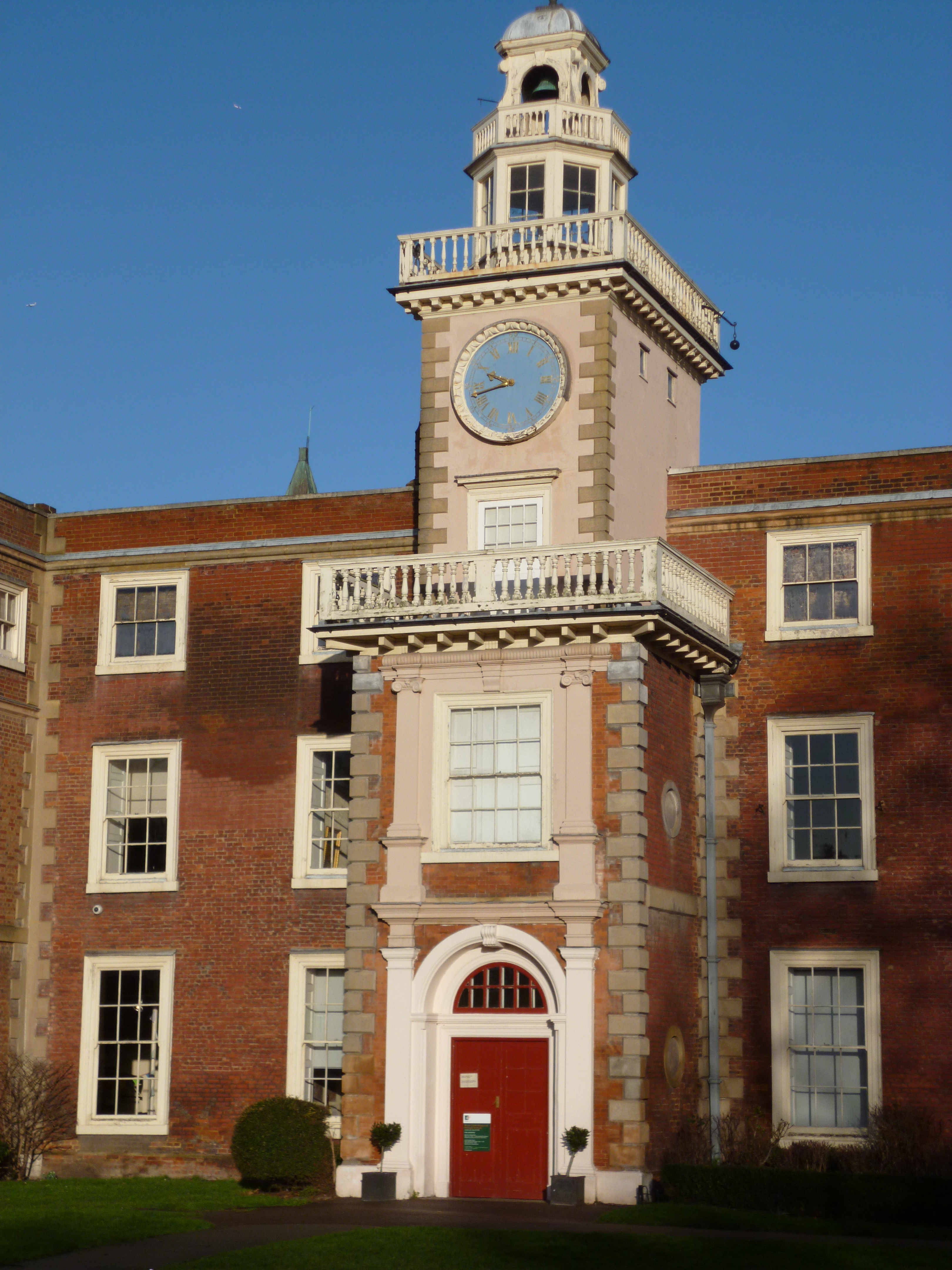
Manor house in red brick, turret painted in pink, with a red door, white decorations, and a bright-blue clockface, under a blue sky.

You can read similar poetry about a walk on a tranquil evening at May Haiku (Bruce Castle).

This is London, too — not only the steel and glass office blocks and underground tunnels I describe in höhlenmenschen / cavemen and related posts, or the bitter poverty I touch on in There’s door on door. London is, in fact, a particularly green city, and Tottenham a very green part of it.

Bruce Castle, Tottenham, London.
Photograph: Christina Egan © 2014

By the Brittle Brown Fence

By the Brittle Brown Fence

By the brittle brown fence,
bright, arresting the eye,
an explosion of pink,
pure pink!
Low, silent, intense, incessant,
a pillow of raspberry colour,
triumphant trumpet
of early summer:
my azalea
in May!

Christina Egan © 2006


The shape of the poem emulates the content…
and in this display, it is also true for the colour!

Der Baum im Schulhof

Der Baum im Schulhof
(Marienschule Fulda)

Das Bäumchen stand im rosa Kleid,
das Mädchen stand im blauen;
sie waren fünfzehn Jahre alt
und lieblich anzuschauen,
wenn auch noch zierlich, kindlich gar,
nichts als ein Bündel Blüten…
Im Norden lag ein gelbes Haus,
der Schulhof lag im Süden.

Und als sie sich nun wiedersehn
in eben jenen Mauern,
da sind sie fünfzig Jahre alt
und herrlich anzuschauen,
wie Wolken stattlich hingewölbt
und strahlend unter Schauern:
der Baum im dunkelrosa Kleid,
die Frau im dunkelblauen.

Christina Egan © 2015

You can look at the blossoming  Tree in the Schoolyard
and the yellow building online at Marienschule Fulda. 

The story of the schoolgirl and the tree, meeting at fifteen
years old and then at fifty, may work in a translation software.

London, This Moment of May

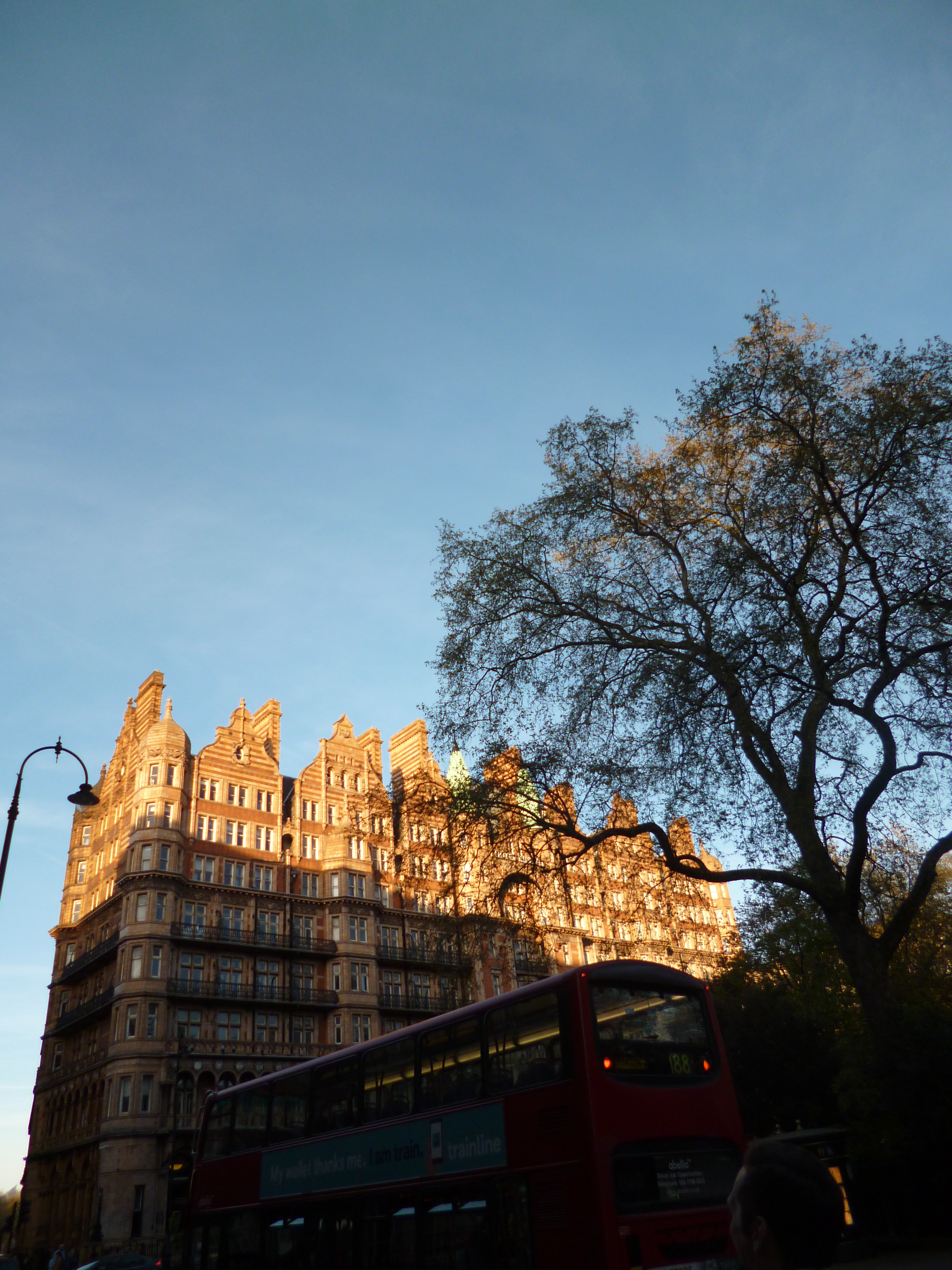
London, This Moment of May I. London, this moment of May. High stately building, lower part in deep shade, upper part brightly lit, with red double-decker bus passing.A Grand Canyon in grey, imperceptibly turning to purple, with an orange glow on its battlements – but teeming in all its cracks, with foam of blossom and bird-flight, with currents of people and cars. Not a city, but a county, a country, a proud world in itself, the planet in a valley, an open oblong fruit, rich with glistening seeds, in the giant hand of clay hollowed out by the Thames.

Photograph: Christina Egan © 2016

II. It is not mine, this city: I borrowed it. I borrowed it for a home, for a while, I borrowed its language, for good. Or it borrowed me, it borrowed my eyes to mount this tall bus, it borrowed my mouth to sing this new song. I run through its veins of walls and windows, of trees and lanterns… A Grand Canyon in grey. Or it runs through my veins, a pale-purple stream, murmuring, glittering… London, this moment of May. Christina Egan © 2013
The title alludes to the famous line by Virginia Woolf: “… what she loved; life; London; this moment of June.” I happened to write my poem in May, on a red bus…
P.S.: A year later, the climate across Europe has slid further into resentment towards foreigners or strangers of any description, be they war refugees or your next-door neighbours. There is a lot of blind anger and fear of vague entities like ‘Europe’ or ‘Islam’. This is the road to racism and fascism. My essay about my identity as an immigrant to England stayed on the front page of trade union UNISON‘s website for weeks: I dream in English. I come from one country, live in another, and plan to move to a third; yet my main identity is European at any rate!
>>> These poems were published in the Haringey Community Press (circulation 15,000) in September 2022.

Ich steh’ im Felde wie der Lindenbaum

Ich steh’ im Felde wie der Lindenbaum

Ich steh’ im Felde wie der Lindenbaum,
im Frühlingswind verloren und im Traum…

Ich schaue auf die blauen Höhn,
die kühn wie Vorzeitbauten stehn.
Ich lausche auf den Vogelsang,
in meinen Adern steigt ein Drang!
Ich schaue auf den Horizont,
von dem mir meine Hoffnung kommt.

Ich steh’ im Felde wie der Lindenbaum,
in Frühlingsnacht verloren und im Traum…

Ich schaue auf die Stadt im Tal
mit Erdensternen ohne Zahl.
In meinen Adern steigt der Saft,
ich streck’ mich mit versteckter Kraft!
Bevor noch süß die Linde blüht,
blüht früh und süß der Linde Lied.

Christina Egan © 2012

The mountain range on the horizon is the Rhön and the city in the valley is Fulda, Germany. There are more lines to this poem to make a song of it: part wistful and part hopeful, part heavy-hearted and part light-hearted!

The phrase ‘Town in the valley’ is echoed in the poem of the same name, Stadt im Tal.

April Rules the Land

April Rules the Land
(April haiku)

April rules the land,
leaden and golden in turns,
wayward as we are.

*

Oxford Street, busy,
a splintered rainbow, patterns,
shaken and broken.

*

The white narcissus 
sings with a voice as sweet as
her brother blackbird.

Christina Egan © 2000

The last haiku originally referred to ‘the ivory rose’, although in England, outdoor roses do not blossom yet in April. When I changed the wording to ‘the white narcissus’ to link it to the season and month, I did not know that the flower’s official name is Narcissus poeticus, or Poet’s Narcissus!

The ivory rose
sings with a voice as sweet as
her brother blackbird.

ostermorgen

ostermorgen

der schwere aschenfarbne vorhang
aus wolken zerrissen und weggefegt
spätmärzhohe morgensonne
ergießt sich als murmelnde orgelfuge

etwas ist geschehen
etwas ist dennoch geschehen
etwas
ist

lösende
lockende
gegenständliche
gegenwart!

Christina Egan © 2013

This poem about Easter morning was published in a previous edition of the Rhönkalender. It does not work in translation machines because the language is unusual and innovative.

For Christians, the resurrection of Jesus is not a myth or symbol but a historical and cosmic event; and God is not a distant force but a living presence.

For more on the symbolism of Lent and Easter, see my previous post Fastenzeit / Lent.