gedichte über blumen

gedichte über blumen
Buds and fresh leaves on top of shoots above a parkein jeder blumenkranz
ein jedes sommerlied

jede hochgemute knospe
ja jeder nadelfeine halm

ist eine kriegserklärung
an den krieg
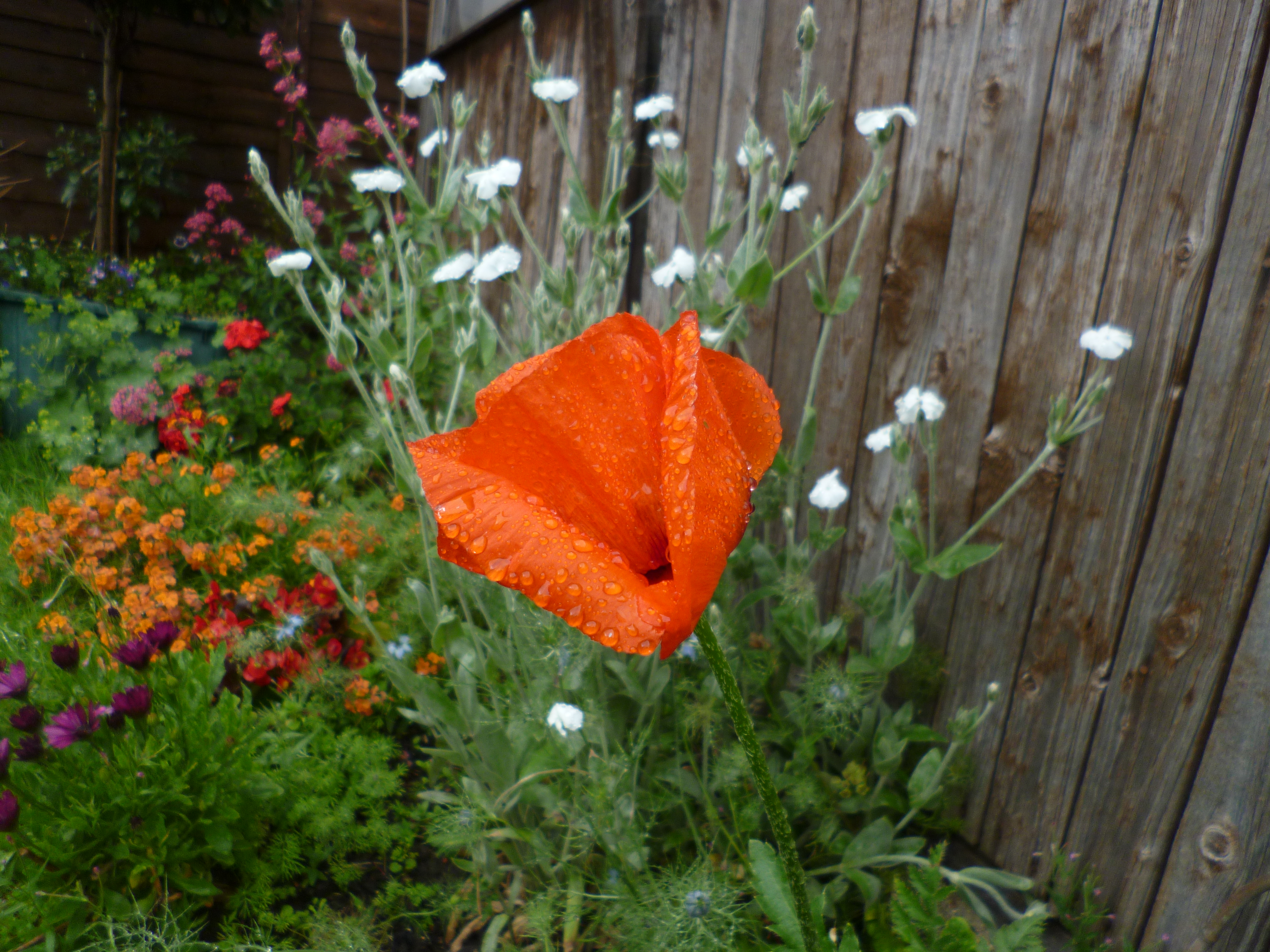
Close-up of poppy flower with dew or rain on it, above other red, orange, purple, and white flowers.

eine nichtigkeitserklärung
des nichts

eine liebeserklärung
an die liebe

an alle
ans all

Christina Egan © 2014

Photographs: Christina Egan © 2014 / 2016.


My insistence on writing poems about flowers is a reaction to Bertolt Brecht’s often-quoted suggestion that a conversation about trees borders on criminal negligence because it is silent about atrocities. In the poem An die Nachgeborenen from the 1930’s he exclaims:

“Was sind das für Zeiten, wo
Ein Gespräch über Bäume fast ein Verbrechen ist
Weil es ein Schweigen über so viele Untaten einschließt!”

Brecht’s idea is  startling and ingenious; but I hold that all praise of a flower or a bud is a praise of life and peace: ‘a declaration of war / against War… a declaration of love / to Love.’

Also, if you have read a few of my poems, you will have noticed that they do not describe flowers and trees alone, but use them as images for human life and joy, suffering and death. ‘Poems about flowers’ has 35 words — but amongst them are ‘nothingness’ and ‘the universe’!
Under the Blue Bloom of the Tree

Under the Blue Bloom of the Tree

Under the blue bloom of the tree,
O little mouse, I buried thee.
I heard thee often run until
I saw thee lying, small and still.
So high the sky, so late the light
ascending to midsummernight…
The deep warm earth is now thy bed,
with snow-white petals for a spread.
Fresh spikes of lavender I chose
and last, a minuscule red rose.
Tonight, the ceanothus tree
will scatter sky-blue dust on thee.

Christina Egan © 2017

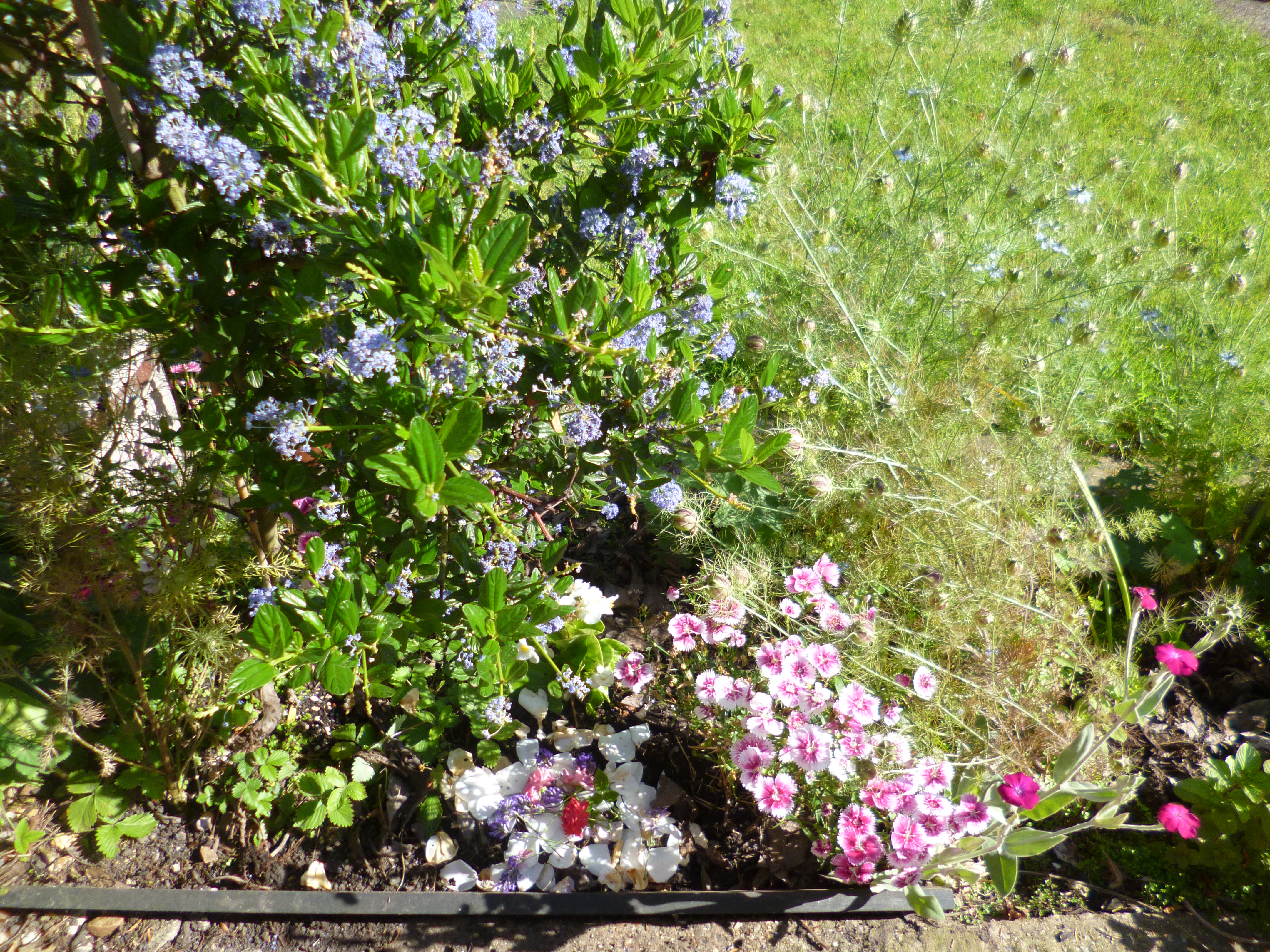
White and coloured petals on the ground, beneath ceanothus and carnation.

The mouse grave in the poem. Photograph: Christina Egan © 2017.

An Average Life / And All My Youth

An Average Life

The admiral butterfly
a map of happiness
on the burnished green
of the ivy in May

its glamour
its poise
its place in the sun
imagine you had it

bright as a bracelet
fine as a feather
strong as a storm
imagine you were it

and you practised your movements
studied your speeches
turned up in good time –
and your part has been cancelled

the play goes ahead
with you as a servant
in black in the background
required to smile.

Christina Egan © 2010


And all my youth I have been old

Amidst the wealth of my existence
I suffer hunger dark and cold
I am invisibly imprisoned
and all my youth I have been old

On narrow shoulders I must carry
my illness like an awkward cross
I am inexorably burdened
by frailty and its offspring loss

Christina Egan © 2010


As Limpid as the Moon / Alabasterschale

As Limpid as the Moon

Some people are as luminous,
as limpid as the moon:
with truthfulness amidst the lies
or happiness in gloom.

They float and glow across the road
or mesmerise a room;
they never fade, and when they’ve died,
they leave a shining tomb.

Christina Egan © 2016


Alabasterschale

Überm schwarzen Heer der Bäume,
überm grauen Heer der Gräber
ruft durch dunkelblaue Räume
eine Glocke unbeirrt.
Balanciert auf spitzem Pfahle,
schimmert ferne feingeädert
eine Alabasterschale:
fremdes riesiges Gestirn.

Überm schwarzen Heer der Bäume,
blätterlos und blütenträchtig,
überm grauen Heer der Steine
lädt die Glocke zum Gebet.
Überm hingestreckten Tale
steigt gemessen, schlicht und prächtig,
jene Alabasterschale,
bis sich uns das Herz erhebt.

Christina Egan © 2017


As Limpid as the Moon remembers my radiant parents-in-law.

Alabasterschale compares the full moon to a bowl of alabaster; the scene is the vast old Tottenham Cemetery in London. The poem integrates awe before Nature and faith in God (as worshipped in church etc.).

This text will be printed in the Münsterschwarzacher Bildkalender 2019.

Ex tenebris (The day is like a daffodil)

Ex tenebris

The day is like a daffodil. Yet
the green garland of the garden,
the golden garland of the sunset
cannot dispel the dark of the depth.

On the crests of the hills,
tiny blue brushstrokes,
you can watch them wander,
the deceased and the unborn.

My heart is a fist in my chest.
My tears are grapes of glass.
No one sees them: no one sees me.
I am alone with the angels.

Christina Egan © 2017

Daffodils and narcissus growing thickly around a fivefold gnarled treetrunk.Photograph: Christina Egan © 2013.

weiße borke / Roof-Top Sculpture

weiße borke

rasch zogen weiße wolken hin
im tanz von sonne regen schnee
und weiße wolken hingen tief
mit zarten düften im geäst
als ich noch beinah winterschlief

ich gähnte und ich dehnte mich
und rührte plötzlich wie im traum
an einen kleinen toten baum
der hinter mir im winde stand
mit einer borke weiß wie schnee

ein birkenschößling manneshoch
den man einst pflanzte und vergaß
in einem kübel ohne raum
um seine füße wogte gras
und unkraut voller übermut

die blanken zweige ohne grün
die weiße borke ohne schrift
minutenlang im rampenlicht
blendende botschaft ohne wort
die ich alleine schweigend las

die tote birke tat mir weh
geschöpf das langsam nur verdorrt
dann nahm ich einen kleinen stift
und schrieb ihr diese elegie.
denn schönheit stirbt und schwindet nie.

Christina Egan © 2016

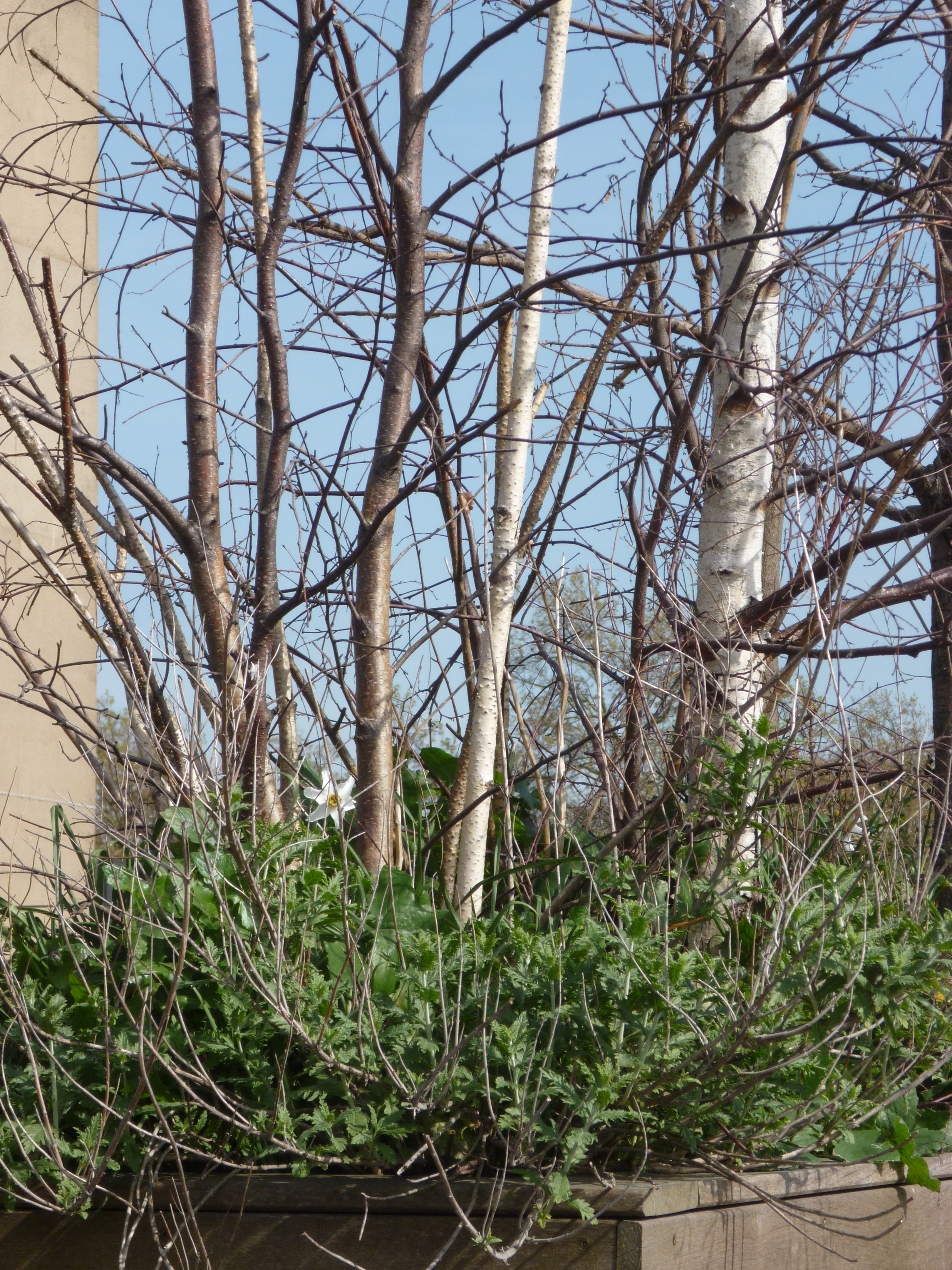
Slim dead tree trunks, brown and white, with thick weeds and a narcissus around the bottom, all in a large box.

Roof-Top Sculpture

Tall slender trunks with silver bark,
pale crinkled copper-gold the leaves:
it is a sculpture, spectral, stark,
the haunting beauty of dead trees,
of roof-top birches left to die
when no one heard their silent cry.

Christina Egan © 2015


Photograph: Dead trees with white narcissus flower. Christina Egan © 2015

Westminster Bridge, Mitte März

Westminster Bridge, Mitte März

Im Überfluß hingeschüttet, schimmernd
und erstmals wieder erquickend
der Sonnenschein, und schon erstreckt sich
aus silbernen Plättchen gehämmert
das Straßenpflaster, entrollt sich
die hellblaue Teppichbahn
des Stromes, schon stemmen sich,
stumme starke Löwenflanken,
die Brückenpfeiler empor, ragen
lotrecht die Honigwaben
der Sandsteinfassaden, rasselt
endlos das bunte Geröll
der Menschenmassen vorüber…

Und unabwendbar naht sich
die Machtergreifung des Lichtes.

Christina Egan © 2014


The rhythmic stream of words recreates an everyday and vibrating scene: the enlivening flow of the spring sunshine; the rolling-out of a silver carpet and a blue carpet — Westminster Bridge and the River Thames; an avalanche of colourful boulders or pebbles people from all over the world; and the upward pull of the bridge pillars and mighty buildings — the Houses of Parliament.

Standing in the Slush

Standing in the Slush
(February Haiku )

*

Standing in the slush,
by the bus stop, I’m looking
for lost memories.

*

Wet empty benches,
wet winding sand paths, furrowed
by hurried footsteps.

*

I’m rubbing my eyes,
weighed down by dreams, and there –
first leaves like lances!

*

Christina Egan © 2013


Like February Sparks, these haiku were written at the hardest time of the year, when our strength is about to be exhausted entirely. This is when we have to be strongest, when we have to fight hardest, as the previous post, Venus and Mars, describes. At least, in southern England, flowers appear very early, in winter, really, to cheer you up…!

I Sought the Star / Weihnachtskerzenflamme

I Sought the Star

Weary was, had wandered far…
        Again, it snowed.
Without a doubt, I sought the star
        above the road:

 The star that had been made for me,
        a radiant face,
above the maze of destiny,
        above the ice.

I climbed a random rugged hill –
        and there it burned!
Above a shelter bright and still
        and warm and firm.

And still they glow, the tiny spark
        and snowed-in home,
both given to my hungry heart
        by faith alone.

Christina Egan © 2010


Weihnachtskerzenflamme

Wie eine Weihnachtskerzenflamme strahlt
dein sanftes schmales Angesicht,
auf dem sich langersehnte Freude malt,–
so hell bist du und ahnst es nicht.

Wie hoheitsvolle Rosenknospen stehn
die Hände in dem goldnen Licht,
so zart, als würden sie im Wind vergehn,–
so weich bist du und weißt es nicht.

Christina Egan © 2014


A ‘Christmas Candle Flame’ as an image for a joyful, gentle, guileless face works only where, like in Germany, the tradition of real candles is upheld!

The second stanza compares the person’s hands to tender, graceful, regal rosebuds. The poem appears to describe a child but was in fact written for an adult.