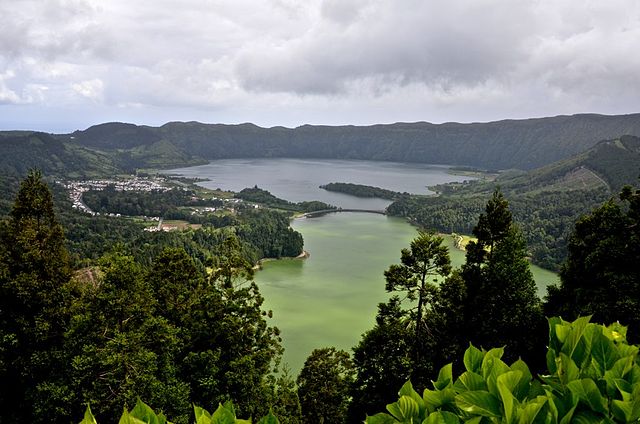
Ein Muster aus Muscheln / Greek Islands

Ein Muster aus Muscheln

Ein Muster aus Muscheln und Bernstein und Bein,
mit Karneol und Koralle durchsetzt,
auf lapislazuliblauem Grund:
So leuchten die Inseln im Sonnenschein,
vor dreitausend Jahren… und letzthin… und jetzt:
ein Mosaik, ein vollendeter Fund.

Vors Fenster des sinkenden Flugzeugs gespannt,
vom Guckloch des finsteren Turmes gerahmt
– nur einen Moment – nur einen Moment –
das Muster aufs wartende Auge gebannt,
die Farben ins wache Gedächtnis gemalt:
ein Bild, das nach dreißig Jahren noch brennt.

Christina Egan © 2016

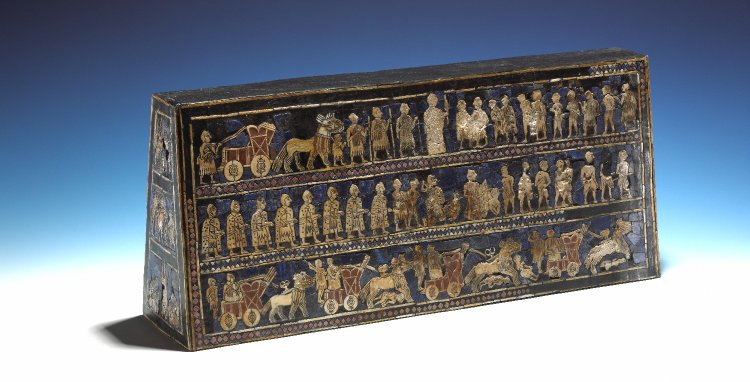
Standard_of_Ur_BM_121201

Standard of Ur (2500 BC). – Photograph© The Trustees of the British Museum.

I am showing this ancient object – twice as old as our classical antiquity – because it must have inspired my poem about Greece. The images on the box are made of shell, lapis lazuli, and red limestone, but I did not remember those details or  even think of the thing. When you have the chance to go to London, do not miss out on the Sumerian galleries of the British Museum!

The longing for a return to Greece, both for the Mediterranean environment and for the ancient civilisation, is also expressed in On Eating Olives / Beim Olivenessen  and in Greek Islands  (below). There are a number of poems about Crete in German and English on this website.


Greek Islands

There is more blue in the air
between here and the horizon,
between morning and evening,
than the cup of the eye can hold.

So my soul may flow over
into the sky,
into the sea,
into this scattered paradise…

Christina Egan © 2012 


On the topic of the blue Mediterranean Sea, see also Meine blaue Mauer  and O Heimatland aus Stein und Licht. On the manifold colours of the same sea, see The Purple Sea / Das lila Meer.

Mer de miel

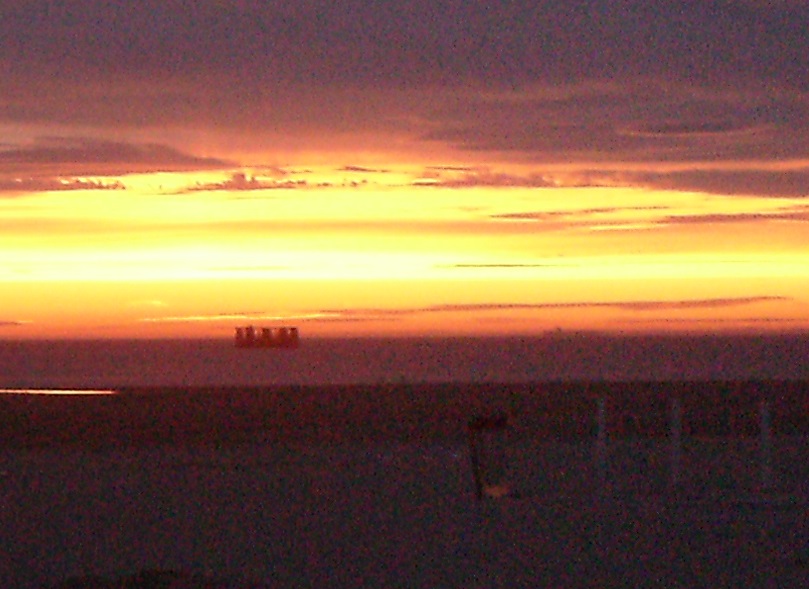
 Clouds in hte sunset, looking like a bright yellow sea, an orange coast and purple sky. An optic illusion above a real coast (not visible here).

Mer de miel
(Sète)

Levez vos yeux vers ce vitrail doré,
d’un jaune plus doux, d’un jaune plus pâle possible :
une baie cernée de hauts rochers
d’un bleu brumeux… Un crépuscule paisible.

Clignez vos yeux à ce vitrail distant,
mer de miel, montagne mauve, sauvage :
tout flotte au dessus de l’horizon –
des eaux de feu, une terre de nuages !

Ce paysage d’un or incomparable
s’évanouit et passe, une image…
Ou serait ça la côte impérissable
et notre terre et mer le grand mirage ?

Christina Egan © 2016


This poem takes up an idea from ancient pagan and Christian philosophy: our world may be only a pale reflexion of a higher, perfect, world. Those ‘heavens’, however, are an inaccessible and unimaginable place — beyond our universe — for which the visible sky is only an image.

The fiery sunset which took me quite literally ‘out of this world’ occurred in midwinter on one of the northernmost beaches of the Mediterranean, at the outskirts of Sète. For a daytime poem and photograph on the sea around Sète, see La Mer, enfin.

Clouds in the sunset, looking like a bright yellow sea, an orange coast and purple sky. An optic illusion above a real coast (also visible here).

Photographs: The sky above the coast in Sète, France. Christina Egan © 2016

dans le verre / Mother-of-Pearl

dans le verre

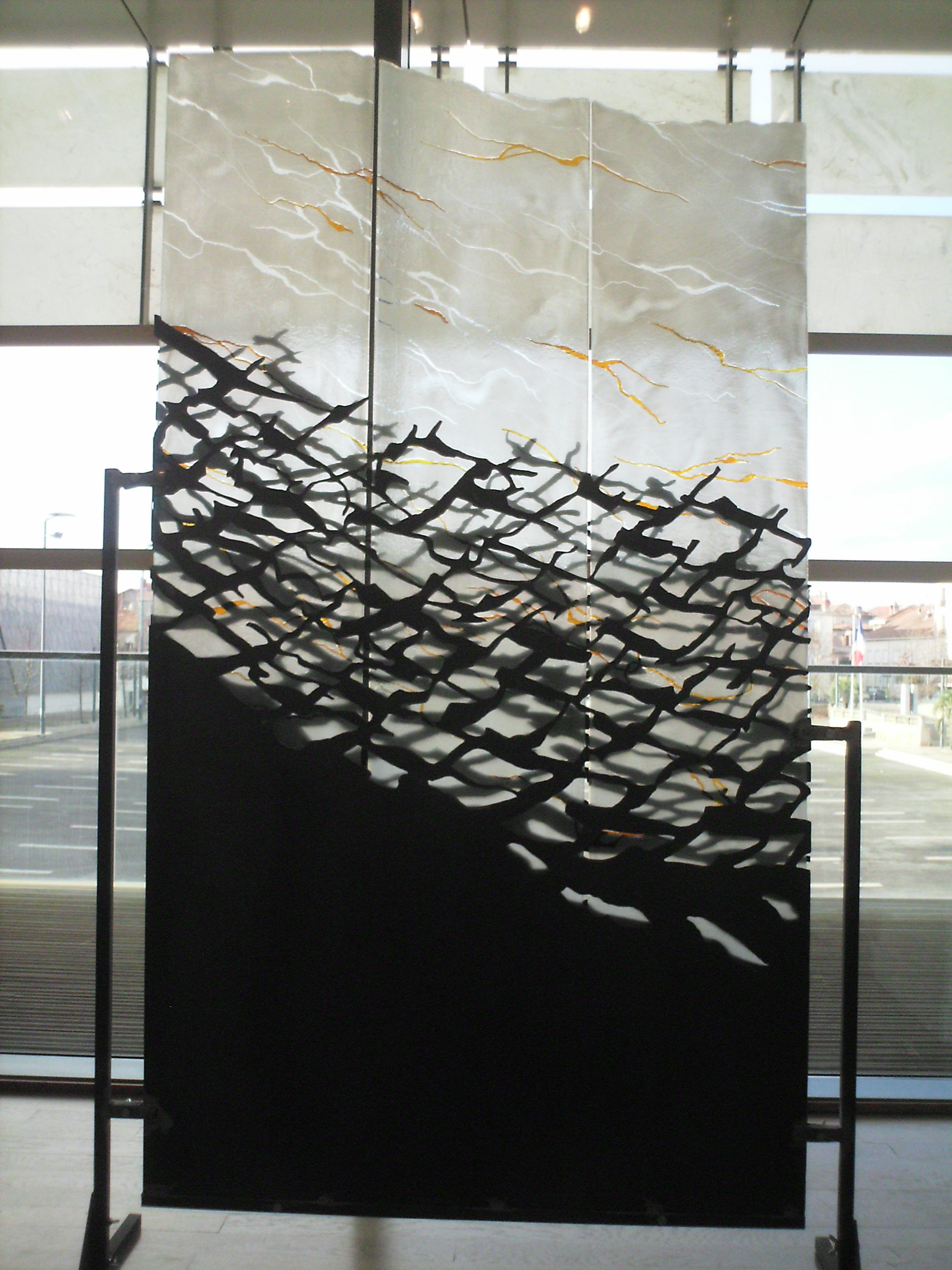
Glass screen with patterns in black, white and gold, resembling surf and seagulls.les couleurs de la mer
sont versées dans le verre
du présent du souvenir
faites-les resurgir

les couleurs de la mer
de l’argent jusqu’au vert
améthyste et saphir
laissez-les reluire

dans ce vers

Christina Egan © 2016


Mother-of-Pearl

The sea is not blue,
no more is the sky:
that is a child’s view,
a picture-book’s lie.

Whenever the rainbow
touches the sea,
it sprinkles a faint glow
of eternity.

From indigo ink,
to raspberry pink,
with peppermint green
and gold-leaf between…

The sea is not blue,
or grey of some hue:
the sea is a swirl
of mother-of-pearl!

Christina Egan © 2016


Photograph: ‘Rhizome’. Sculpture by Laurence Bourgeois (Lô).
Verse pattern of French poem after Jean-Yves Léopold (J. Y. L.).

The Dittany of Crete

The Dittany of Crete

I’ve found the place where red and blue,
where earth and sea and sky all meet;
I’ve even climbed the ashen rock
to pick the dittany of Crete:

to weave a spell about your eyes,
to wake your smiling silent mouth,
to share with you the flaming light
and heavy flavours of the south.

Christina Egan © 2012

Hanging oblong flowers in bright green with bright pink.


The ‘dittany of Crete’ is a rare wild plant, gathered as a flavouring, medicine, aphrodisiac, or love token. I tried it on Crete in a delicious and wholesome tea!

The red colour in the poem could be the pink and orange surf in the sunset, or the pink and orange beaches of Crete. The sea might be bright blue and then again bright green

Origanum dictamnus.
Photograph:
HelenaH via Wikimedia.

Views of North Sea Islands

Views of North Sea Islands Ansichten von Nordseeinseln

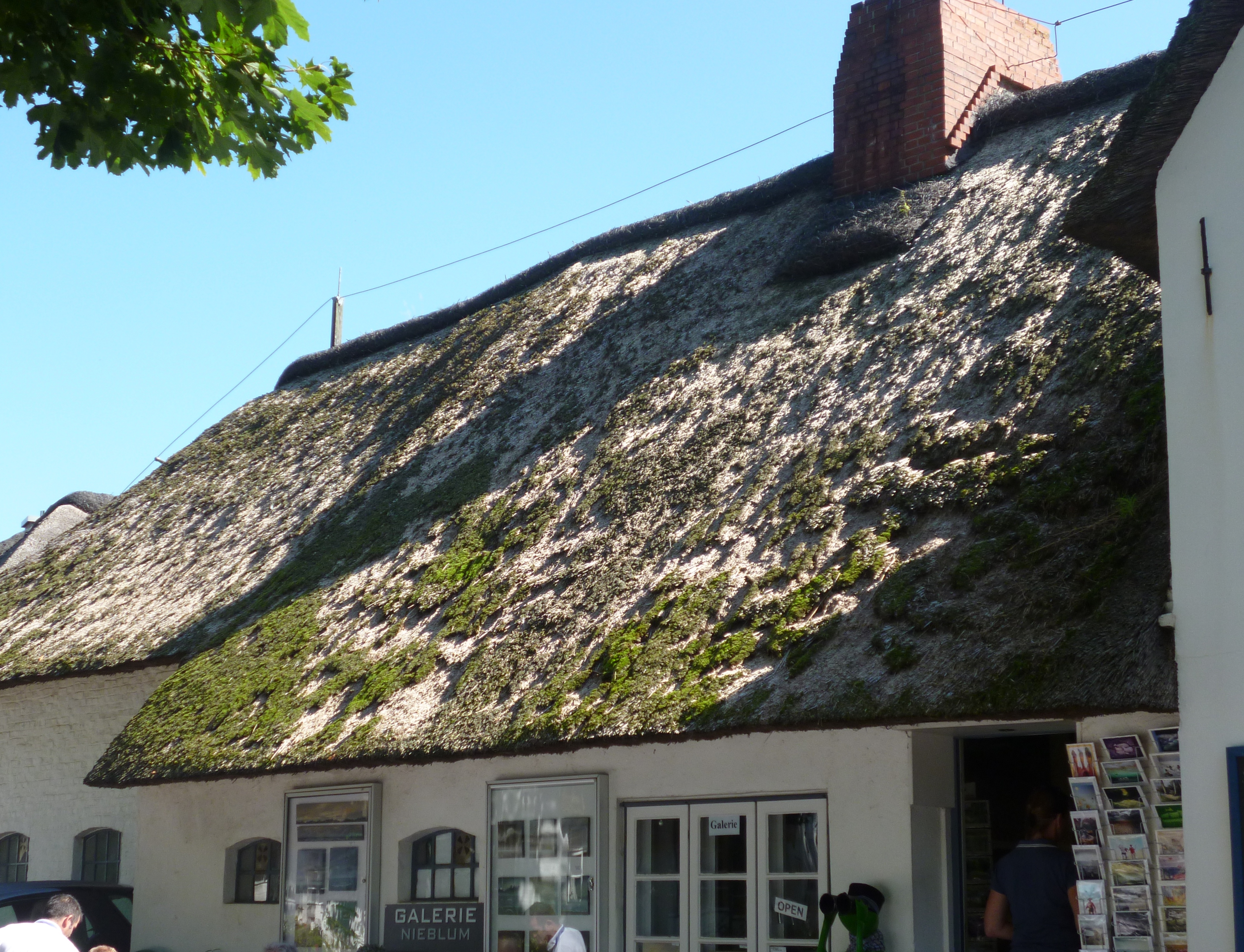
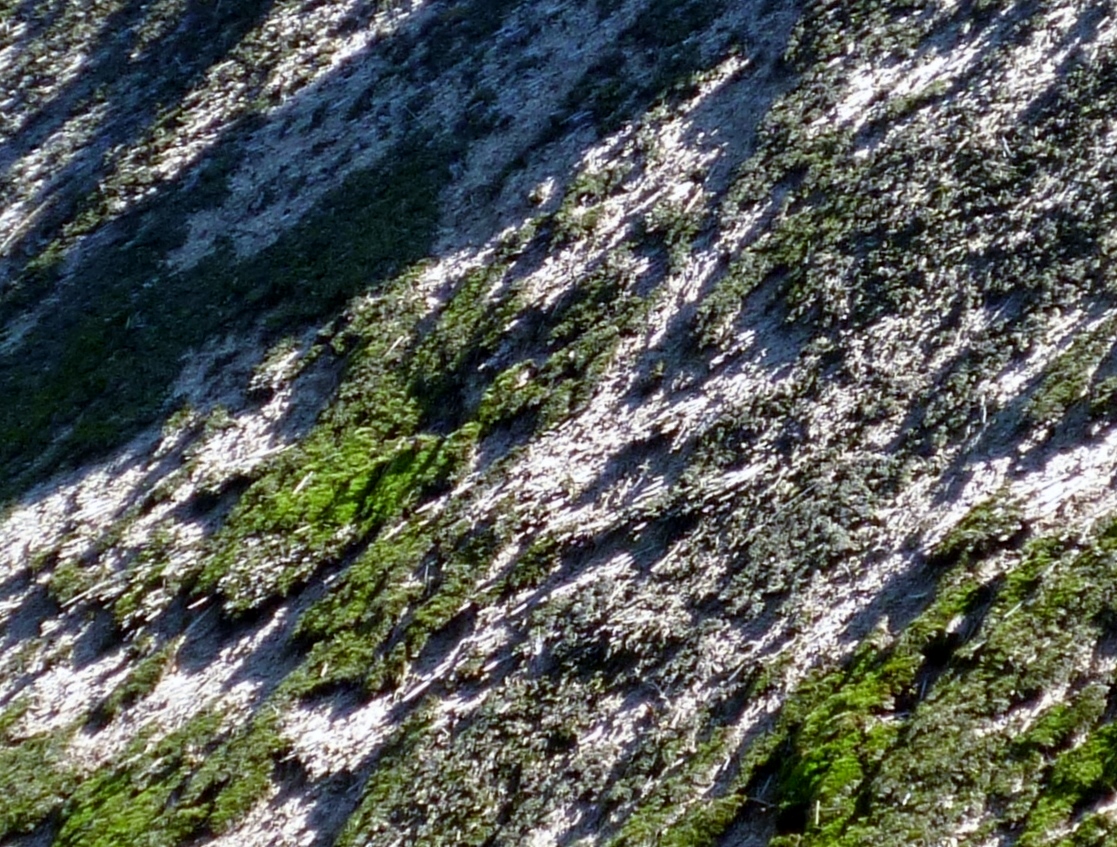
White cottage, steep thatched roof, covered with moss


Thick patches of moss
clustering on rippled thatch
like verdant islands,
like the islands we stand on:
growing in the rough grey sea.

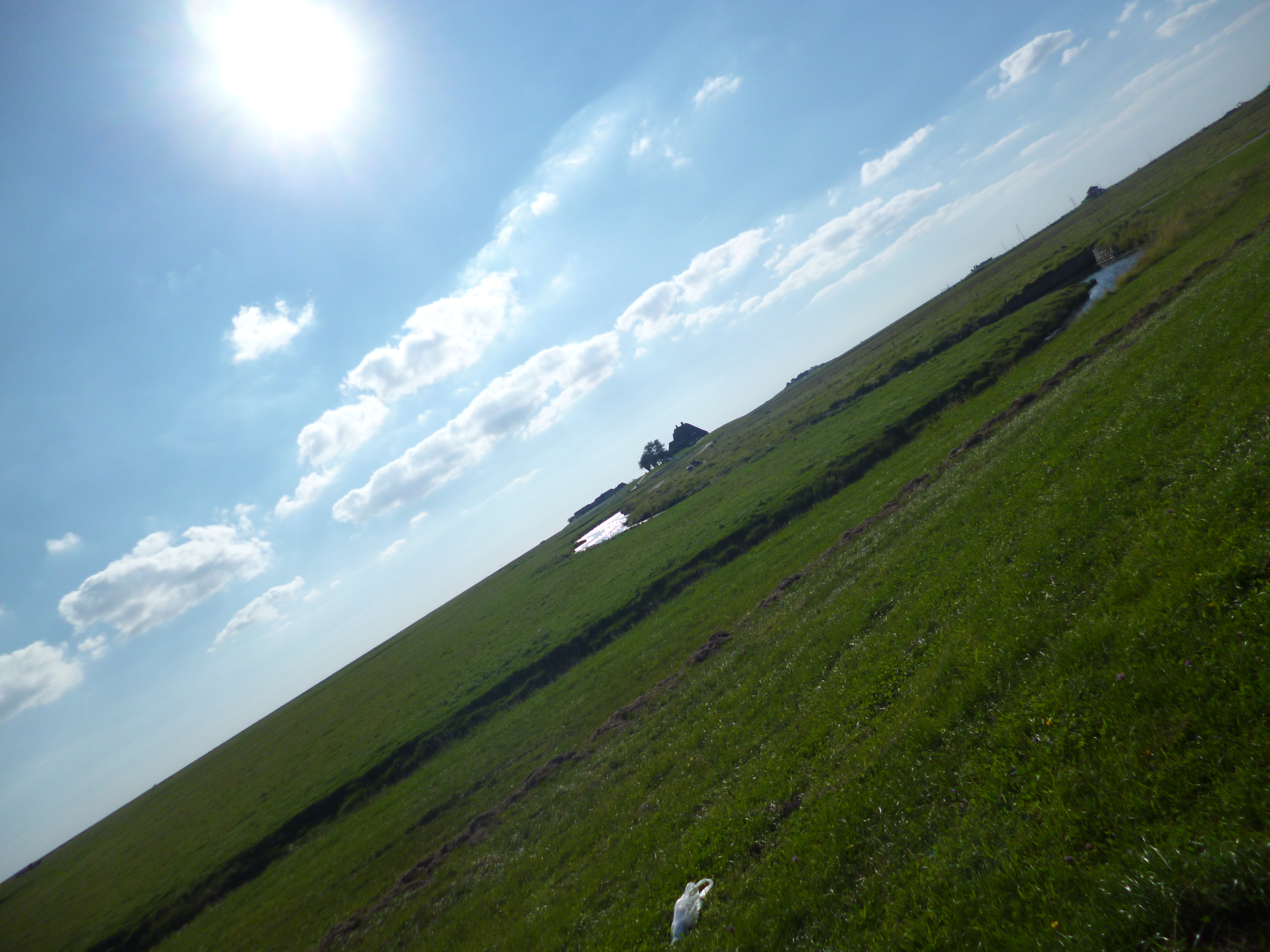
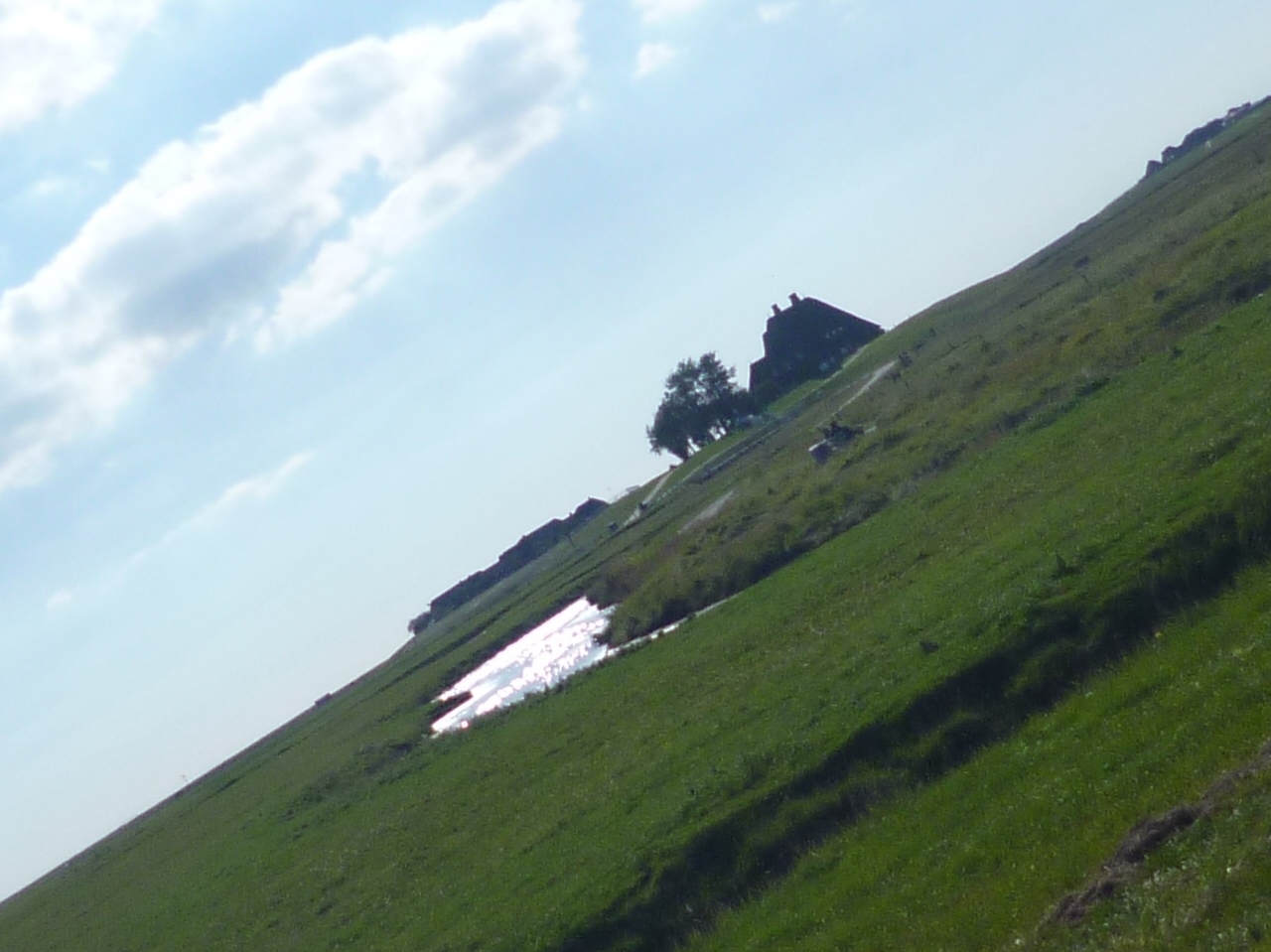
Diagonal horizon, entirely flat between green and blue, with house in middle

Dicke Moospolster
auf dem welligen Reetdach,
gleich grünen Inseln,
gleich diesen Inseln hier,
wachsend im wilden grauen Meer.

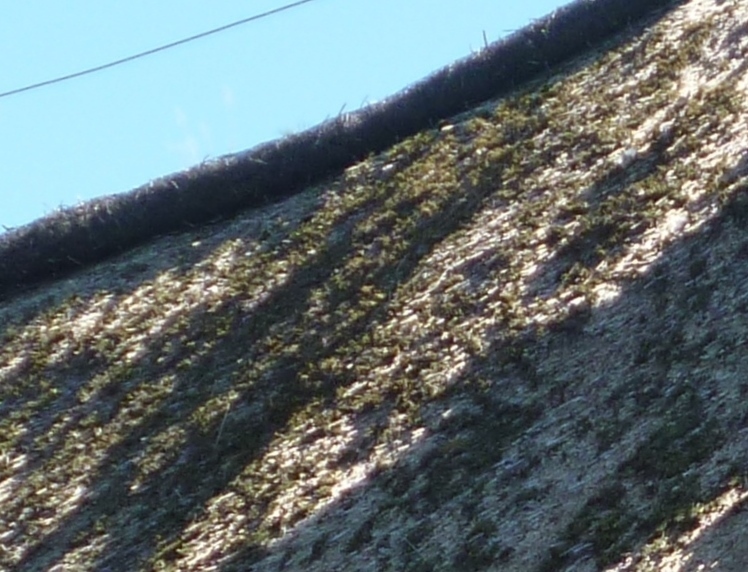
Thatched roof, covered with moss

Red clover blossom:
tiny magenta lanterns
in the green and blue,
feeding on the salty floods
across these flat floating disks.

Diagonal horizon, entirely flat between green and blue, with house in middle


Rosaroter Klee:
winzige Laternen
in all dem Grün und Blau,
genährt von Salzfluten
über schwebende Scheiben hin.

Thatched roof, covered with moss


Huge ships approaching,
or space-ships – or are they hills,
or houses on stilts?
They are houses, hamlets, islets…
a necklace of glass beads.


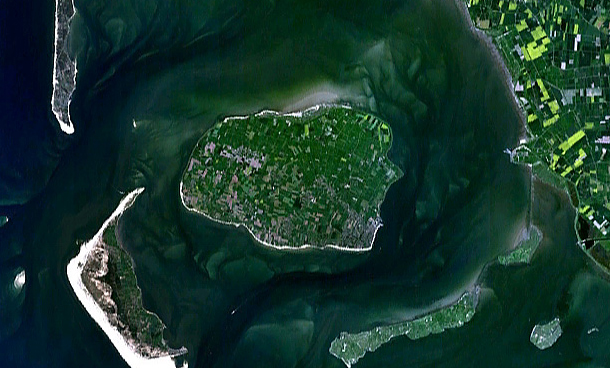
Satellite image of a cluster of small emerald green islands


Da – Riesenschiffe –
Raumschiffe – oder Hügel,
Häuser auf Stelzen?
Häuser, Dörfchen, Inselchen…
eine Glasperlenkette.

English texts: Christina Egan © 2015
German texts: Christina Egan ©2016

Photographs: Christina Egan © 2014
Galerie Nieblum on Föhr; Hallig Hooge.
Satellite picture: NASA via Wikimedia.


From the flat, small, oval island of Föhr, you spot the even flatter, even smaller islands known as ‘Halligen’: their clusters of houses and trees on little dells are visible on the horizon far across the ocean.

The Halligen still get regularly flooded and are occasionally menaced by devastation. All these islands change shape over time, when the forces of wind and water eat away at their edges or add new land.

I wrote about a similar phenomenon observed on the Baltic Sea island of the Darss in Schöpfung (Darß).

The Purple Sea / Das lila Meer

The Purple Sea

I’ve seen the sea turn indigo
and greyish green and brilliant blue:
the wine-red sea that Homer saw
was not a blind man’s dream — it’s true.

I’ve swum in waves of indigo,
I’ve swum in eyes of greenish grey:
the fair-eyed gods that Homer saw
may just for moments cross your way.

Christina Egan © 2015

Das lila Meer

Auch indigo färbt sich das Meer
wie gräulichgrün und leuchtendblau:
Wahr war das Weinrot des Homer –
nicht eines blinden Dichters Schau.

Im Indigo schwamm ich sogar
und auch in Augen von Grüngrau:
Ein göttlich lichtes Augenpaar,
das gibt es manchmal noch genau.

Christina Egan © 2015

The Wine-Dark Sea

Where sky and ocean form a line
of glassy indigo,
the water looks indeed like wine,
a strong and sweet Merlot.

This is the sea that heaped up rocks
and beckoned walls to rise,
the ageless mother of these flocks
of sun-enchanted isles.

This is the sea that brought the fleets
to Carthage and to Troy
on silver-green and bright-blue sheets
which wayward gods deploy.

Christina Egan © 2012

These poems refer to the debate around Homer’s strange colour names: e.g. ‘wine-coloured’ (‘oinops’) and ‘purple’ or ‘maroon’ (‘porphyreos’) for the sea; ‘green-eyed’ (‘glaukopis’) for a person or god with eyes of any fair colour.

While people in antiquity were not yet interested in describing colours and 
despite their sophisticated languages — had only very few words for them, I
believe that on occasion, these can be taken literally.

The first two poems are translations of each other. The colour adjectives oscillate between the languages, and within, just like the sea does…

inselstrand / mondstrand

inselstrand

der sand ist durchsponnen
von tausenden rinnen
wo winzige flüsse
perlmuttern erschimmern

sich sammeln sich teilen
erwärmen erschauern
bald rasten bald eilen
erblassen erblauen

der sand is voll salz
und voll sonne gesogen
das leben verbirgt sich
im atmenden boden

das land ist dem wind
und dem wasser verwoben
die seele der enge
der insel enthoben

Christina Egan © 2014

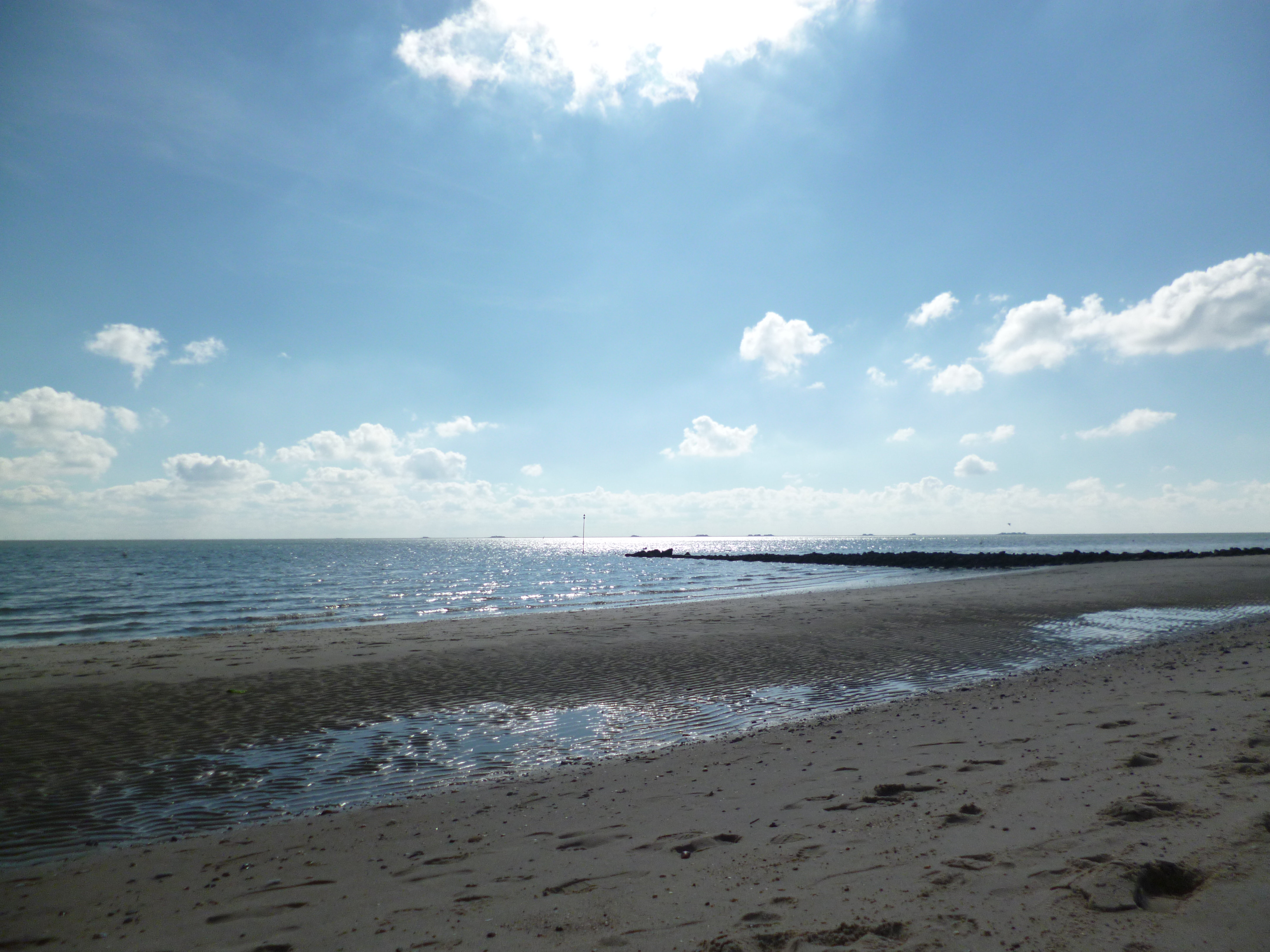
Shallow sandy beach and blue sea water filling lower half of picture, sky-blue sky with a few clouds above. Exudes tranquillity.

Beach of Wyk on Föhr, Germany. Photograph: Christina Egan © 2014.

mondstrand

streckt das meer sich
mondbeglänzt
wacht die erde
nachtentgrenzt

webt die wolke
geisterhaft
um der mondin
zauberkraft

schlägt die schwärze
windbewegt
auf das silber
feingeprägt

pocht die welle
unentwegt
an den sandstrand
sanfterregt

taucht die sohle
heiß und bloß
in die brandung
ruhelos

steigt der schmerz
im raschen blut
fällt die träne
in die flut

steht die hoffnung
fest und fern
hängt das herz
am höchsten stern

Christina Egan © 2014


These lines stem from a visit to two tiny round North Sea
islands, Föhr and Hooge. Besides my walks on the beach —
by day and by night — I was inspired by
Gregor Swoboda’s
paintings
 at Galerie Nieblum.

Find more poems and photos at Views of North Sea Islands
(in German and English).

vermächtnis

vermächtnis

und wieder dünen. wieder hohes gras.
und meer und himmel hier mit urgewalt.
und wieder du in deiner wohlgestalt.
und mein verlangen sanft und ohne maß.

ich tauch in deine lichten augen ein…
das meer entweicht. es war nur wellenschaum.
der tag verbleicht. du warst ein sommertraum.
ich bin allein am strand. ich bin allein.

wie mars in seinem kupferfarbnen glanz
entsteigt dem wall des kiefernwalds dein bild.
die brandung klopft. und klopft. der boden quillt.
ich kröne dich mit meiner verse kranz.

Christina Egan © 2015

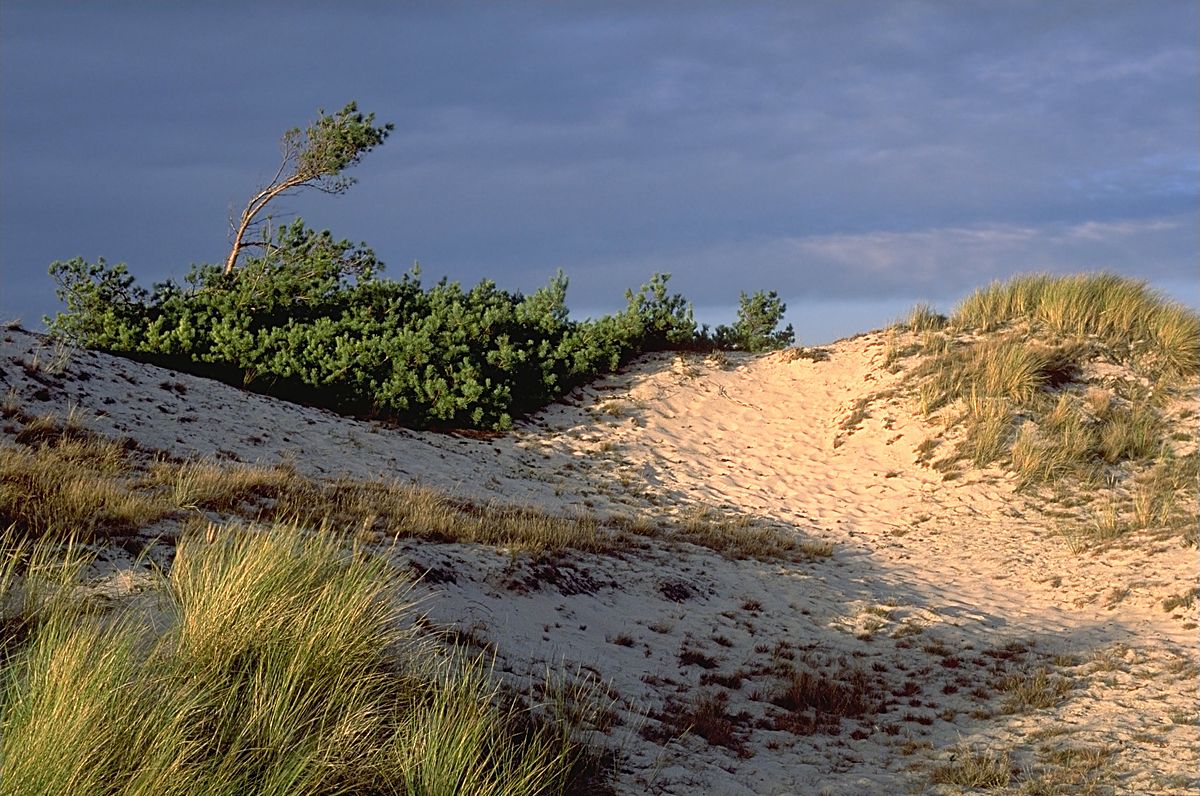
Golden dune, green grass and shrubs, deep-blue sky.


This is my poem of the year 2015! It is, as the title states, my Bequest.

Like many other poems, it was inspired by a holiday on the Darss.


“Dune in Nature reserve Darßer Ort, Baltic Sea”. Photograph: Andreas Tille via Wikimedia Commons.

The Pattern of a Yesterday / Golden Dell

The Pattern of a Yesterday
(Knossos, Crete)

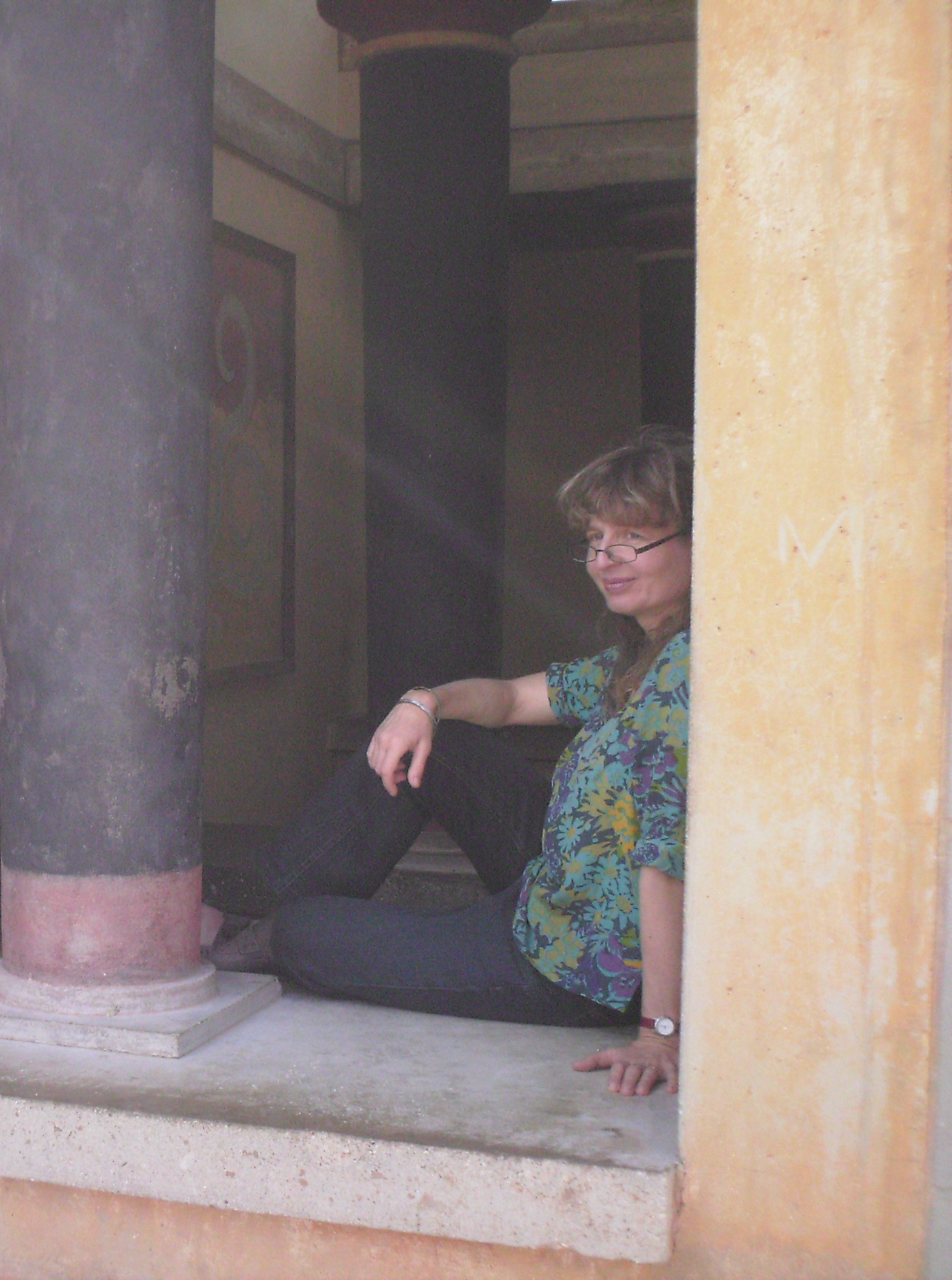
Knossos: woman in very colourful blouse sitting in a reconstructed window of the palace, in front of the same very colourful mural shown in the other photo.

the colossal columns
of the proud pine-trees
that lofty canopy offering shelter
from the flood of sun

the black and white and blood-red pillars
in the serene maze of the palace
those patches in the pattern of a yesterday
which is millennia past

Christina Egan © 2012


Flourishes on a mural, turquoise on luminous red and yello


The same mural in the palace
at Knossos, Crete. 
Photograph:
Harrieta171 via Wikimedia.

For German poems about Crete,
go to the cycle Kretische Küste.
For more about Crete, see below!


Golden Dell
(Chania, Crete)

You sip your coffee in the market-square
lapped by a sky and sea which both are blue;
you notice other folk from everywhere
and read this was the Roman forum, too.

You pass a corner with a golden dell:
stairs down and down, a hundred ages’ span…
The layers blur, solidify and swell,
and history unfolds, a dazzling fan.

Christina Egan © 2015


The Minoan civilisation is the oldest urban civilisation in Europe. The royal palace at Knossos, dating back almost 3,500 years, has the first stone street of Europe. Chania on Crete, a city of stone even 5,000 years ago, is one of the oldest continously inhabited European settlements. You look back on 100 and more generations…

My German translation of the first poem is called gesternmuster.

Kretische Küste

Kretische Küste

I.

Vor mir ein grünes Meer, ein roter Strand
und hinter mir die himmelhohe Wand
der Weißen Berge, mit Gesträuch schraffiert,
mit Schluchten aufgeteilt, vom Mond berührt.

Es schwindelt mich, so schroff ist es und schön…
ich möchte mitten ins Gebirge gehn,
als sei es eines Mannes Wohlgestalt
und berge sein Gemüt in jedem Spalt.

II.

Der kupferfarbne Sand wird doch zu Gold,
wo er in steiler Woge niederrollt
und sich mit jenem Brennendblau benetzt,
das kommt und nochmals kommt… und jetzt… und jetzt.

Und Disteln starren in dem dürren Strand,
die plötzlich strahlen wie von Zauberhand,
wenn erster Regen flüchtig niedersteigt
und Brautkleidblüten aus den Blättern treibt!

III.

Wo täglich Himmel sich mit Meer vermählt
und Landes Rand von anderm Strand erzählt,
wo trockne Erde wie der Tagstern loht
von silbriggold bis zu orangerot,

wo noch bei Nacht das Wasser, kaum bewegt,
den Leib in schwerelosem Zauber trägt,
bis in das sanfte Schwarz ein Schweifstern stürzt –
dort laß uns warten auf den milden Herbst.

IV.

Mit riesenhaften grünen Pranken greift
das Meer hinein in den geschützten Kreis
des kleinen Hafens, daß die Mole schäumt
und sich die bunte Schar der Boote bäumt.

Des späten Herbstes erstes Fauchen fährt
in letzte schwere Hitze wie ein Schwert.
Fünftausend Jahre aber ragt die Stadt
ins Element, gelassen, sonnensatt.

Christina Egan © 2014

Flourishes on a mural, turquoise on luminous red and yello

For more poetry and information
on Knossos 
and Chania on Crete
see my English poems
The Pattern of a Yesterday and
Golden Dell.


Frieze in the royal palace at Knossos, Crete.
Photograph: Harrieta171 via Wikimedia.