The Purple Sea / Das lila Meer

The Purple Sea

I’ve seen the sea turn indigo
and greyish green and brilliant blue:
the wine-red sea that Homer saw
was not a blind man’s dream — it’s true.

I’ve swum in waves of indigo,
I’ve swum in eyes of greenish grey:
the fair-eyed gods that Homer saw
may just for moments cross your way.

Christina Egan © 2015

Das lila Meer

Auch indigo färbt sich das Meer
wie gräulichgrün und leuchtendblau:
Wahr war das Weinrot des Homer –
nicht eines blinden Dichters Schau.

Im Indigo schwamm ich sogar
und auch in Augen von Grüngrau:
Ein göttlich lichtes Augenpaar,
das gibt es manchmal noch genau.

Christina Egan © 2015

The Wine-Dark Sea

Where sky and ocean form a line
of glassy indigo,
the water looks indeed like wine,
a strong and sweet Merlot.

This is the sea that heaped up rocks
and beckoned walls to rise,
the ageless mother of these flocks
of sun-enchanted isles.

This is the sea that brought the fleets
to Carthage and to Troy
on silver-green and bright-blue sheets
which wayward gods deploy.

Christina Egan © 2012

These poems refer to the debate around Homer’s strange colour names: e.g. ‘wine-coloured’ (‘oinops’) and ‘purple’ or ‘maroon’ (‘porphyreos’) for the sea; ‘green-eyed’ (‘glaukopis’) for a person or god with eyes of any fair colour.

While people in antiquity were not yet interested in describing colours and 
despite their sophisticated languages — had only very few words for them, I
believe that on occasion, these can be taken literally.

The first two poems are translations of each other. The colour adjectives oscillate between the languages, and within, just like the sea does…

Le vent de la mer se lève

Le vent de la mer se lève
(Alyscamps, Arles)

Tout doux, le vent de la mer se lève
parmi les colonnes à l’aube de l’an,
dans mon esprit réjouissant
ressuscitant mon ancien rêve,
un rêve de tuiles couleurs du couchant,
un rêve de murs couleurs océan.

Le vent se renforce et lève la sève
des hauts platanes le long de la rue,
ces forts piliers du ciel du Midi…
Mais quel tombeau révèle le rêve,
lieu lumineux et réapparu ?
Ô vent de la mer, Ô vent de ma vie !

Christina Egan © 2015

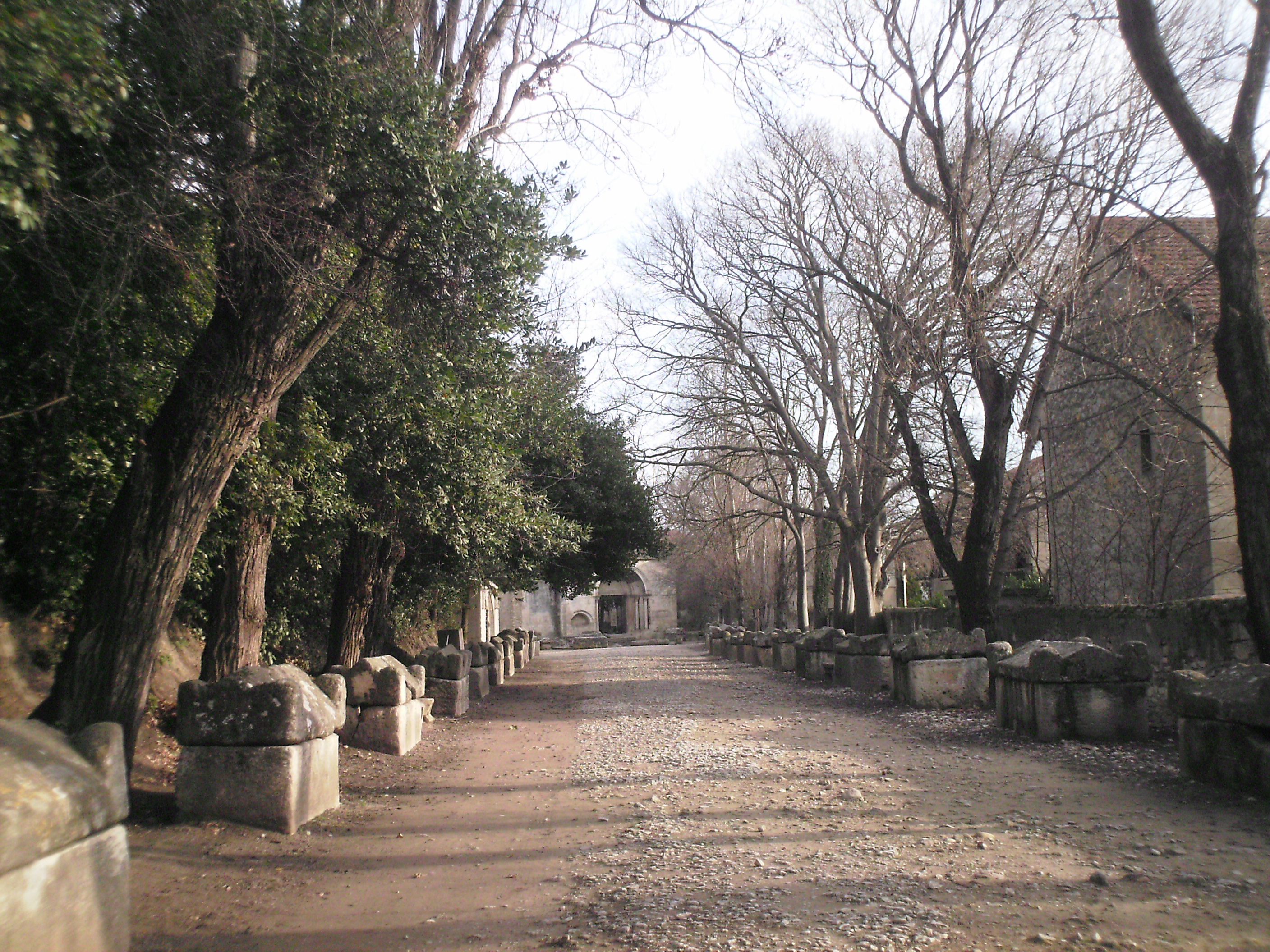
Wide avenue with sarcophagi to the left and right,leading to a mediaeval portal. Winter scene in fair weather, light-brown and light-blue.

Alyscamps, Arles. Photograph:  Christina Egan © 2010


The Wind from the Sea is rising
(Alyscamps, Arles)

The Wind from the Sea is rising, all mild,
between the columns and graves at the dawn
of the year, stirring up in my jubilant mind
my resplendent dream of antiquity,
a dream of tiles resembling the sun,
a dream of walls resembling the sea.

The wind is now swelling and ready to rouse
the sap in the plane-trees along the wide road,
those pillars supporting the sky of the South…
Which tomb may hold my mystery of old,
the luminous place that has just reappeared?
O Wind from the Sea, O wind of my soul!

Christina Egan © 2016

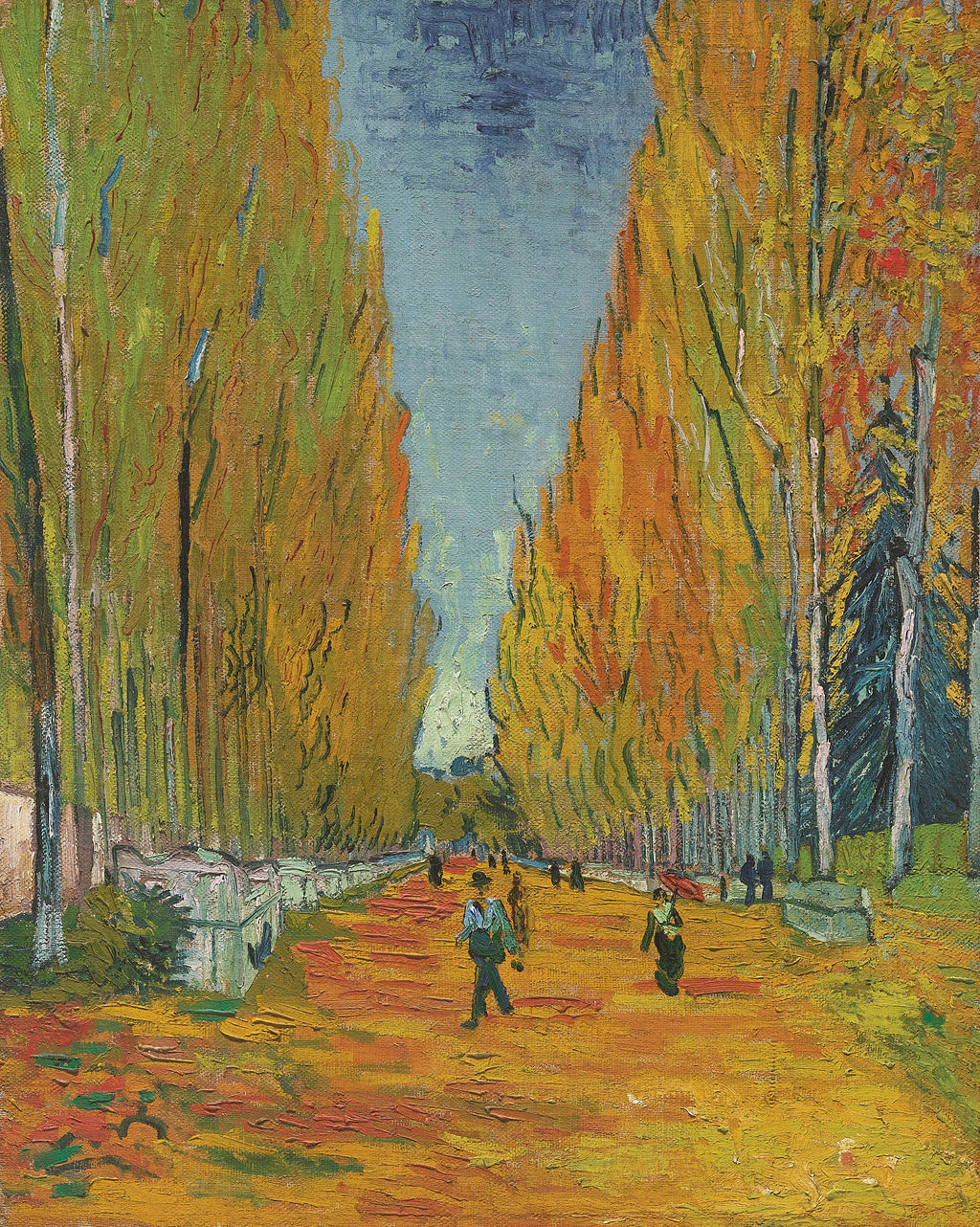
Painting by van Gogh: Avenue with very high trees, with path and foliage in bright orange, sarcophagi and sky in blue.

The Roman cemetery known as the Alyscamps has been immortalised by Paul Gauguin and Vincent van Gogh.

Vincent van Gogh: L’Allée des Alyscamps (1888). Photograph: Public domain, via Wikimedia Commons.

You can read an English and German poem about a Roman road in France at Where Road and River Meet / Überm Fluß . 

Where Road and River Meet

Where Road and River Meet
(Ambrussum, France)

I hold the echo of a thousand feet,
of hob-nailed sandals and of dainty boots;
I hold the echo of a thousand wheels,
of carts and coaches and a thousand hooves.

My inside holds the echo of the waves,
the splashing of the oars, of hands and feet,
the shouts and sighs of children and of slaves:
I am the arch where road and river meet.

I have withstood the floods, withstood the storms;
of once eleven comrades, I’m the last.
I guard the memory with sturdy arms:
I’ll hold your voices, too, when you have passed.

Christina Egan © 2015

Überm Fluß
(Ambrussum, Frankreich)

Den Nachhall halte ich von tausend Schritten,
Sandalen grob und Stiefeln elegant,
den Nachhall auch von tausend Rädern, Ritten,
von Karren und von Kutschen über Land.

Mein Hohlraum widerhallt vom Wellenschlagen,
vom frischen Klatsch von Ruder, Hand und Fuß,
von Seufzer oder Ruf von Kindern, Sklaven:
Ich bin der Brückenbogen überm Fluß.

Ich widerstand den Fluten und den Stürmen;
elf Kameraden einst,nur ich blieb stehn.
Gedenken sammle ich mit starken Armen —
und eure Stimmen im Vorübergehn.

Christina Egan © 2015

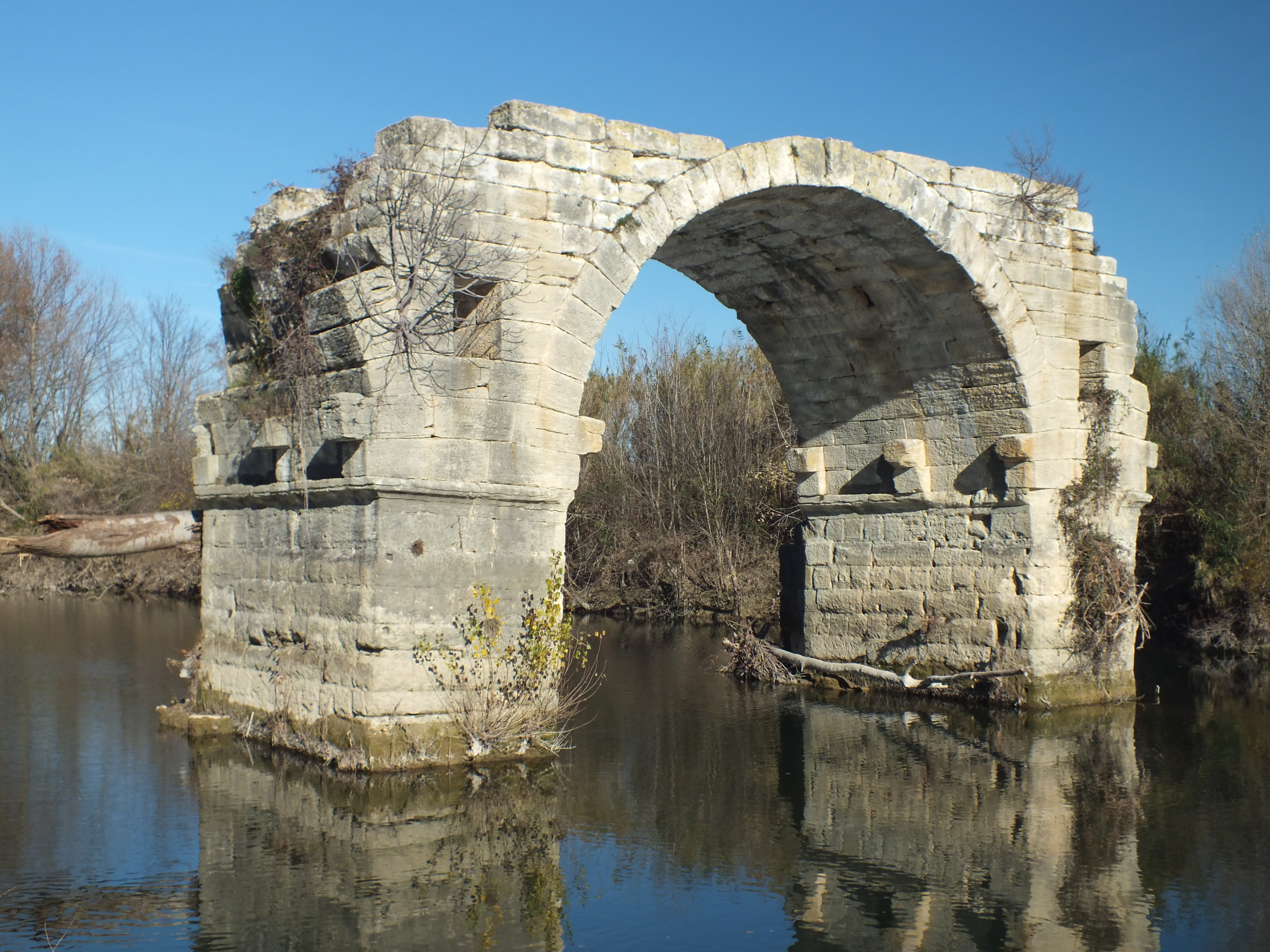
Grey Roman arch on two bridge pillars between blue water and blue sky

The remaining arch of the  Pont Ambroix at Ambrussum, once part of the Via Domitia from Italy through France to Spain.


Photograph: By Clem Rutter, Rochester, Kent, via Wikimedia Commons.

I begin this year’s posts like last years’: with a Roman road !

The Pattern of a Yesterday / Golden Dell

The Pattern of a Yesterday
(Knossos, Crete)

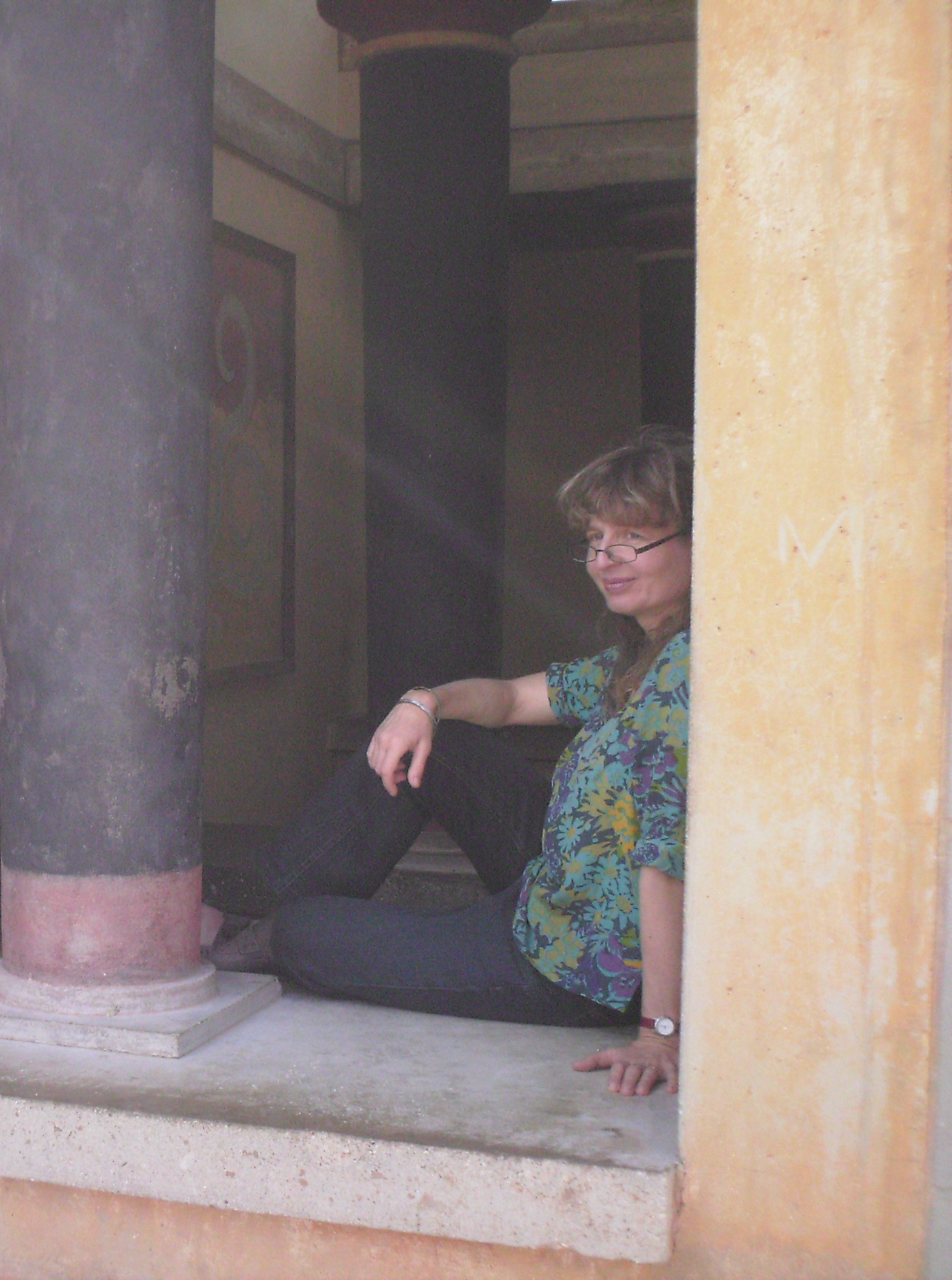
Knossos: woman in very colourful blouse sitting in a reconstructed window of the palace, in front of the same very colourful mural shown in the other photo.

the colossal columns
of the proud pine-trees
that lofty canopy offering shelter
from the flood of sun

the black and white and blood-red pillars
in the serene maze of the palace
those patches in the pattern of a yesterday
which is millennia past

Christina Egan © 2012


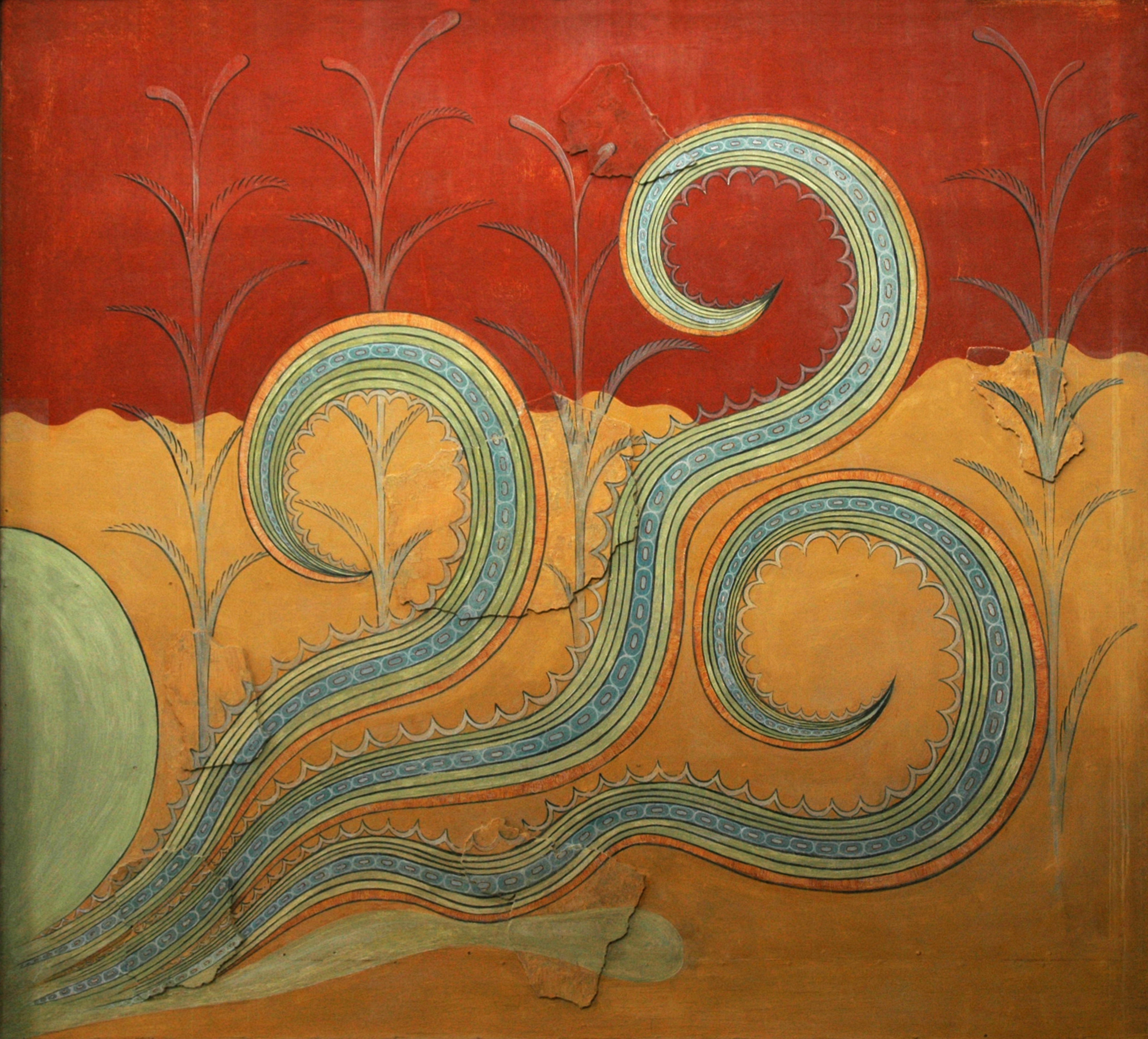
Flourishes on a mural, turquoise on luminous red and yello


The same mural in the palace
at Knossos, Crete. 
Photograph:
Harrieta171 via Wikimedia.

For German poems about Crete,
go to the cycle Kretische Küste.
For more about Crete, see below!


Golden Dell
(Chania, Crete)

You sip your coffee in the market-square
lapped by a sky and sea which both are blue;
you notice other folk from everywhere
and read this was the Roman forum, too.

You pass a corner with a golden dell:
stairs down and down, a hundred ages’ span…
The layers blur, solidify and swell,
and history unfolds, a dazzling fan.

Christina Egan © 2015


The Minoan civilisation is the oldest urban civilisation in Europe. The royal palace at Knossos, dating back almost 3,500 years, has the first stone street of Europe. Chania on Crete, a city of stone even 5,000 years ago, is one of the oldest continously inhabited European settlements. You look back on 100 and more generations…

My German translation of the first poem is called gesternmuster.

Kretische Küste

Kretische Küste

I.

Vor mir ein grünes Meer, ein roter Strand
und hinter mir die himmelhohe Wand
der Weißen Berge, mit Gesträuch schraffiert,
mit Schluchten aufgeteilt, vom Mond berührt.

Es schwindelt mich, so schroff ist es und schön…
ich möchte mitten ins Gebirge gehn,
als sei es eines Mannes Wohlgestalt
und berge sein Gemüt in jedem Spalt.

II.

Der kupferfarbne Sand wird doch zu Gold,
wo er in steiler Woge niederrollt
und sich mit jenem Brennendblau benetzt,
das kommt und nochmals kommt… und jetzt… und jetzt.

Und Disteln starren in dem dürren Strand,
die plötzlich strahlen wie von Zauberhand,
wenn erster Regen flüchtig niedersteigt
und Brautkleidblüten aus den Blättern treibt!

III.

Wo täglich Himmel sich mit Meer vermählt
und Landes Rand von anderm Strand erzählt,
wo trockne Erde wie der Tagstern loht
von silbriggold bis zu orangerot,

wo noch bei Nacht das Wasser, kaum bewegt,
den Leib in schwerelosem Zauber trägt,
bis in das sanfte Schwarz ein Schweifstern stürzt –
dort laß uns warten auf den milden Herbst.

IV.

Mit riesenhaften grünen Pranken greift
das Meer hinein in den geschützten Kreis
des kleinen Hafens, daß die Mole schäumt
und sich die bunte Schar der Boote bäumt.

Des späten Herbstes erstes Fauchen fährt
in letzte schwere Hitze wie ein Schwert.
Fünftausend Jahre aber ragt die Stadt
ins Element, gelassen, sonnensatt.

Christina Egan © 2014

Flourishes on a mural, turquoise on luminous red and yello

For more poetry and information
on Knossos 
and Chania on Crete
see my English poems
The Pattern of a Yesterday and
Golden Dell.


Frieze in the royal palace at Knossos, Crete.
Photograph: Harrieta171 via Wikimedia.

Hieroglyphe

Hieroglyphe

Die goldne Hieroglyphe dieser Locke
ist eine hohe Botschaft der Natur,
ein Angebot vom unbekannten Gotte,–
doch unentziffert schlummert ihre Spur.

So einfach ist die Locke doch zu deuten,
so klar die Kurven, die sie kühn beschreibt,
ein goldner Schlüssel zu versteckten Freuden,–
doch ohne Leser glänzt sie auf und schweigt.

Auf dich hat sie gewartet, jene Strähne,
die die Geschichte so nur einmal schrieb,
auf jenen, der am Strom vorüberkäme
und läse in dem unerhörten Lied.

Christina Egan © 2014

Fragments of giant Egyptian statue with hieroglyphs


Photograph: West Bank of Thebes (Luxor)
Christina Egan © 2013

A woman's throat with a large butterfly pendant in silver and purple and a long blond ringlet on her dark garment.The poet claims that even a curl may be a sacred character to be deciphered, a key to another person’s mind.

Yet, it is rare that we notice or understand each other… and the next moment, it may be too late.

Meine blaue Mauer

Meine blaue Mauer

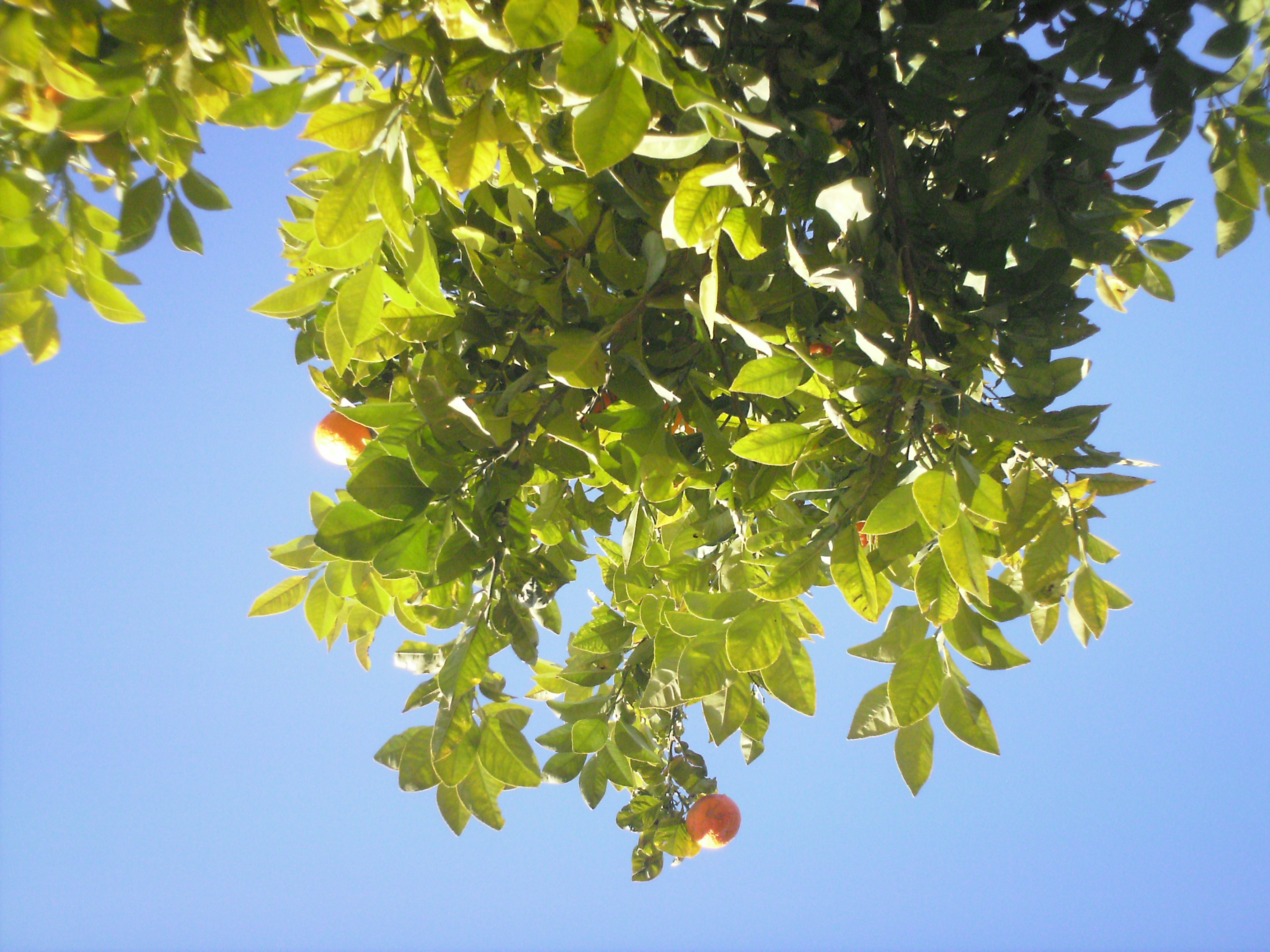
Oranges hanging from branches against blue sky

Ich tränke die Terrassenwand
mit Mittelmeeresblau,
denn auch im Goldorangenland
regiert zuweilen Grau.

Ich pflanze einen Ölbaumzweig
in einen irdnen Topf,
als säße ich im Römerreich
mit meinem prallen Pfropf. Fragment of a plate; fine red pottery impressed with two doves

Ich krümele den Thymian,
kaum samengroßes Laub:
Sein wilder Duft steigt himmelan –
Mein südlich süßes Kraut!

Ich leg’ ein rotes Scherbenrund
in meine Marmorhand,
als hielte der gemeine Fund
Jahrtausende gebannt…

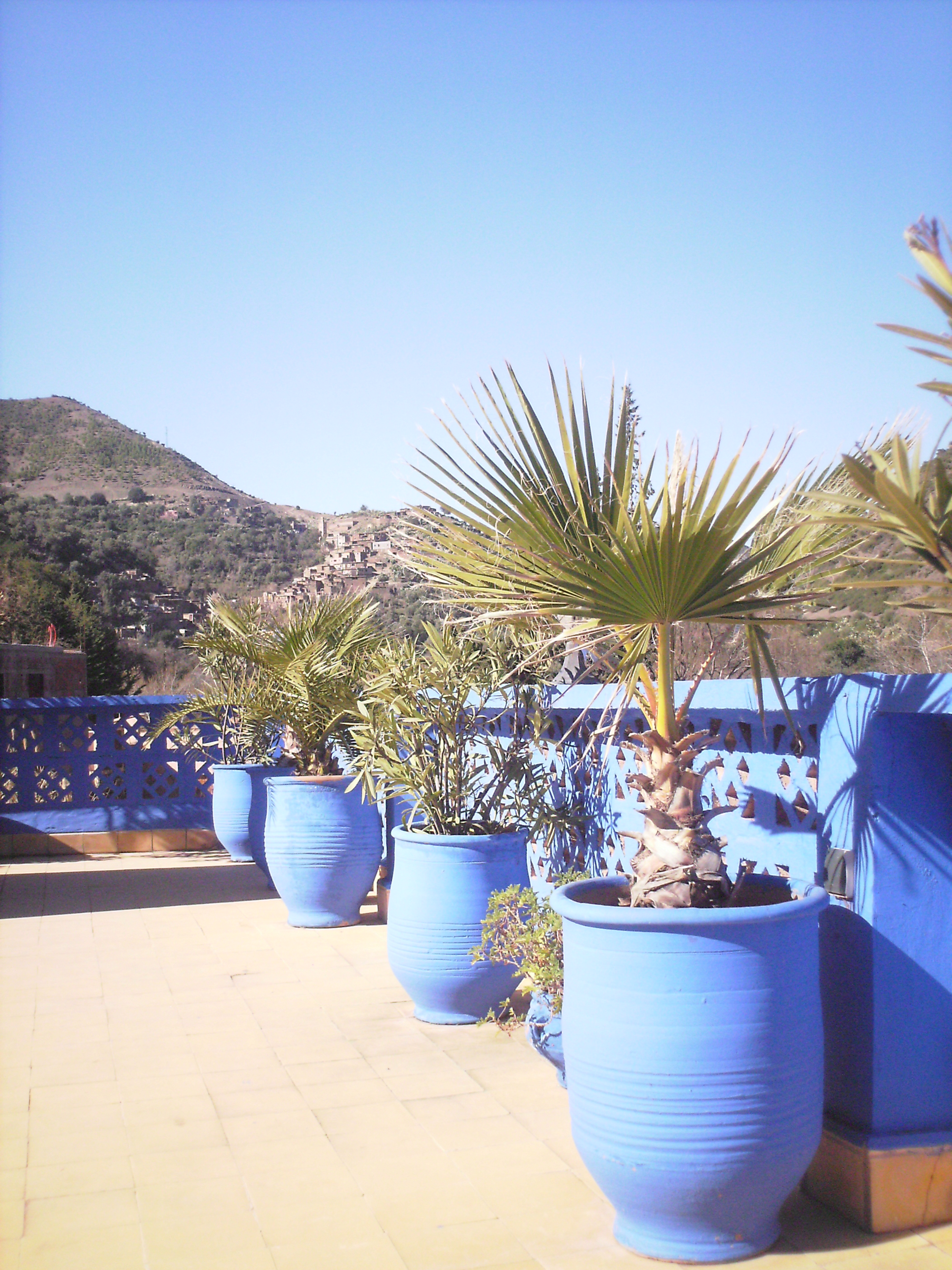
Roof terrace with pots of little palm-trees and fence all painted in striking bright blue.Auf meiner Gartenmauer schau’
ich Städte bunt erblühn
und wachsen in das satte Blau
und wanken und verglühn.

Ich ritze meinen Namen stolz
dem Putz ein auf Latein;
ich warte aufs Olivenholz
und schlürfe Purpurwein…

Christina Egan © 2014

Photographs: Morocco
Christina Egan © 2012

Photo of Late Roman shard from Egypt used
with kind permission of the British Museum.

Enamel

Casket covered in gold and inlaid with blue and green enamel figures.

Enamel

Dreams
made of enamel,
panels in peacock plumage,
in crimson and ivory patches,
in frames of gold.

Dreams
poured into pictures,
of wide-eyed faces,
of white-winged boats,
of bursting baskets.

Dreams
fished out of night,
luminous, solid,
age-old, valid,
with veins of gold.

Christina Egan © 2014

Image: Casket from court of Aquitaine (around 1180). With kind permission of the British Museum.  http://www.britishmuseum.org/explore/highlights/highlight_objects/pe_mla/e/enamel_casket.aspx

Anaconda, Anaconda

Anaconda, Anaconda

Slowly slides the anaconda,
through the thicket, through the grass,
undulating, scintillating,
like a rope of murky glass,
ochre and opaque and glinting,
like a river without name,
or a mountain-range in motion,
powered by a hidden flame.

Such a swerving, sparkling serpent
is the history of man,
each millennium of suffering
but a patch or pattern’s span
and each life of toil and longing
but a gold-rimmed muddy scale,
heaving, weaving through the jungle,
seeing neither head nor tail.

Christina Egan © 2015

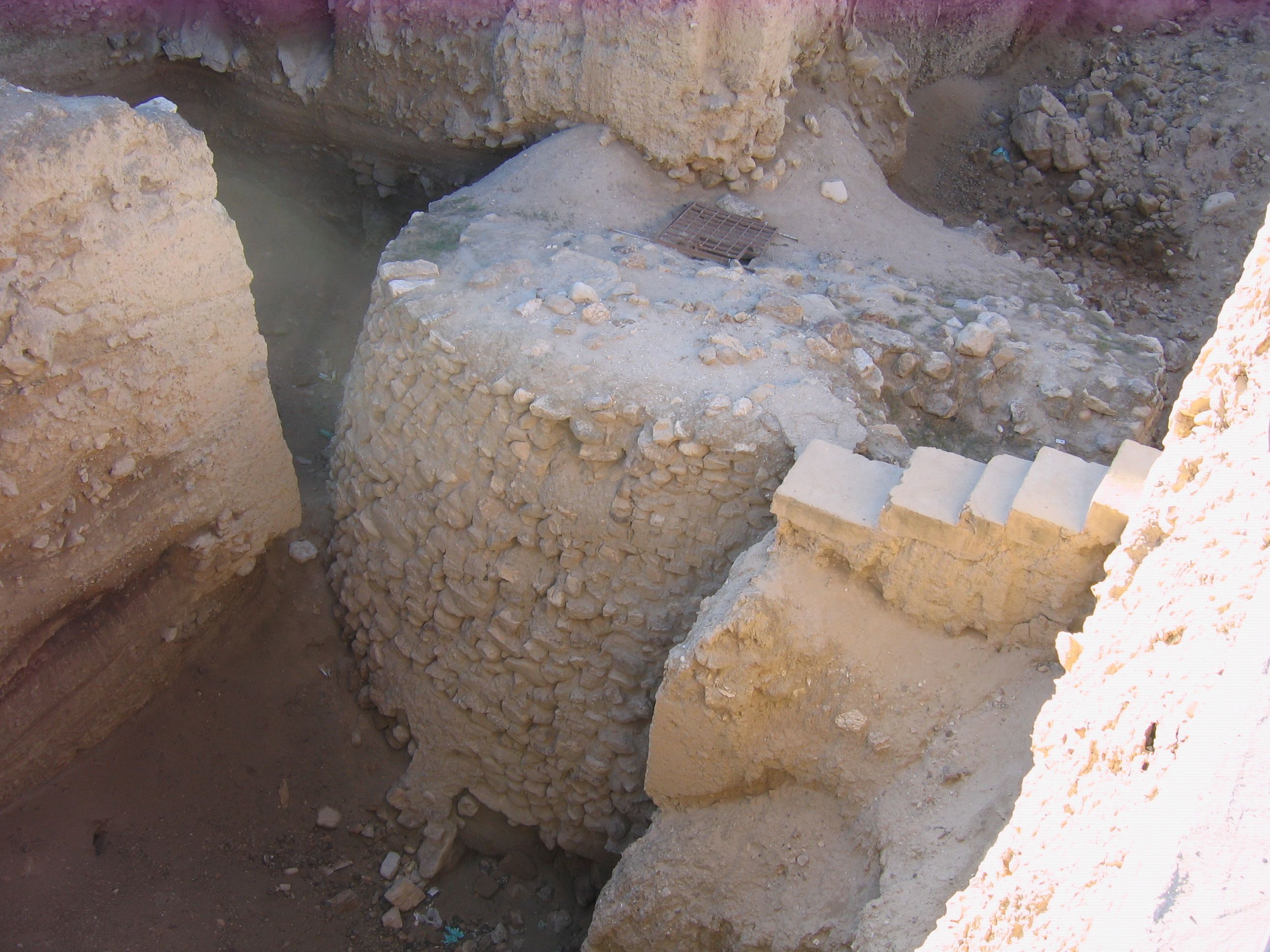
Massive stone walls piled upon each other

The Tower of Jericho, around 9,000 years old. Photograph:
Reinhard Dietrich (Own work), via Wikimedia Commons
.

SEMPER AMEMUS

SEMPER AMEMUS
 
Ein großer lila Schmetterling
an einem feinen Silberband:
ein einfallsreiches Ornament
von unbekannter Künstlerhand,

das man vielleicht den Mauerresten
des Vorstadthauses einst entringt,
in sorgsam aufgereihten Kästen
dem Publikum zur Ansicht bringt.

Bis dahin werden Bild und Name
der Trägerin verloren sein;
nur ein verbeulter Brillenrahmen
wirft einen warmen Kupferschein,

und, rätselhaft, ein Silberring
trägt eine Inschrift auf Latein.
Die Zeitung schreibt: Der Schmetterling
mag Zeugnis einer Liebe sein.
 
Christina Egan © 2015

A woman's throat with a large butterfly pendant in silver and purple and a long blond ringlet on her dark garment.This story takes place in the future: when we are the past  unearthed, marvelled at, mused about. The inscription on the ring – which is a real item from the year 2000 AD – means ‘May we always love each other’.