Heimat gibt es doppelt

Heimat gibt es doppelt

Heimat gibt es doppelt: Heimat deiner Jugend,
Kopfsteinpflaster unter den karierten Schuhn;
anderswo vielleicht dann Heimat deines Herzens,
wo gewundne unsichtbare Wurzeln ruhn,

wo die Glocken süß und voll Verheißung beben
wie die frühen fliederfarbnen Azaleen,
wo die vielen flachen blassen Hausfassaden
lächeln, wenn die Wolkenschatten weiterwehn….

wo vor himmelstürmend hohen Kirchentürmen
glutrot oder sonnengelb die Blüten sprühn
und der Teppich der Jahrhunderte darunter
ruft, um deinen Lebensstrang hineinzuziehn.

Christina Egan © 2010

Another love letter to my favourite city, Cologne!

In Marrakesch (Einst fiel ein Regenbogen)

In Marrakesch

Einst fiel ein Regenbogen auf die Wüste
zersplitterte in funkelnde Oasen
in Perlen Spiegel abertausend Tücher
in Brunnen Palmen abertausend Rosen

Zum Regenbogen wird der Horizont
zum schwarzen Drachenkamm das Hochgebirg
und über kühnen Türmen hängt der Mond
wenn Dunkelheit das Mauerrund umwirbt

Und immer Hupen Räder Rufen Reden
Laternen Tänzerinnen wie zum Fest
Dies ist die Stadt wo jede Nacht das Leben
ein Feuerwerk ist: Dies ist Marrakesch!

Christina Egan © 2012

There is a longer version of this poem, as lyrics for a love song, for once a happy one…

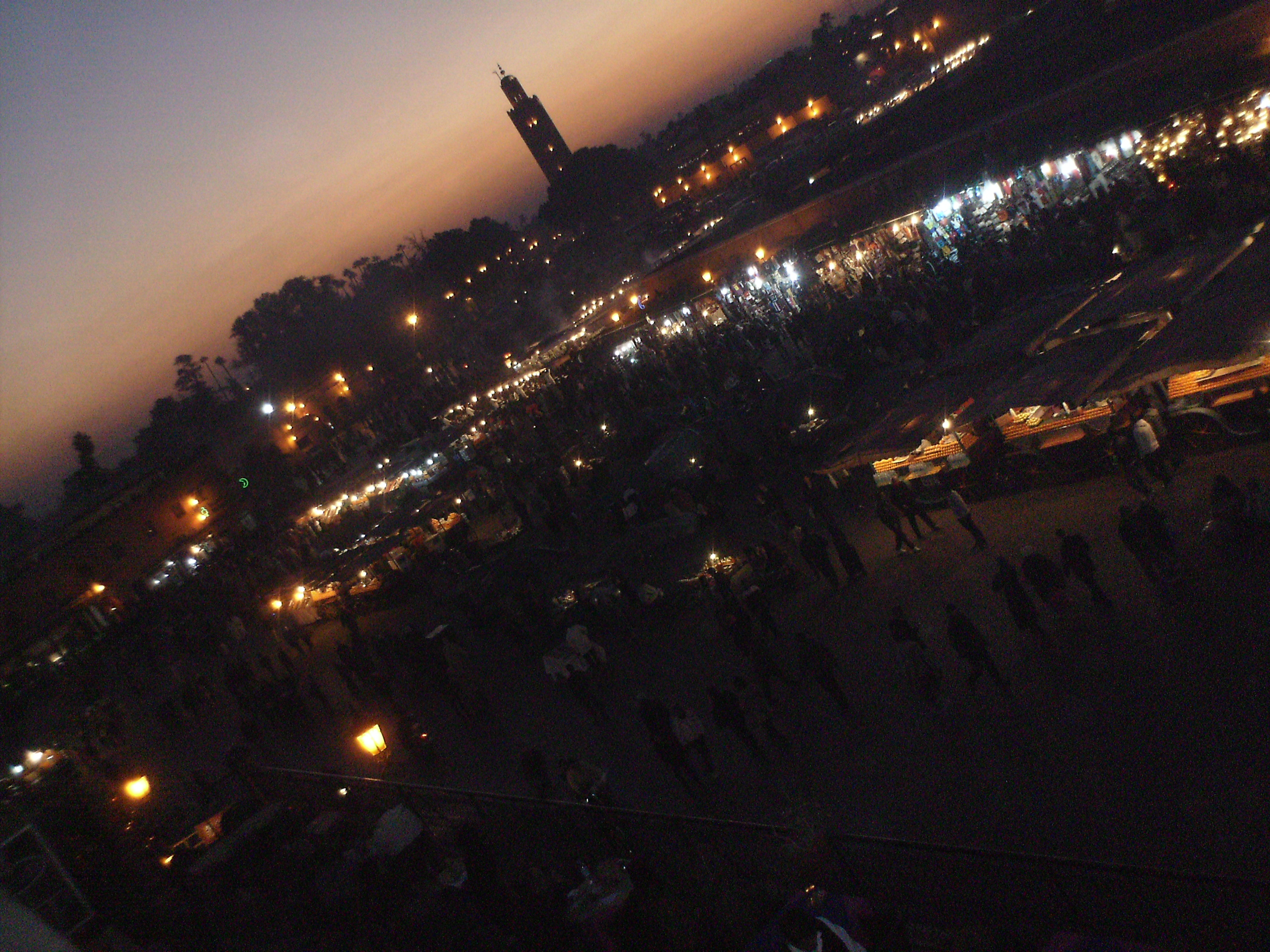
This text may work in a translation software. You can read an English poem about Marrakesh at Winter Sunrise in Morocco.Vast square by night, illuminated by lamps in market stalls, with the sunset along the horizon and a massive minaret showing. The Square of the Dead is incidentally the most lively place on the planet. You must visit it after dusk to get the full experience. Nothing prepares you for Marrakesh!

Photograph: Square of the Dead, Marrakesh, Morocco. Christina Egan © 2012

Winter Views from the Bus

Winter Views from the Bus

*

Pink watering cans
lying flat in the drizzle,
dreaming undisturbed.

*

The yellow front door
in the long row of houses:
It stands out. It smiles.

*

The moon, veiled in mist,
floats in the darkness above
the bright white clockface.

*

Christina Egan © 2012

I was looking at the clocks of St Pancras Station at
King’s Cross, but you could equally observe Big Ben.

There is no ‘London fog’ any more since coal fires were
outlawed — 
yet there are still a lot of mist and fumes…

In northern countries, there is very little colour in winter,
so you need to look out for splinters of colour and rejoice!

When Webs of Steel / Von stählernen Waben

When Webs of Steel

When webs of steel and walls of glass
confine you to a square of grass –
stand still and feel your sap pulsate:
You have a face. You have a fate.

When no one listens, no one knows you,
when no one loves you or else shows you,
take a deep breath – take two – take cheer:
I know, across the seas. I’m here.

Christina Egan © 2009

Von stählernen Waben

Von stählernen Waben und gläsernen Wänden
beschränkt auf ein spärliches gräsernes Eck,
steh’ stille und spüre dein Blut in den Händen:
Du hast ein Gesicht; und du hast ein Geschick.

Will keiner dich kennen, verstehen und lieben,
gibt keiner verborgene Neigungen her,
hol’ Atem  hol’ Atem und freudich am Leben:
Ich weiß es ja, bin ja bei dir übers Meer!

Christina Egan © 2015

In these lines, the anonymous and monotonous modern life described in Amidst the rush / Schrumpft die Welt and höhlenmenschen / cavemen
is overcome: whenever individuals become aware of themselves — and appreciate each other — as unique personalities.

This poem may be declaring love or expressing affection between family members or close friends.

höhlenmenschen / cavemen

höhlenmenschen

die treppe rollt
hinab hinab
die u-bahn grollt
fährt ein fährt ab

der tunnel biegt sich
durch die nacht
der aufzug hebt sich
aus dem schacht

die masse schiebt sich
durch die schlucht
ein wabern webt sich
in die luft

ein sonnenstrahl
blitzt auf vom glas
ein vogelschwarm
stiebt auf vom gras

der rest ist schatten
stahl und stein
dies ist die stadt
tritt ein tritt ein

Christina Egan © 2015

cavemen

the staircase bores
into the ground
the tube train roars
goes round and round

the tunnel bends
through rock through black
the lift ascends
the narrow gap

the masses heave
through deep ravines
fumes waft and weave
through all these streams

a glint of sun
reflects off glass
a pigeon swarm
explodes from grass

the rest is shadow
steel and stone
this is the city
welcome home

Christina Egan © 2015


This poem — created in parallel in both languages — questions the notion of progress by observing its epitome, the world city, with its underground tunnels and dark gorges between skyscapers.

You can read more laments about the strain of our urban environment in the previous post, Amidst the rush / Schrumpft die Welt, and find some relief in When Webs of Steel / Von stählernen Waben.

Amidst the Rush / Schrumpft die Welt

Amidst the Rush

Amidst the rush, the silent crowds,
the glaring lamps, the blaring sounds,
I sink into a narrow seat,
a circling thought, a fleeting sleep…

Christina Egan © 2015

— 

Give me Two Minutes in the Sun

Give me two minutes in the sun,
give me two minutes in the breeze,
above the roofs, above the trees,
above the dust, above the din –
Give me five yards to stretch and spin,
give me a bench to look and breathe
before I must descend again –
Give me two minutes in the sun!

Christina Egan © 2015

Schrumpft die Welt

Hängt man vor dem Bildschirm
wie im Schattenreich,
wird das Auge müde
und der Rücken steif,

sieht man von der Weltstadt
eine Backsteinwand
und vom Erdenrunde
einen Rasenrand,

schrumpft die Welt zum Rechteck,
klickt man hin und her,
werden Leib und Seele
rastlos oder schwer…

Streift ein Strahl dein Fenster,
stürzt ins müde Aug –
Pflück den Blick des Himmels,
pflück den Tag und saug!

Christina Egan © 2015

By contrast to the previous post, On the Volcano’s Rim, which evokes an extraordinary experience at an exotic place, these poems describe the most mundane and repetitive of actions: commuting in a big city, working in a modern building, typing on a computer…

Schrumpft die Welt, or Shrinks the World, shows how, squeezed in front of a screen for hours, a person may only feel alive for one moment — when a ray of sunshine brushes his or her desk…

This criticism of contemporary life continues in höhlenmenschen / cavemen, where the tunnels and canyons of a world city resemble the rock dwellings of our distant forbears.

Real dreams

Real dreams

The saxophone blows golden loops
of grief into the golden air…
Amongst the crowd, I am alone –
my life is cracked beyond repair.

The saxophone, the sinking sun
release a web of golden streams…
Not even memories are mine
but only memories of dreams.

The bus arrives and carries me
away from unrhymed elegies.
Not even real dreams are mine
but only dreams of memories.

Christina Egan © 2014

An der breiten Straße / By the Highway

An der breiten Straße

In des Stadttors Schatten steh’ ich,
Wo die Straße sich entrollt:
Und die Stadt ist nicht von Marmor
Und das Pflaster nicht von Gold.

An der breiten Straße sitz’ ich
Eine Stunde und ein Jahr:
Und ich träume, und ich hoffe,
Und ich warte immerdar.

Händler fahren ihre Waren,
Pilger ziehen aus und ein,
Gräber reihen sich allmählich:
Und ich werde selbst zu Stein.

Eines Nachts verkünden Sterne:
Gehe aus und such’ dein Glück!
Eines Tages bringst du’s hierher,
Denn die Stadt ruft dich zurück.

Christina Egan © 2015

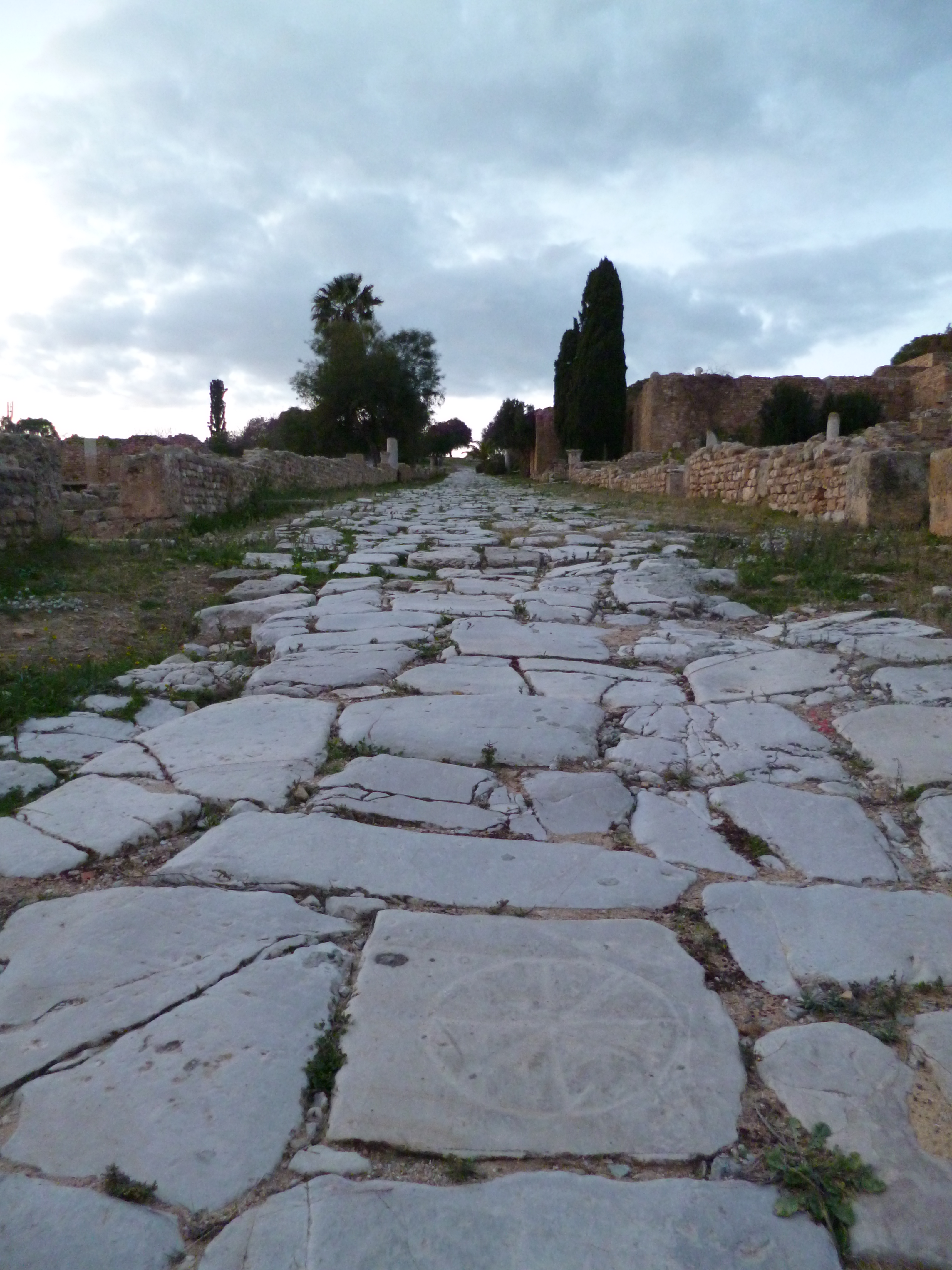
Straight Roman road with ruins and trees to the left and right, in the dusk

Roman road in Carthage, Tunisia.
Photograph: Christina Egan © 2014

By the Highway

In the city gate I’m standing,
Where the outbound road‘s unrolled:
And the city’s not of marble
And the pavement not of gold.

By the highway I am sitting,
First an hour, then a year:
And I’m dreaming, and I’m hoping,
And I’m waiting, sitting here.

Merchants cart their goods to market,
Pilgrims visit and go home,
Tombs line up along the highway:
Slowly, I, too, turn to stone.

Yet one night some stars announce it:
Seek your luck now, seek your track!
And one day bring back your luck here,
When the city calls you back.

Christina Egan © 2015

This poem is timeless. A similar song is part of my play The Bricks of Ur, which is set 4,000 years ago. Another story from a highway outside a Roman city is Quo vadis?.View of Roman Cologne: a large neat grid of buildings with red tiles, located on flat land by a wide river“Roman Cologne, reconstruction” by Nicolas von Kospoth via Wikimedia.

This poem or song was inspired by ancient Roman tombs along Severinstraße, the straight road leading southwards out of Cologne, Germany (left in the picture). Artistic impressions of a Cologne city gate and a highway lined by tombs are online on p. 48 and p. 28-29 of Römer Straßen Köln. When I wrote the poem, I did not know that at times, Severinstraße was known as “Lata platea” or “Breite Straße” (“Broadway”)!

Postscriptum:  This was my first post ever! Roman roads and Cologne are two of my favourite subjects; so you can link to the texts covering them directly.