Ich behaupte das Dach über Dächern

Ich behaupte das Dach über Dächern

I.

Ich behaupte das Dach über Dächern
und Wipfeln und Kuppeln der Stadt,
im sonnengeladenen Himmel
ein lebensgeladenes Blatt!

Eine Fahne in sattesten Farben,
ein Winken: „Ich bin! Ich bin hier!“
Mein Herz reißt sich los aus dem Leibe
und fliegt über Meere zu dir.

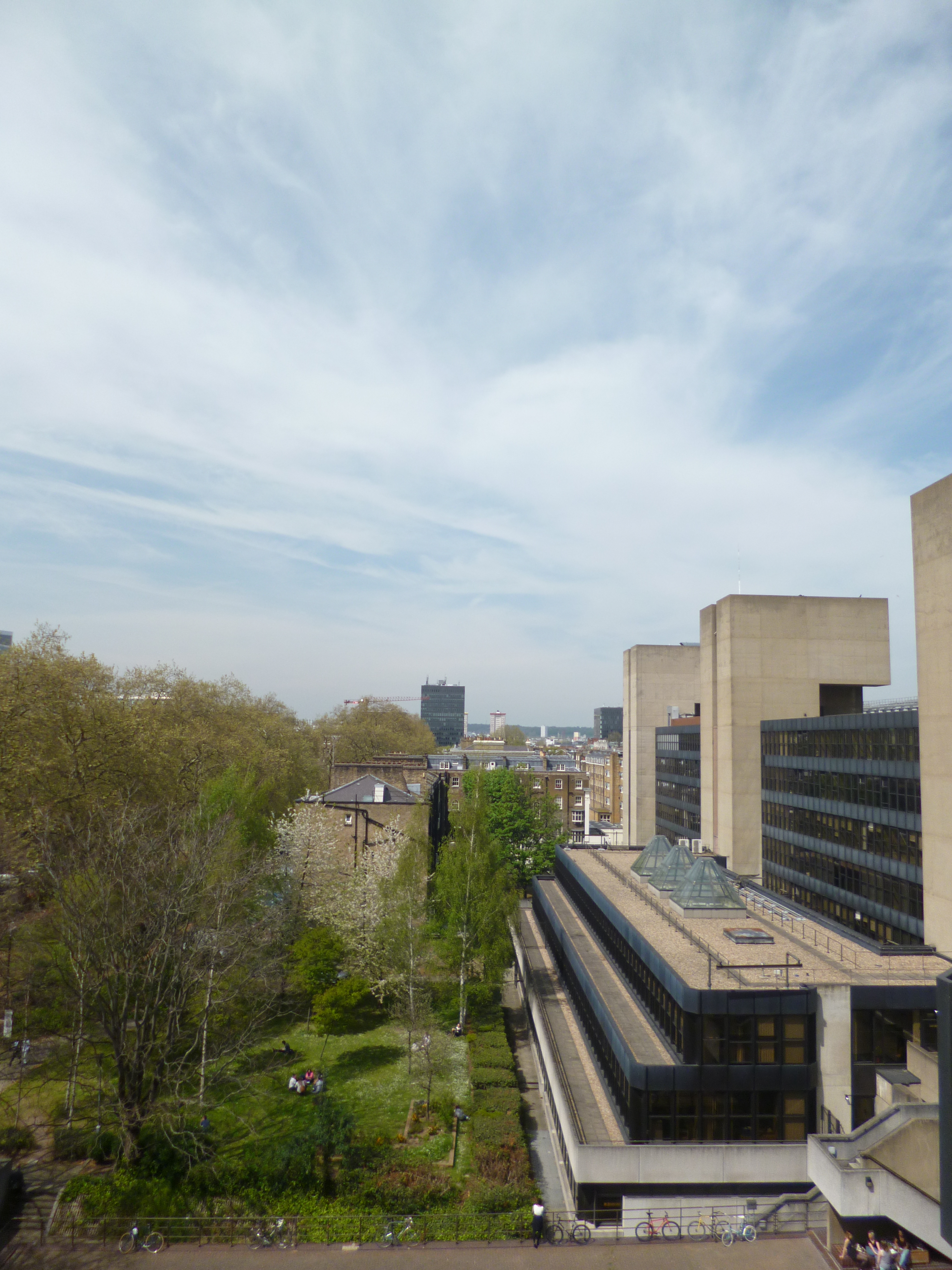
View from high up along building of concrete, steel and glass to the right, with lawn and trees to the left and clouds in blue sky above.

II.

Ich betrachte die Bäume von oben:
erst leuchtend, dann dürr und dann kahl.
Ich zeichne die Großstadt, gewoben
aus Backstein und Kalkstein und Stahl.

Mein Auge drängt aber hinüber
zum Rande der Stadt und des Lands,–
mein Herz glaubt noch immer, es fliege
zu dir mit dem Goldwolkenglanz!

Christina Egan © 2016


Photograph: Christina Egan © 2016


The person who ‘holds the position on the
roof above roofs’ gets the bigger picture:
observing the city, the sky, the seasons;  
aware of being a part of the fabric of life.

But really, she or he just wants to fly beyond
the horizon, to be united with a beloved one…
who might turn out to be an illusion of desire.
These lines evoke immanent transcendence.

These poems may work in a translation software.

A Quilt of Light and Shade

A Quilt of Light and Shade

A quilt of light and shade,
a quilt of wind and heat
this solstice has become:
half fervour, half fatigue…

A quilt of sun and rain,
a quilt of green and grey,
brick red and blinding white
this city is today.

The boulevards are streams,
the roundabouts are whirls –
and fleetingly this seems
to be the best of worlds.

Christina Egan © 2012


In London, and in northern Europe in general, the weather is unsteady and unpredictable, even in midsummer. London has got a very great number of buildings in red brick, usually with window frames and decorative features in white, and plenty of trees, gardens, and parks. And it is very, very busy…

The summer solstice is also the subject of the previous post, This Day of June. As I am putting these poems online, there should be daylight till ten at night in England and some blue left in the sky even towards midnight — instead, there is not a ray of sunshine all day, and the sky is dark grey in the afternoon…

May Haiku (Bruce Castle)

May Haiku
(Bruce Castle)

Glowing orange orbs,
cluster of new-born planets:
this year’s first roses!

*

Dusk, delayed, scented:
the earth emerged from the dark,
bedecked like a bride.

*

Below the half-moon
a low-flying aeroplane
slices up the sky.

*

The tower-clock strikes,
bright, as if an angel called:
Be alive! Alive!

Christina Egan © 2013

You can see a photo of Bruce Castle, Tottenham, London and read some similar poetry in German at Himmelblaue Uhr.

Himmelblaue Uhr (Tottenham)

Himmelblaue Uhr
(Schloßpark zu Tottenham)

Die Dämmrung senkt sich auf die Flur.
In Vogelsang
tropft Glockenklang
von einer himmelblauen Uhr
an einem himbeerfarbnen Turm.

Die Rosen schimmern wie Laternen.
Von ringsum her
summt der Verkehr.
Ein Flugzeug funkelt zwischen Sternen
und segelt durch Kornblumenfernen…

Die Wetterfahne blinkt am Mast.
Ein Ruf, Gebell,
der Uhrschlag, hell –
Und alle Sorge, alle Hast
kommt zwischen Tor und Tor zur Rast.

Christina Egan © 2016

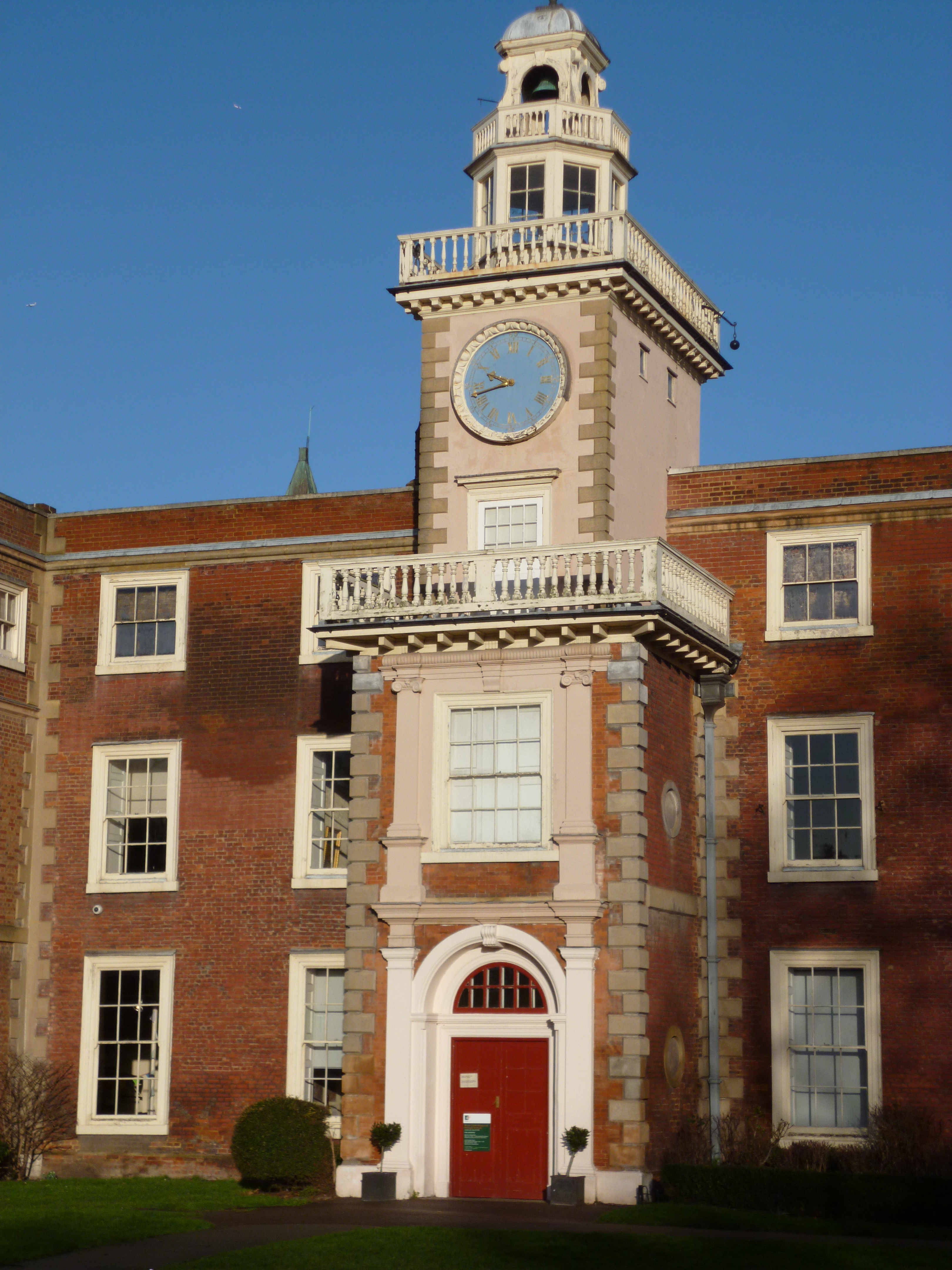
Manor house in red brick, turret painted in pink, with a red door, white decorations, and a bright-blue clockface, under a blue sky.

You can read similar poetry about a walk on a tranquil evening at May Haiku (Bruce Castle).

This is London, too — not only the steel and glass office blocks and underground tunnels I describe in höhlenmenschen / cavemen and related posts, or the bitter poverty I touch on in There’s door on door. London is, in fact, a particularly green city, and Tottenham a very green part of it.

Bruce Castle, Tottenham, London.
Photograph: Christina Egan © 2014

There’s Door on Door

There’s Door on Door

There’s door on door of painted wood
with potted plants and polished brass,
there’s row on row of gabled roofs,
there’s brick and plaster, hedge and grass.

There’s floor on floor of balconies,
above the din, above the dust,
inclusive of commodities,
there’s stone and concrete, steel and glass.

There’s door on door, there’s floor on floor,
but not for me, but not for me –
there’s brick and brass, there’s steel and glass,
exclusive of humanity.

There’s door on door, there’s floor on floor,
but not for us, but not for us –
one has a sofa in a store,
one has an archway in the dust.

Christina Egan © 2015

London, This Moment of May

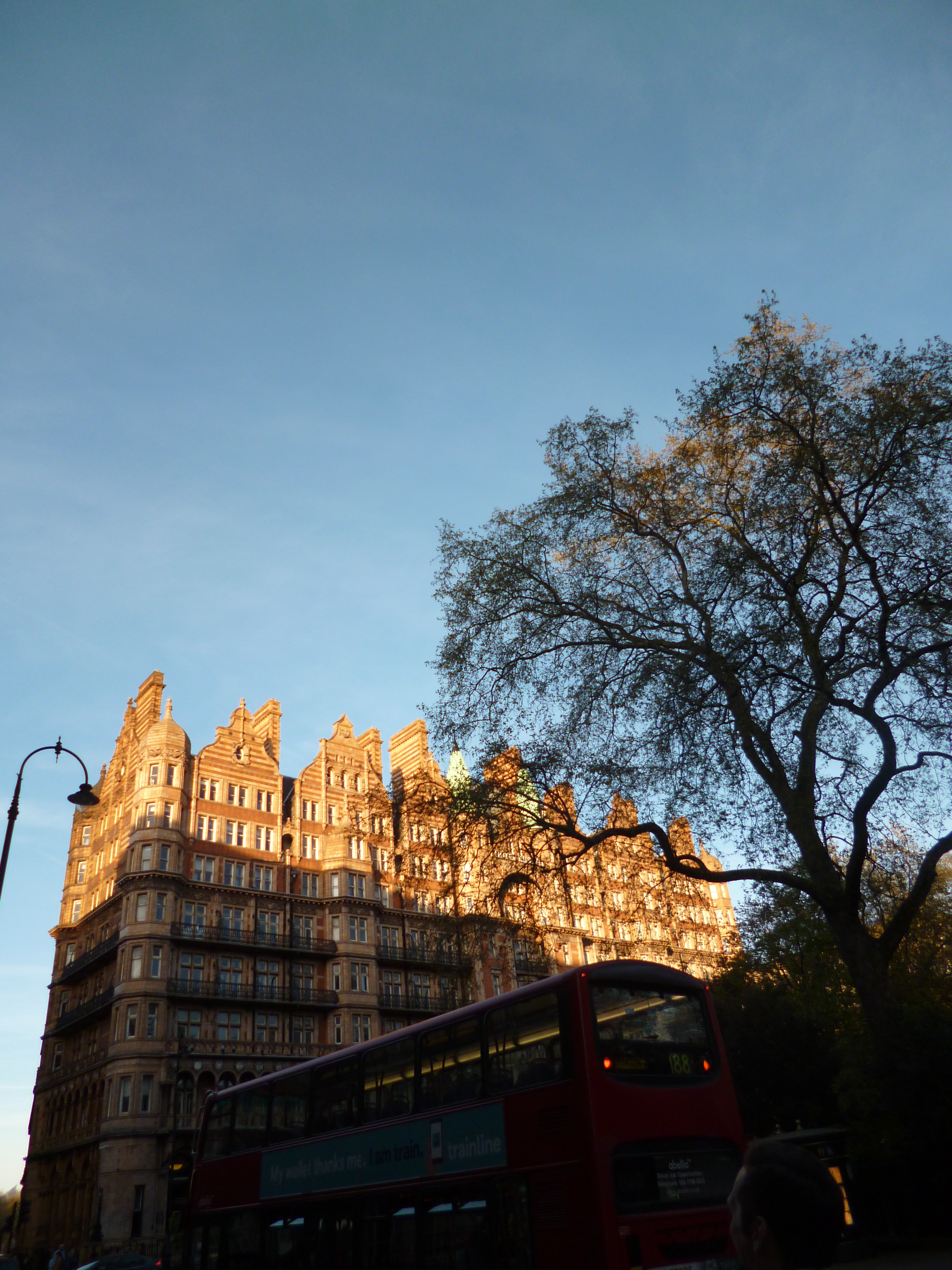
London, This Moment of May I. London, this moment of May. High stately building, lower part in deep shade, upper part brightly lit, with red double-decker bus passing.A Grand Canyon in grey, imperceptibly turning to purple, with an orange glow on its battlements – but teeming in all its cracks, with foam of blossom and bird-flight, with currents of people and cars. Not a city, but a county, a country, a proud world in itself, the planet in a valley, an open oblong fruit, rich with glistening seeds, in the giant hand of clay hollowed out by the Thames.

Photograph: Christina Egan © 2016

II. It is not mine, this city: I borrowed it. I borrowed it for a home, for a while, I borrowed its language, for good. Or it borrowed me, it borrowed my eyes to mount this tall bus, it borrowed my mouth to sing this new song. I run through its veins of walls and windows, of trees and lanterns… A Grand Canyon in grey. Or it runs through my veins, a pale-purple stream, murmuring, glittering… London, this moment of May. Christina Egan © 2013
The title alludes to the famous line by Virginia Woolf: “… what she loved; life; London; this moment of June.” I happened to write my poem in May, on a red bus…
P.S.: A year later, the climate across Europe has slid further into resentment towards foreigners or strangers of any description, be they war refugees or your next-door neighbours. There is a lot of blind anger and fear of vague entities like ‘Europe’ or ‘Islam’. This is the road to racism and fascism. My essay about my identity as an immigrant to England stayed on the front page of trade union UNISON‘s website for weeks: I dream in English. I come from one country, live in another, and plan to move to a third; yet my main identity is European at any rate!
>>> These poems were published in the Haringey Community Press (circulation 15,000) in September 2022.

Die Hängenden Gärten / Palmyra Perennis

Die Hängenden Gärten

Schwarz liegt der Strom, von Gestirnen benetzt,
blendend erhebt sich der Herrscher der Nacht
über die Hängenden Gärten,
über den künstlichen Gipfel,
welcher den Hügel ins Flachland versetzt,
welcher den Wald in die Großstadt gebracht,
über die plätschernden Gärten,
über die flüsternden Wipfel…
Flimmernd erhebt sich die Harfe zuletzt,
warm liegt die Stadt in versilberter Pracht.

Christina Egan © 2015

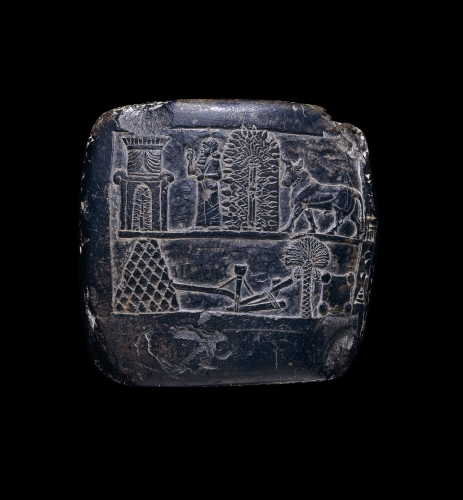
Basalt stone with carved images of trees, with a building, an animal and a man

The city of Babylon. Assyrian, 7th c. BC. —
© The Trustees of the British Museum
(Ref. no. 00032445001)

These musical lines evoke Babylon by night:
the moon and stars reflected in the Euphrates,
the Hanging Gardens rising above the big city,
murmuring fountains and a sparkling harp…
It could be the instrument which rises
sparkling like a star — or its voice.

Palmyra Perennis

Sank auch der stolze Bogen dahin mit dreifachem Seufzer,
ragt uns sein Bildnis im Geist schwerelos über dem Sand.
Sind auch zum Staube gekehrt der Ahnen goldene Hallen,
tragen das Erbe wir fort: sanften Triumph der Vernunft.

Christina Egan © 2015

For a picture of the ruins of Palmyra and a comment on
this poem on enlightenment, please look at my
MOTTO.

The view that cultural vandalism should be recognised as
a war crime akin to genocide has been discussed recently.

April Rules the Land

April Rules the Land
(April haiku)

April rules the land,
leaden and golden in turns,
wayward as we are.

*

Oxford Street, busy,
a splintered rainbow, patterns,
shaken and broken.

*

The white narcissus 
sings with a voice as sweet as
her brother blackbird.

Christina Egan © 2000

The last haiku originally referred to ‘the ivory rose’, although in England, outdoor roses do not blossom yet in April. When I changed the wording to ‘the white narcissus’ to link it to the season and month, I did not know that the flower’s official name is Narcissus poeticus, or Poet’s Narcissus!

The ivory rose
sings with a voice as sweet as
her brother blackbird.

Ode to London Wall

Ode to London Wall

Moss is conquering your broken stones,
weeds are rooting between your bricks;
but you still stand tall, Wall,
facing the winds, the seasons, the years.

The round foundations of your towers
harbour herbs now, neatly labelled;
but your walkways bore watchmen once,
to guard the goods going round and the people.

You lie at my feet now, tall Wall,
I look down from the walkway above you;
but when I step down by two thousand years,
I see you could shelter me still or crush me.

And then I seem to remember –
we have met before, Wall –
you guarded me indeed –
and I guarded you!

On the treacherous clay we erected you,
in the obnoxious fog and sleet:
even and straight and strong as a rock,
forming a line in the marshy meadow,

forming a square along the vague river,
forming a knot in the net of roads,
from London to Chester and York,
from Paris to Sousse and Palmyra.

O Wall of soldiers and explorers,
O Wall of merchants and accountants:
yes,
you still stand tall and you talk,
you tell me to tell your story to all.

Christina Egan © 2015
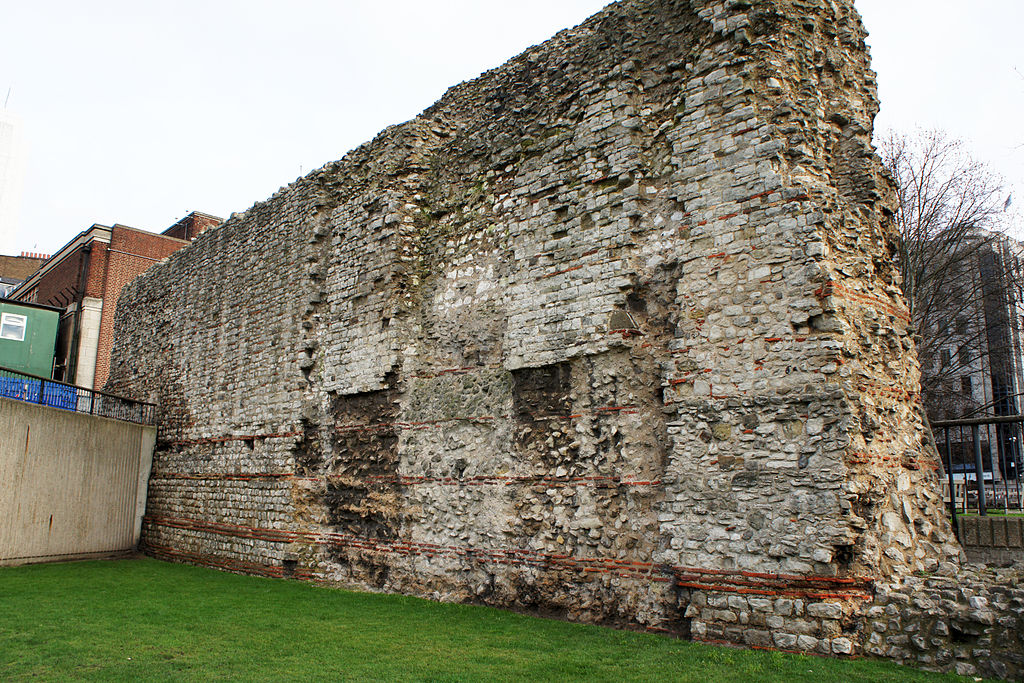
High wall of neatly piled stone and brick in the midst of the city

You can see a section of the Wall of London and learn more about it in the Roman Galleries of the Museum of London. A visit there inspired me to write these lines. I talk to the stones as they talk to me; and I pass their story on.

Photograph: Roman city wall near Tower Hill Tube station,
by Mariordo (Mario Roberto Durán Ortiz).

London Wall Had Fallen Down

London Wall had fallen down,
brick by brick and stone by stone;
in the crenellation’s crown,
storks and starlings built their home.

London Wall stood in the mud,
but we fixed it brick by brick,
and we filled the wasteland up
with new lanes across the grid.

London Wall was melting down,
but we used it stone by stone;
and we built a bigger town
on the ground of proud old Rome!

Christina Egan © 2015

After the end of the Roman Empire, the Roman City of London was left uninhabited for generations, while a new city sprung up next to it; later, the original precincts became the centre again. This area is now known as ‘The City of London’, although it forms only a small part of the centre of town.

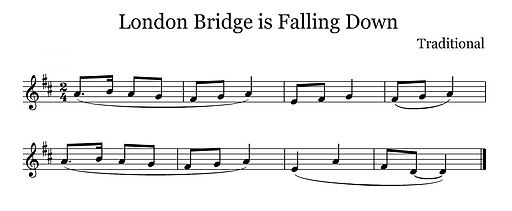
Musical score of 'London Bridge is falling down'


This little song alludes to the nursery rhyme London Bridge is falling down.

Heimkehr nach Köln

Heimkehr nach Köln

Die türmenden Inseln
der Kirchen,
die aschgrauen Schachteln
der Häuser,
die lärmenden Räder
der Plätze –

Geborgen bin ich
im Schoß meiner Stadt,
die mich die Sprache lehrte,
die vergessene Sprache,
die schlichten Gesänge
verschütteten Glücks.

Ein goldenes Antlitz taucht
aus dem bunten Dämmer hervor.
Wer bist du?
Geh nicht fort, Gesicht
ohne Namen, leihe mir
mein Geheimnis heut nacht!

Christina Egan © 1992

This poem about homecoming to a big city could refer to a place where someone grew up; or where they lived in the past; or where they may have lived in a former life on earth.

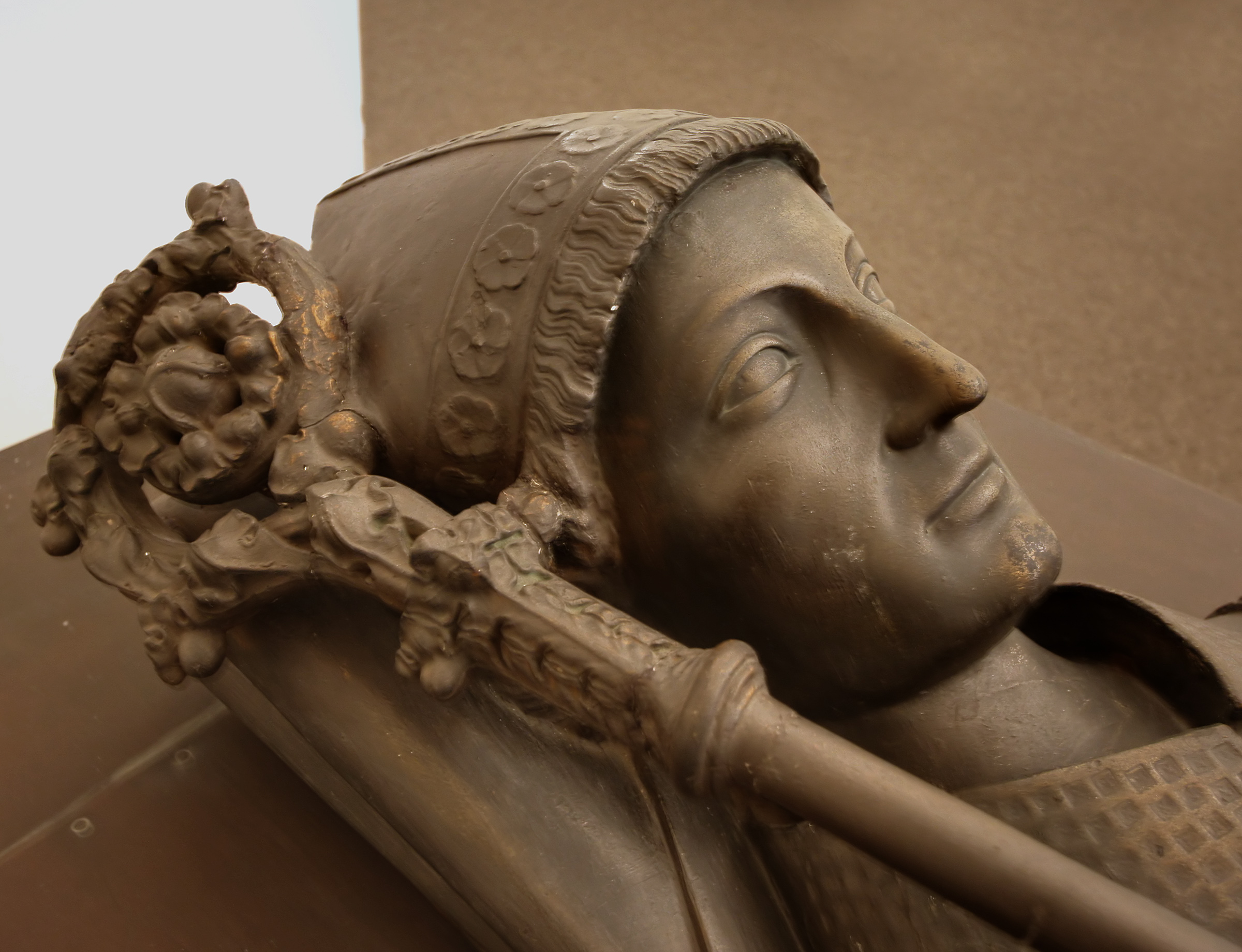
Bronze head of a bishop, mediaeval yet classical in appearance.Therefore, the mysterious golden face which is the key to the past could be a late relative; or a lost friend; or else a historical figure. I was thinking of this portrait at the back of Cologne Cathedral.

Photograph: „Grabmal Konrad von Hochstaden Gipsabdruck“ von Elke Wetzig (Elya)