Friday in Lent

Friday in Lent

Friday morning.
The city is busy and tired
under the closely curtained sky.

The headlines shout out:
Things fall apart,
trains, towns,
countries, couples.

Life hurts.

The day is a prison, a lenient one,
with gardens and books as windows
and magical messages beamed onto screens,
with the freedom of speech
and the purple pursuit of the heavens.

Christina Egan © 2001


Purple is the colour of Lent, representing suffering; you will find churches decorated —and their statues covered up — with purple fabrics. Purple (violet, lilac, mauve) is a slightly melancholy colour, but it also has dreamlike and spiritual qualities. My ‘purple pursuit’ has all these shades of meaning; ‘the heavens’ could refer to religious faith or simply to a decent and fulfilled life on earth, as in ‘Liberty and the pursuit of Happiness’.

Friday is the time when Christians remember Jesus’ passion and keep some fasting, a miniature Lent within each week… or at least the time when they do remember their faith during Lent. The positive messages on your screen could come from a friend — or from God, if you believe in Scriptures!

For a German and English poem about Lent, go to Fastenzeit / Lent.

Arles im Winter

Arles im Winter

Die Fensterläden wie ein Farbenkasten,
kornblumenblau und flieder und türkis;
die goldnen Wände, die im Wind verblaßten,
die Gasse, die den kurzen Schnee verschlief.

Die Bogengänge wie bestickte Bänder,
die Krippenbilder wie ein Glockenspiel…
Und das Theater wechselnder Gewänder,
wo nie – seit Rom – der letzte Vorhang fiel.

Die weiche Luft am weiten Strom von Norden,
wo beißendkalter Wind bis eben blies,–
er wälzt sich meerwärts, kostet wohl schon morgen
Kornblumenblau und Flieder und Türkis!

Christina Egan © 2016

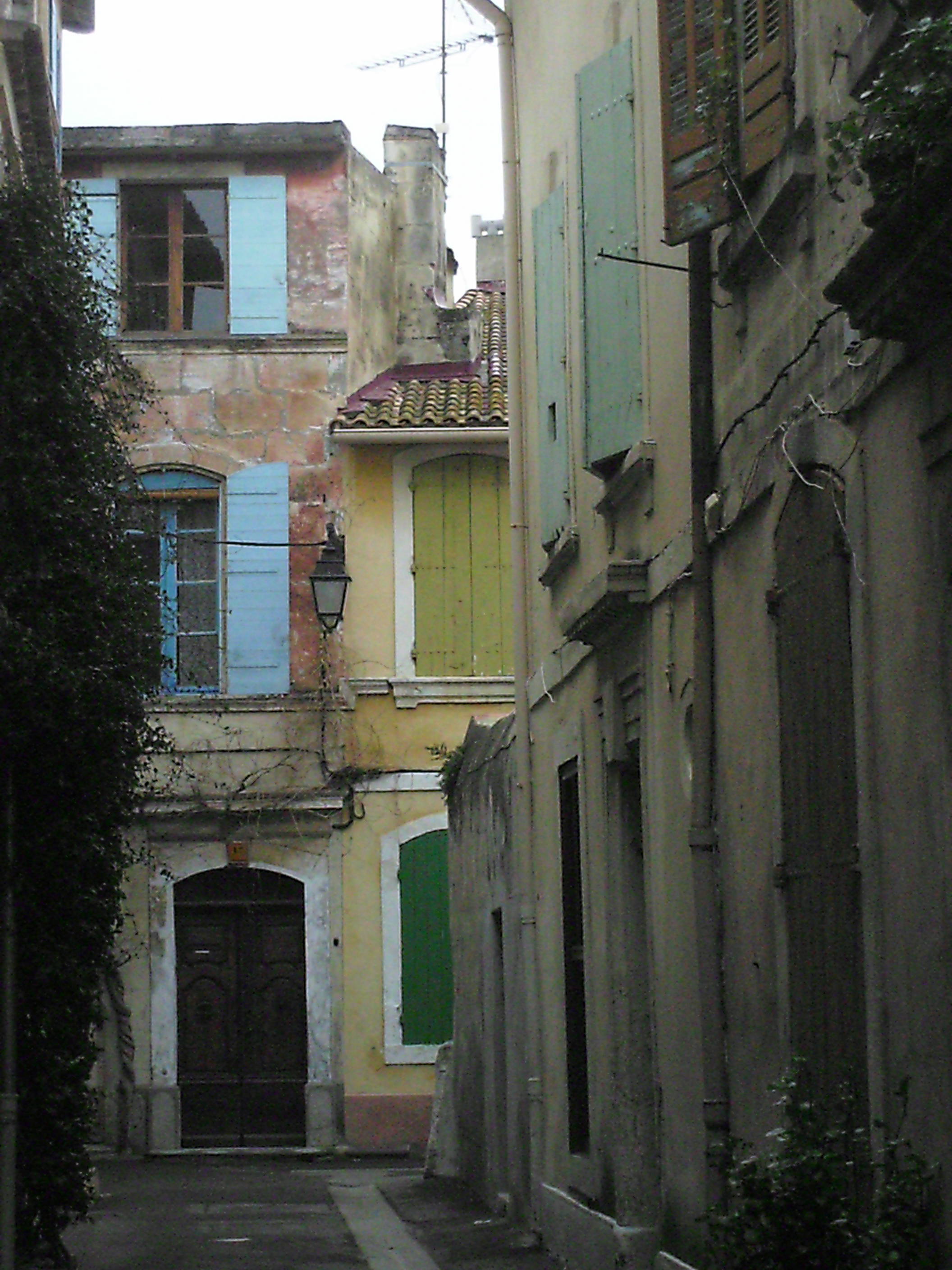
Lane with old houses, window shutters in various shades of turquoise and green.The Old Town of Arles is huddled together within the precincts of the Roman city, next to the vast River Rhône  and close to its mouth into the Mediterranean Sea – with the churches built of the stones of the temples and the houses built with the stones of the theatre.

Down the funnel of the river valley, there is a forceful and often icy wind, the Mistral; but there is also a mild wind from south, the Wind from the Sea, which may warm up the city in the midst of winter, so that you can sit in the Roman ruins…

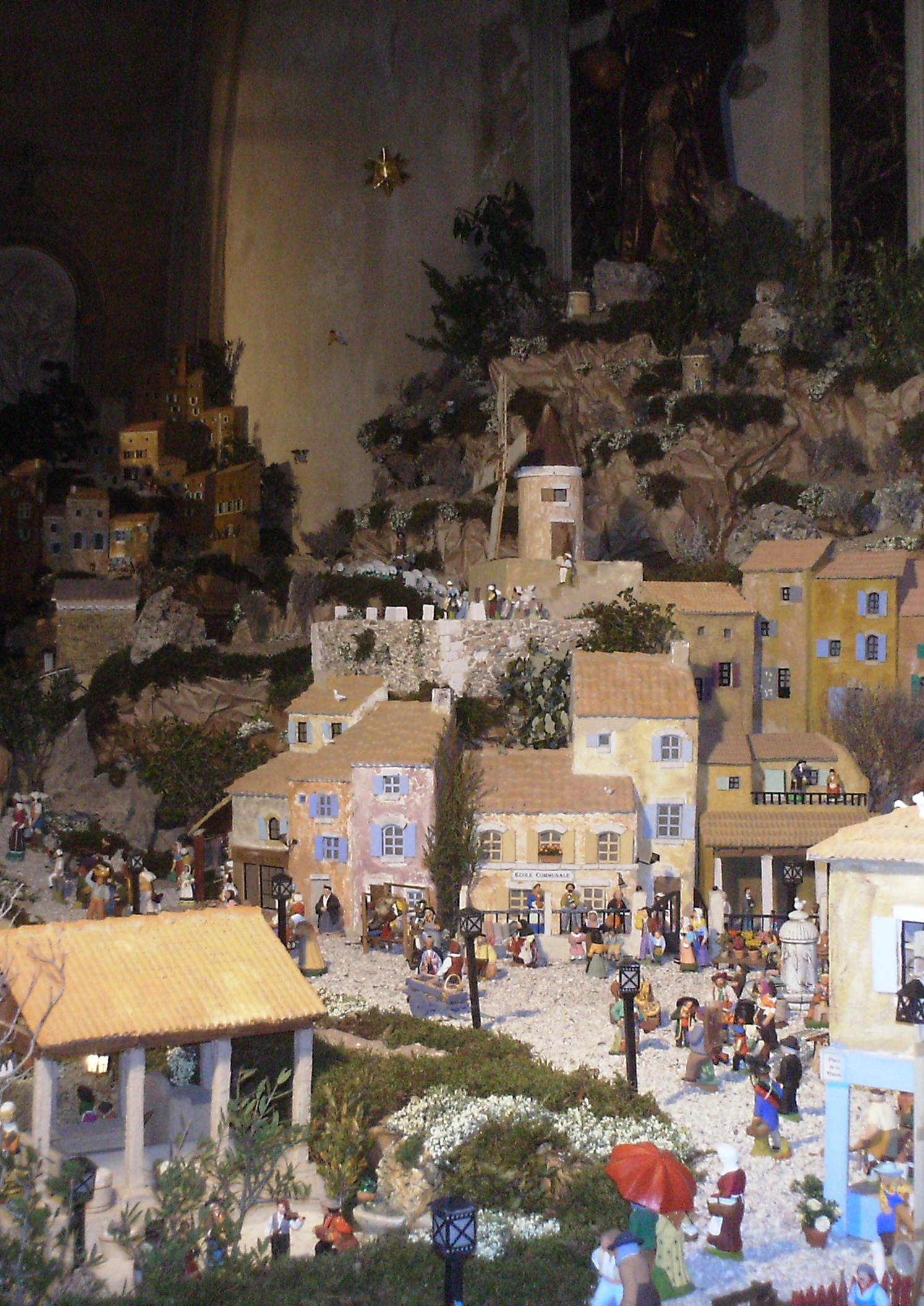
Model village on steep hills as backdrop to a nativity scene

There are exhibitions of nativity scenes and figurines in all styles, even contemporary, at Saint-Trophime; in another mediaeval church, a whole side-chapel is filled with a model village with rocks and trees, running water and flickering fire, and hundreds of tiny local people.

I have written another poem on Arles and the Vent de la mer  in French and English. This one here may work quite well in a translation software.

Photographs: Arles. Christina Egan © 2011.

The City Lit Up

The City Lit Up

I lived between Ilex and Salix,
just north of Londinium Town,
and sometimes I climbed to the moss-well
between the oaks and looked down.

I looked at the thatch and the roof-tiles,
as red as the embers beneath,
I looked at the timber and marble,
the highways connecting the heath,

the gates, the walls and the broad bridge,
the fields afloat on the clay;
and I wondered if London would stretch
as vast as the valley one day,

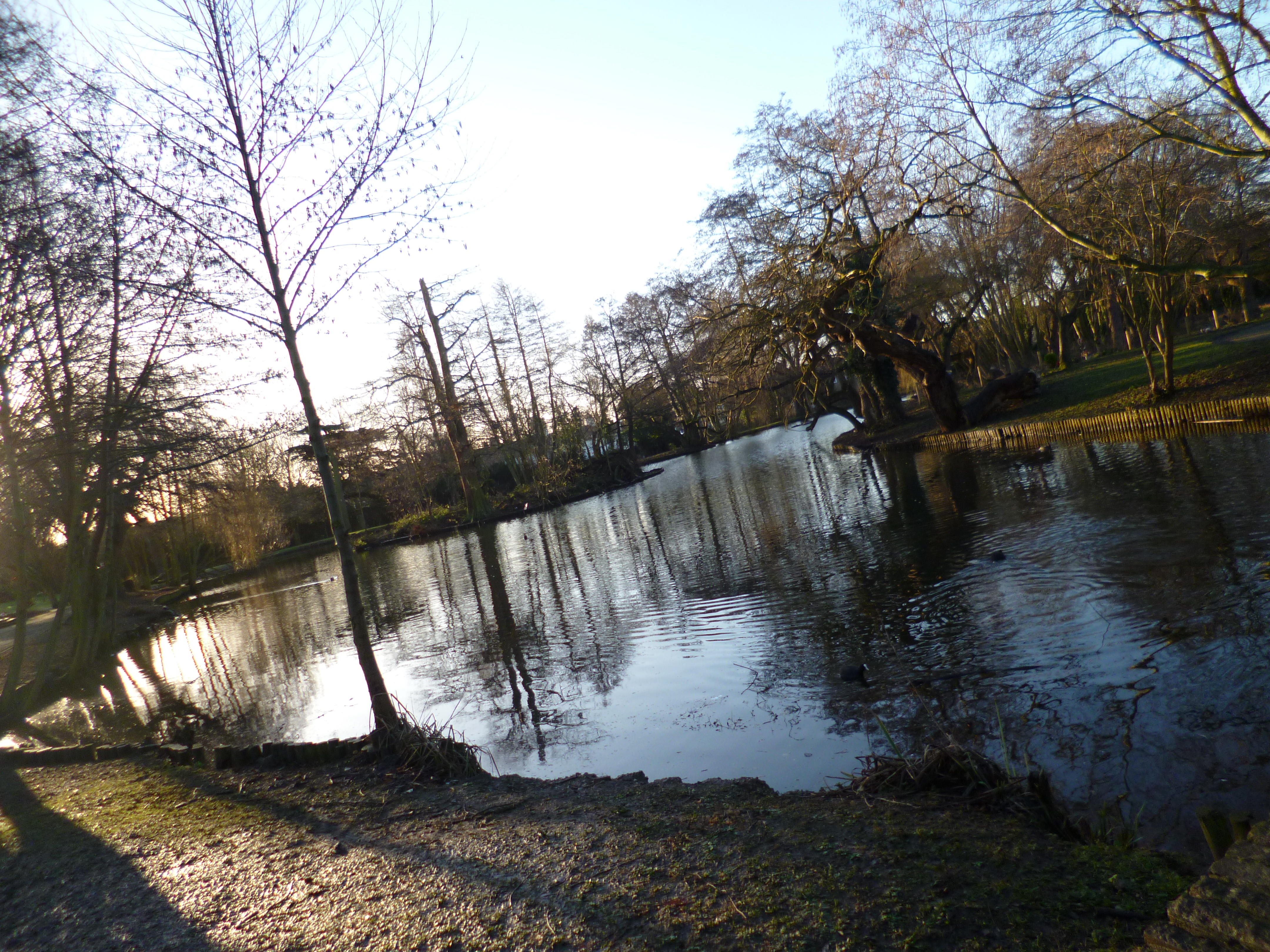
Pond in park, surrounded by bare trees, with tiny island

as vast as Rome, which had risen
from marshes and slopes long ago,
with columns touching the heavens
because the gods willed it so;

and if Rome could ever be shrinking
and sinking into the bog,
or London be burning or flooding
and melting into the fog…

The city lit up in the sunset
and faded away in the dusk;
I felt the chill in the oak-wood,
and down to my villa I rushed.

I entered the gate by the willows
and strode through the dolphins’ yard,
I passed the flickering torches
and stopped by my forefathers’ hearth.
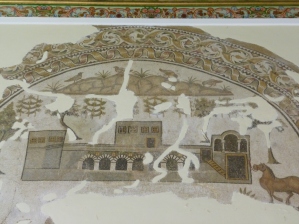
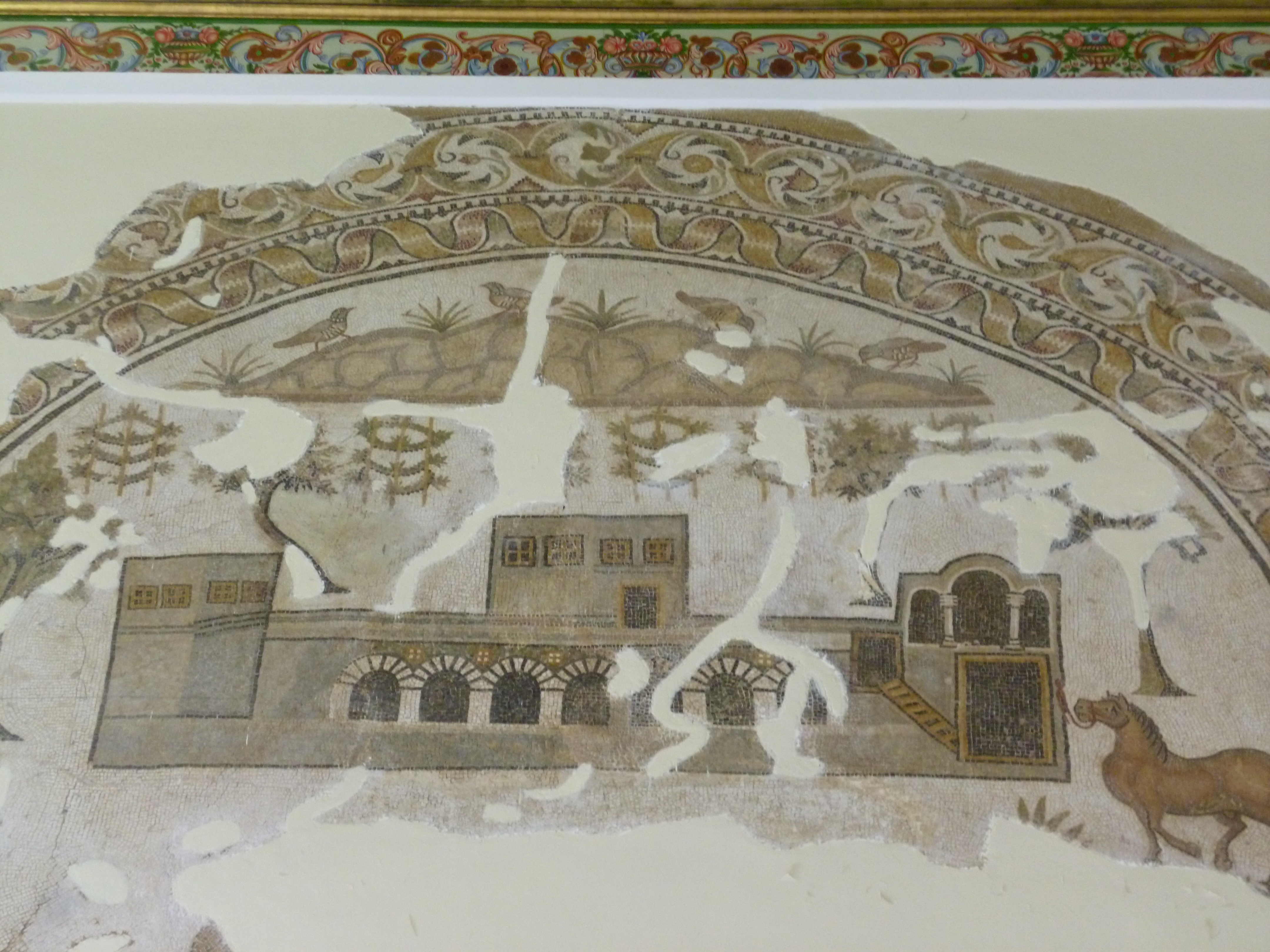
Roman mosaic of a mansion

My name was Appius Felix,
an heir to Aeneas of Troy;
I kept the seals and the idols
to pass them on to my boy.

I used the sword and the saddle,
I held the lyre and quill.
I lived between Ilex and Salix,
at the foot of the Moss-Well Hill.

Christina Egan © 2016


As you can see from the 100-metre-high summit of the Muswell Hill, London does stretch for many miles nowadays, filling the valley to both sides of the meandering River Thames.

You will also notice that there are large patches of green everywhere, some of them left over from ancient marshland and woodland. If you know your way, you can walk across London through woods and meadows, across hills and along rivers for miles!

My Roman observer lives in modern-day Wood Green or Bounds Green, near fictitious hamlets or villas called Ilex (holly or oak) and Salix (willow or osier).

This man firmly believes that gods guard his city and his country and that spirits guard his home and his family. He pursues some useful career in the service of the Empire, but he is also a bit of a poet.

I named him Appius after the statesman of the Republic who had contributed so much to Rome’s infrastructure as well as intellectual life, and Felix because he counts himself lucky.


You can find more on Londinium’s fortifications at Ode to London Wall  and more about its straight or winding highways at Quo vadis?

Photographs: Country villa, late Roman mosaic, Bardo Museum, Tunis. —  Pond in Tottenham, North London. Christina Egan © 2014

Glazed Clay

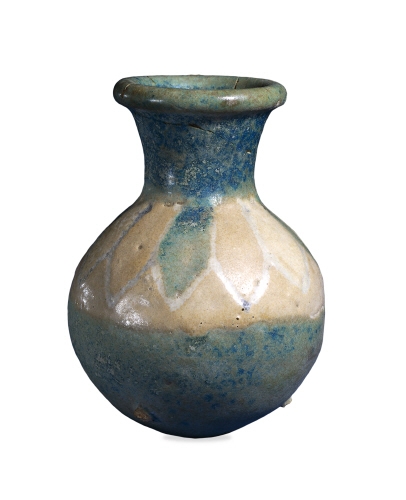
Jar, elegantly curved, with brown and blue glaze.Glazed Clay

Two mighty rivers’ ceaseless flow
beneath a high and cloudless sky;
to either side the ochre glow
of arid countries rolling by;

and here and there a golden maze,
the buildings’ cubes, the cities’ grid:
this jar with blue and brownish glaze
from Babylon still mirrors it.

Christina Egan © 2016

Mesopotamian jar (9th to 7th c. BC) Photograph: © The Trustees of the British Museum.

The city and country of ‘Babylon’ were under Assyrian rule at the time the little jar was made, but I just used the name as the most familiar for all the civilisations of Mesopotamia.

For a German poem about Babylon with the Euphrates and the Hanging Gardens, see Die Hängenden Gärten.

The perfect elegance of this tiny everyday object is an example for the simple beauty I call for in Fewer Things, where you can also see a red Roman bowl. 

My City Calls (Grey Roofs Grey Walls)

My City Calls

Grey roofs grey walls
Make up this place
A rough and kind
Familiar face

The spires chimneys
Market stalls
Suspended bridges
Station halls

Oh face of walls
So great so mild
My city calls
Come here my child

My city calls
With golden chime:
While winter falls
Stay here some time

The sky is full
Of rain and snow
Of miracles
To fall and grow

So many faces
In the street
Yet far away
The one I need

Far is my dear
So far away
But I am here
Just day to day

My city calls
Me with her charms
My heartbeat falls
into her arms

Christina Egan © 1995 / 2012


For a similar German poem, see Im Herzen von Köln. Like in Heimkehr nach Köln, the big city is seen as a mother. There are other poems or songs where I describe it as a person — man or woman, although I feel that a city is female. It is a personal relationship: my heart beats for the city, as I claim in Geflecht / Geflechte.

Berlin Zoo Station

Berlin Zoo Station

I.

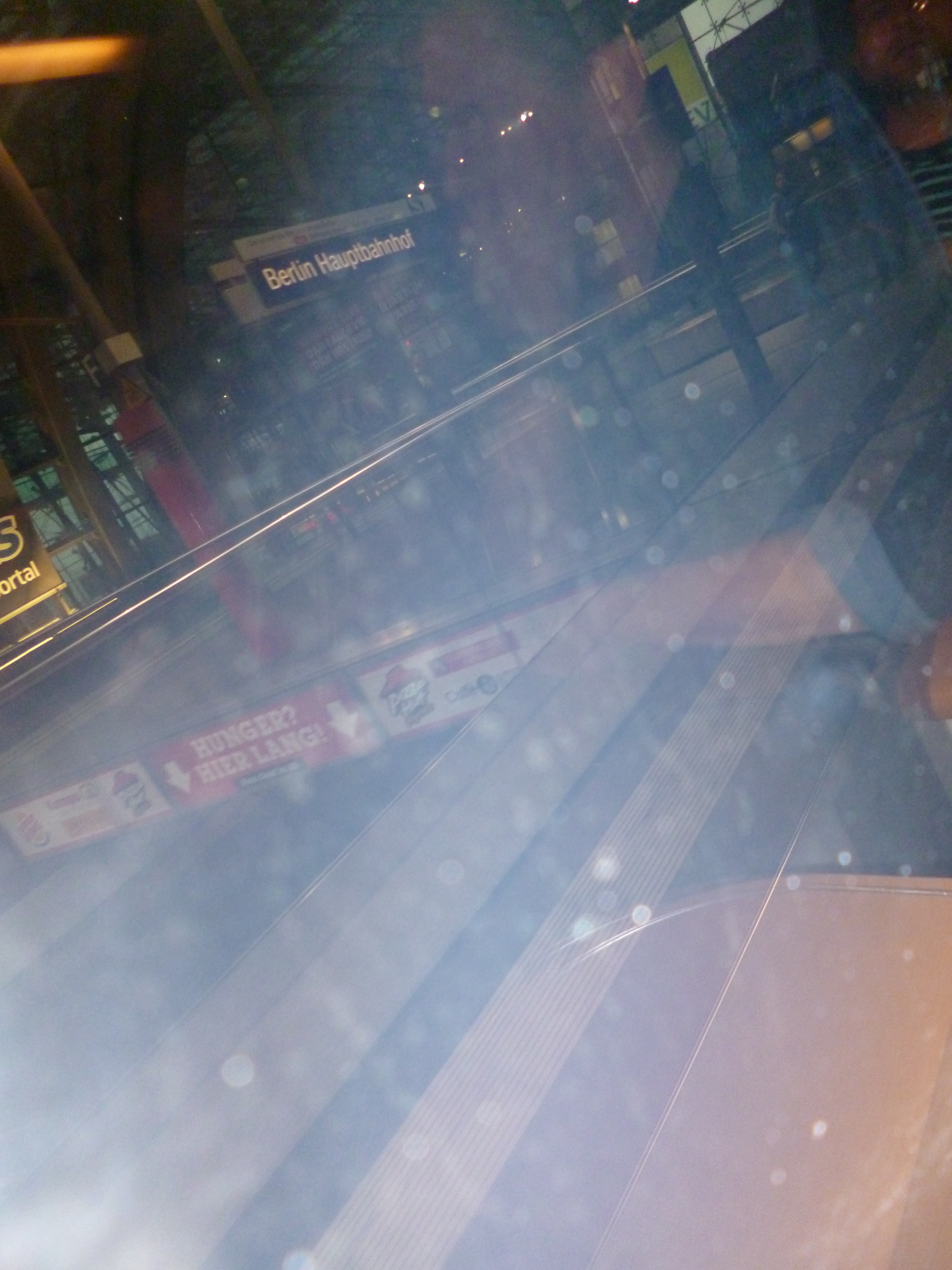
Blurred impression of large railway station through train window.Building sites, cordons,
corridors, concourses,
people whizzing, weaving,
people sauntering, skipping,
dragging luggage along, around,
trains shooting in and out,
shuttles on a loom.

Faces, faces like packs of cards,
shuffled, shuttled across the city,
voices, voices from all the winds,
into all the winds, and everyone
means something to someone,
everyone means something,
means everything.


II.

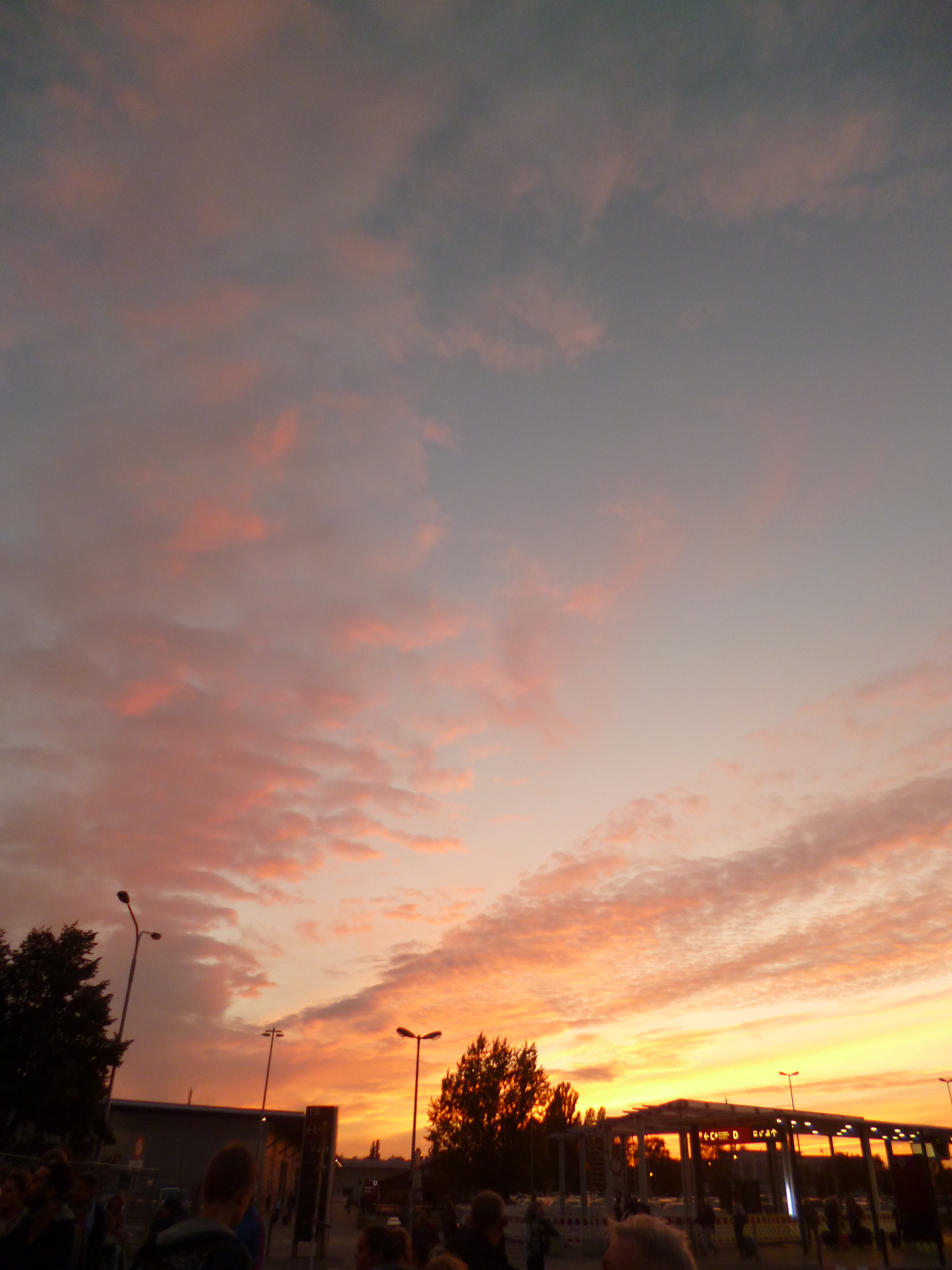
Cloud strips, golden and pink, above a dark crowded square at the very bottom.

Trains bridging borders,
the square, sun, people,
people, specks of colour
propelled past me,
their shades brushing me,
their warmth, breath,
so near, here, now.

Life, life, yes, yet
nothing but
the first faint dawn
of a future with no night,
no barriers, boundaries:
destination without distance,
one web of light.

Christina Egan © 2016 (I) / 1999 (II)

Photographs: Railway station and airport in Berlin. Christina Egan ©  2016.

On Crossing the City

On Crossing the City

Sometimes you want to get out of your life
as if off a draughty and noisy bus
and wander along the pavement for miles
round corners, expecting a revelation.

People in books get off on occasion
to escape a track of modest despair,
but you cannot remember where they end up,
presumably just on another bus.

Sometimes you wonder if you caught the right bus
or at the right time, or the right way round,
and if this hectic clockwork of movements
is determined by destiny or by dice.

Christina Egan © 2011

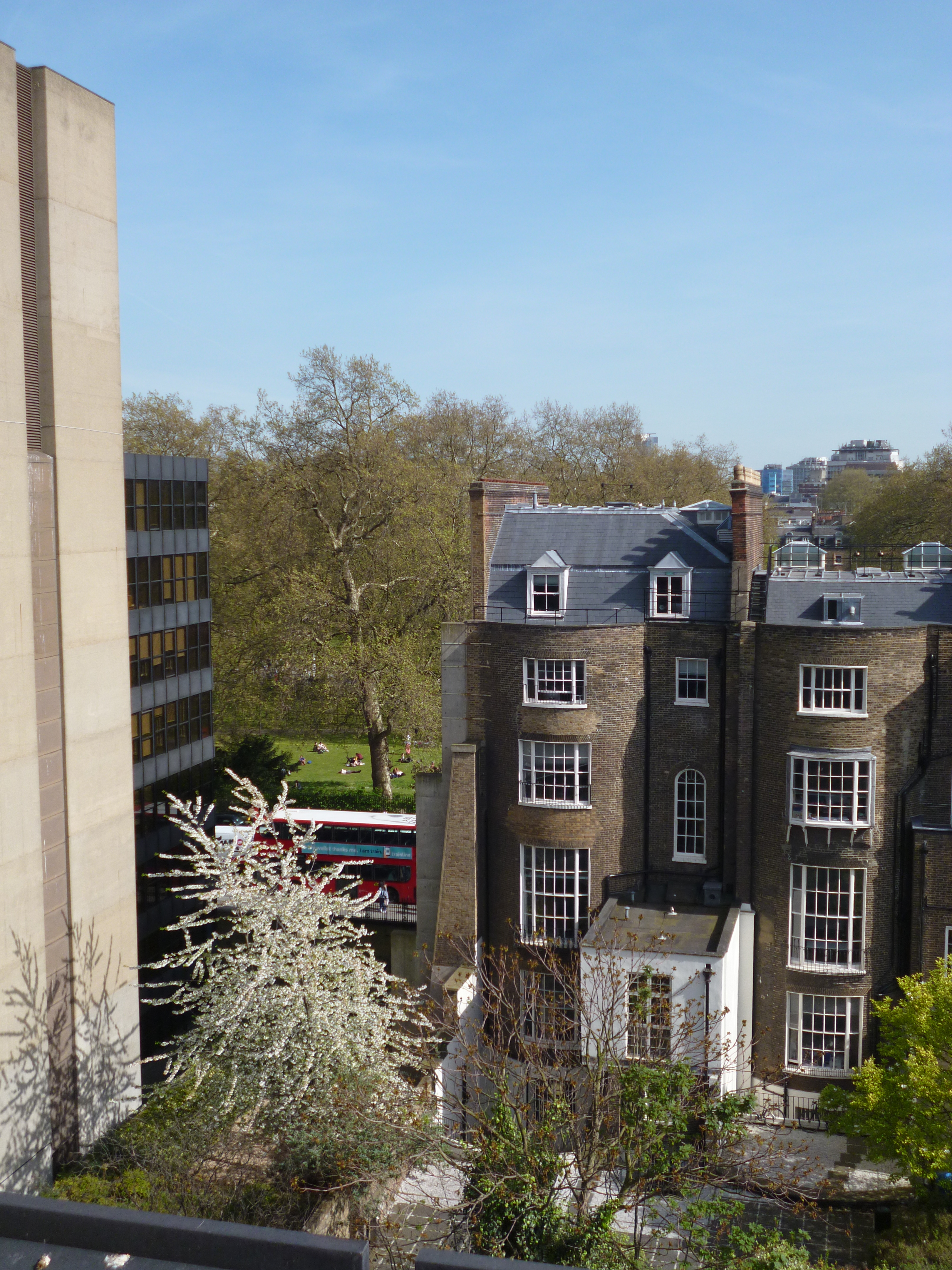
Amongst high, dark, buildings, lawns, trees in blossom, and in the middle, a red doubledecker bus.


For a German poem about the quest for meaning and happiness amidst the apparent confusion of a big, busy, city, see my previous post Zugewogen.


Photograph: London bus. Christina Egan © 2016

Zugewogen


One year later:
My 125th post!


Zugewogen

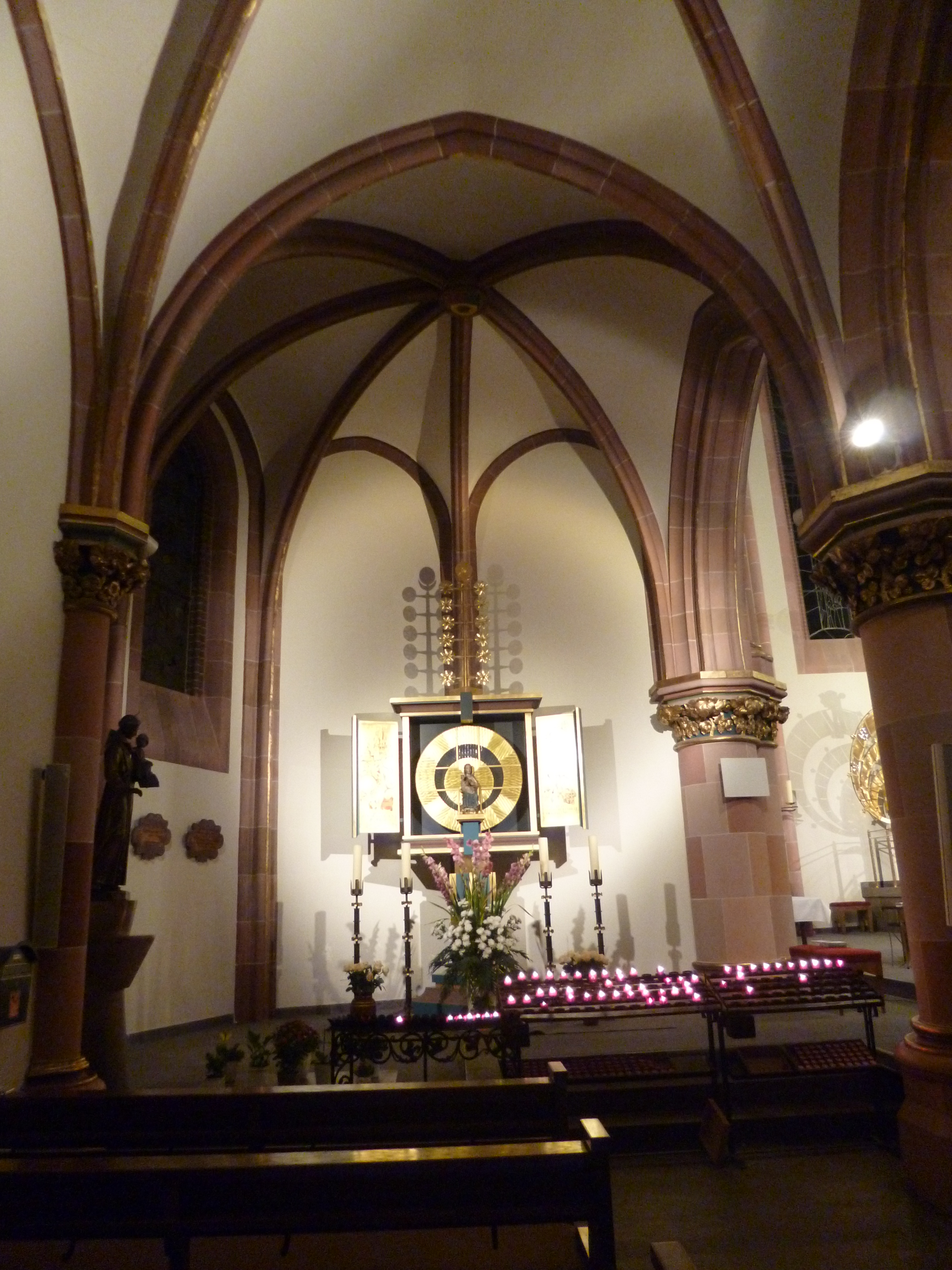
Altar, bright golden, in church, Neo-Gothic, with plenty of lit candles beneath.In den Gezeiten des Lebens,
in dem Getriebe der Stadt
suchst du verzweifelt, vergebens
Liebe, die Zukunft hat.

Tritt ins Portal einer Kirche,
schau’ in die flackernde Flut,
entzünd’ eine winzige Kerze
und wisse: Alles wird gut.

Alles ist zugewogen,
Liebe und Freude und Leid;
niemand wird je betrogen
um Sinn und um Seligkeit.

Christina Egan © 2011

St Ludwig, Berlin (near Ku’damm).
Photograph: Christina Egan © 2016

“Everything is weighed for you, love and joy and suffering; nobody will ever be cheated out of meaning and of bliss.”

I believe this beyond any doubt, although not everything will come all right this side of death. Lighting a candle in a place of worship in the midst of our busy lives gives us comfort and peace at any rate.

This poem on faith and destiny was published in a previous edition of the  Münsterschwarzacher Bildkalender. The 2017 calendar is available now, with 52 photographs and 52 poems and addresses (one of them by me: psalm für dich).

Die Fluten der Stadt

Die Fluten der Stadt

I.

Vor meinem Fenster rauscht die späte Stadt
und glitzert auf im Vollmond, schwarzes Meer;
sie spült Millionen Menschen hin und her,
spielt Fangen, nimmermüd und nimmersatt.
In ihrem Brausen höre ich Willkommen
und lasse mich auf ihren Wellen treiben.
Die Sternbilder der Leuchtreklamen schreiben
sich unter meine Lider… schon zerronnen.
Und nie allein: weil ich alleine bin,
zu Haus im selben Sehnsuchtsleitmotiv
wie jeder andre aufgewühlte Sinn.
Was immer schon in meinen Gliedern schlief,
schäumt ungebärdig zu den Sternen hin:
Ich will dich, will dich wild und meerestief.

II.

Auf vielen Brücken stand ich, ausgespannt
von Stahl und Stein an Themse, Rhein und Main,
und unter allen Himmeln stets allein:
stets einem Unsichtbaren zugewandt.
Es wandeln ja mit jedem neuen Strand
die Menschen wie die Häuser ihr Gesicht,
erstehen anders schon im Morgenlicht;
und immer wieder scheint mir eins verwandt.

Die Fluten wechseln – braun, blau, grau und grün –
die Augen ebenso, die mich gebannt,

sie füllen meine Augen – und entfliehn.
Doch deine, die ich nur von ferne fand,
die kaum mich streiften, seh ich weitersprühn…
Und ihre Farbe hab ich nie gekannt.

Christina Egan © 1995 / 1996

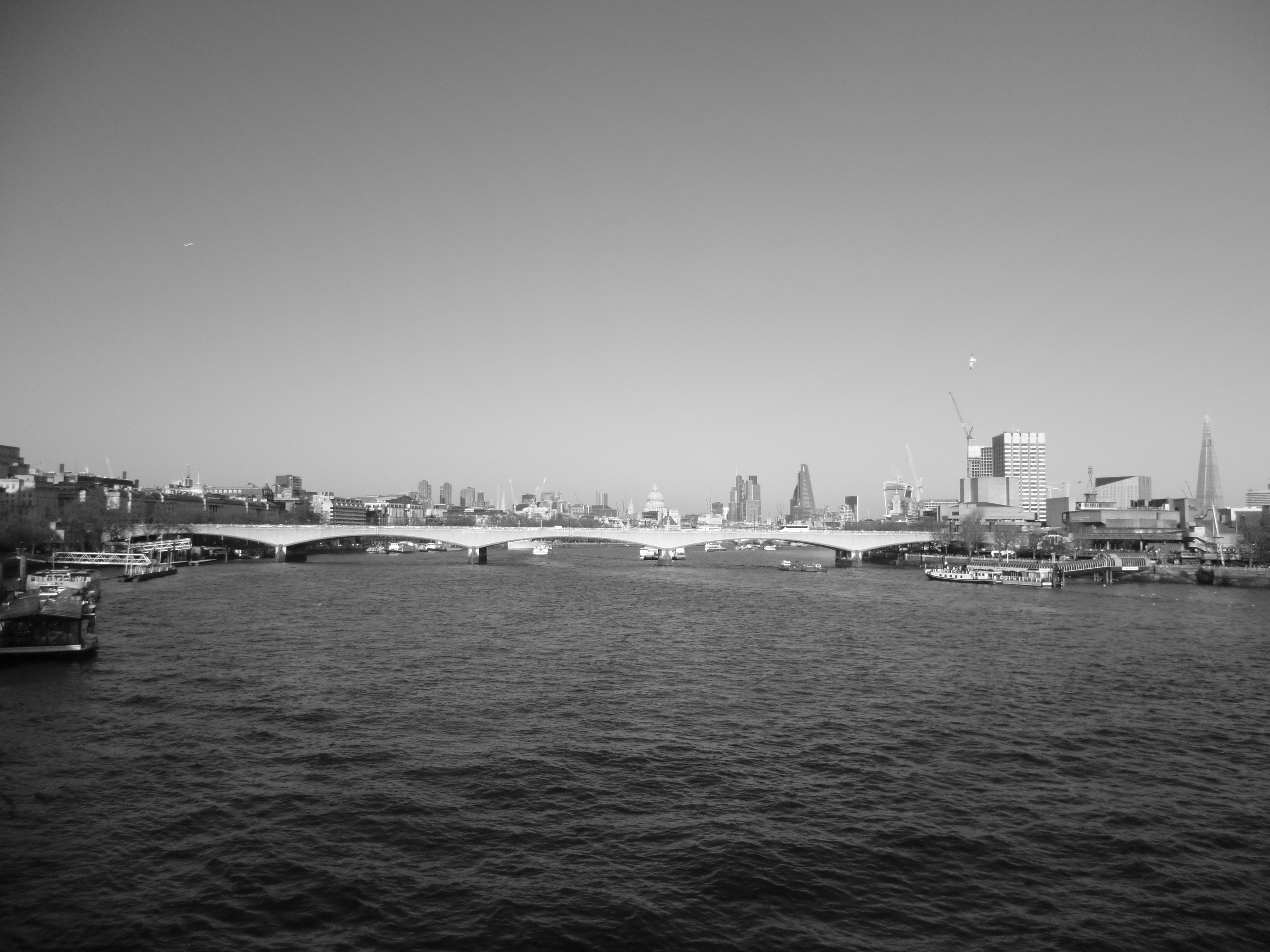
Black and white panorama of London skyline from a Thames bridge, with another bridge, boats, skyscrapers, St Paul's.

London. Photograph: Christina Egan © 2014


The narrator looks for love amidst the masses of the big city by the big river, where the star constellations consist of neon advertisements. She or he adores someone whom she has only seen from afar so that she does not even know the colour of his or her eyes.

Each sonnet makes a paradoxical statement about loneliness: This person is never lonely because many other people in this city share her loneliness; and she is always lonely because she is in the presence of a beloved one who is absent.

Geflecht / Geflechte

Geflecht

Jedes Leben ist verstrickt,
Masche um Masche, Stich um Stich,
in die Leben neben ihm,
ob wir’s wollen oder nicht.

Jede Reihe ist verschlungen,
ohne daß das Garn je bricht,
in das vorige Geflecht,
ob wir’s wissen oder nicht.

Jeder Jahrgang ist der Boden
für die nächste bunte Schicht:
Kaum geboren, sind wir Ahnen
für ein künftiges Geschlecht.

Christina Egan © 2015

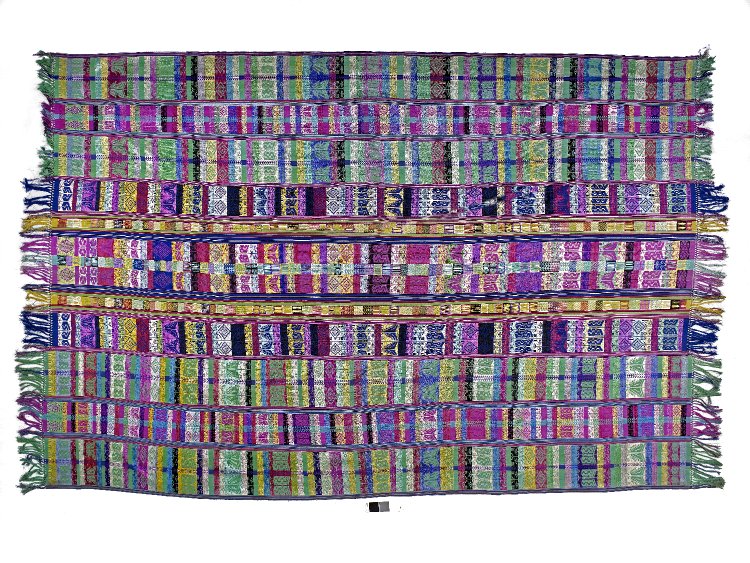
Silk cloth dominated by vivid pinks and greens.

Geflechte
(Altstadt von Köln)

Reihen auf Reihen von Häusern,
hell und freundlich im Frühlingslicht,
Reihen auf Reihen von Fenstern,
schimmernd in allen Augenfarben.

Und hinter einem jeden Fenster
Gesichter… Geschichten… Geflechte.
Und unter einem jeden Pflaster
Pflaster… Pfade… Schwellen.

Stockwerk um Stockwerk von Leben,
hinauf ins ausgelassene Blau!
Schicht um Schicht von Geschichte
bis in den unbetretenen Staub.

Ich strecke mich hin auf dem Mäuerchen hier
und höre die Vögel und höre ein Herz –
Das Herz diese Platzes? Das Herz dieser Stadt?
Mein eigenes Herz, wie es schlägt für die Stadt?

Christina Egan © 2016


These poems describe human life as a knitted or woven tissue: every person is a mesh amongst, above, and below others. Every little life is part of a layer of history, as every modest buidling and ordinary street is.

Every life is interwoven with  others. Every single one of us is history!

I wrote the second poem on the way back from Cologne, where I had briefly rested on a little wall, which turned out to be in the area of the ancient forum and which in hindsight reminded me of excavated foundations.

For a poem on weaving words into a poem, see the previous post, Word Weaver.

Photograph: Silk cloth from Madagascar. – © The Trustees of the British Museum