Anaconda, Anaconda

Anaconda, Anaconda

Slowly slides the anaconda,
through the thicket, through the grass,
undulating, scintillating,
like a rope of murky glass,
ochre and opaque and glinting,
like a river without name,
or a mountain-range in motion,
powered by a hidden flame.

Such a swerving, sparkling serpent
is the history of man,
each millennium of suffering
but a patch or pattern’s span
and each life of toil and longing
but a gold-rimmed muddy scale,
heaving, weaving through the jungle,
seeing neither head nor tail.

Christina Egan © 2015
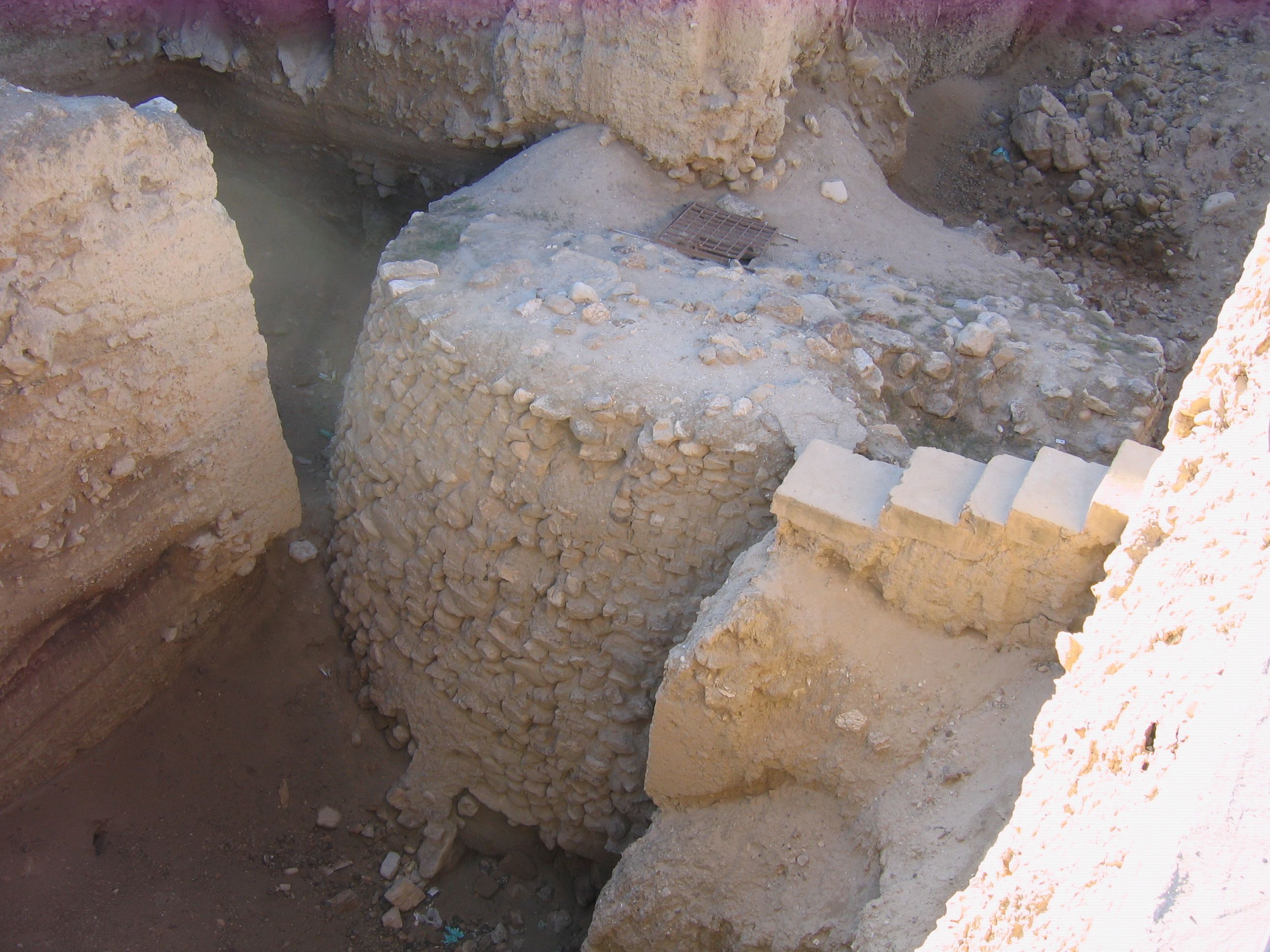
Massive stone walls piled upon each other

The Tower of Jericho, around 9,000 years old. Photograph:
Reinhard Dietrich (Own work), via Wikimedia Commons
.

Auf den Höhen der Rhön

Auf den Höhen der Rhön
(Juli-Haiku)

*

Mit blauen Blumen
bestickt, bläht sich das goldne Korn,
ein Tanzgewand.

*

Auf dem Kiefernduft
gleitet der Habicht dahin
hoch über den Höhn.

*

Die Kuppen im Dunst,
ein perlgrauer Scherenschnitt
vorm Silberhimmel.

*

Im kupfernen Laub
ganze Quader von Jade:
bemooste Felsen.

*

Christina Egan © 2003

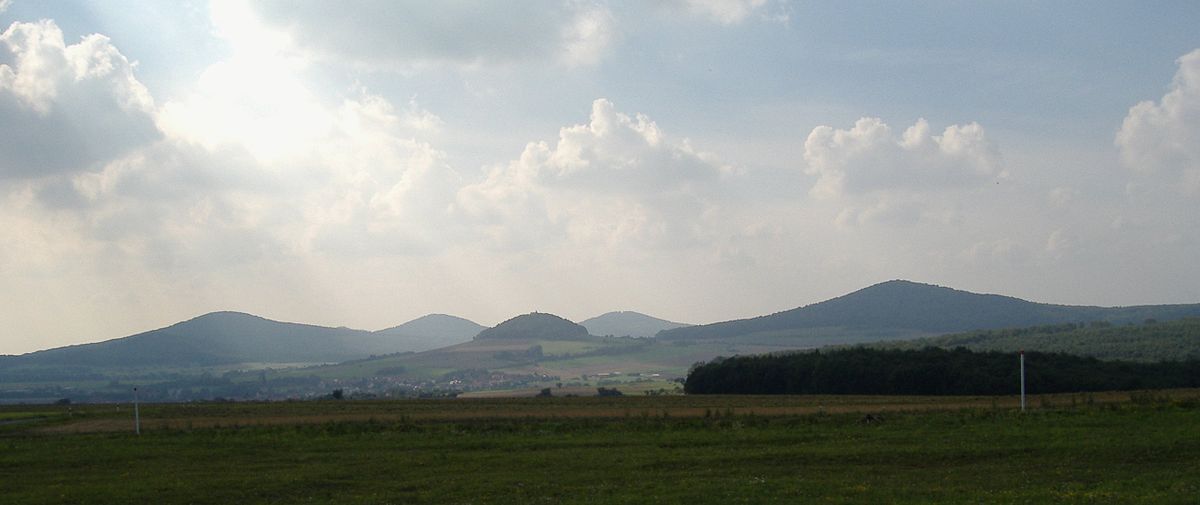
The Rhön Mountains, part of the Central Uplands of Germany, stand out through their wild and austere beauty. – This series of haiku has just been published in the photo calendar Rhönkalender 2016.

English speakers: This text, titled On the heights of the Rhön, works quite well in a translation software. You can also see two wonderful panoramas of the mountains at the link to the calendar and some more on Wikipedia.

Silhouette of low silver-blue mountain range against silver-blue sky, just like in the poem.

Photograph: “Kegelspiel” by N8mahl at the German language Wikipedia.

Midsummernight Far North

Midsummernight Far North
(Darss)

This is the edge of the land.
The number of signals is seven:
The shimmering sand,
the green in the sea,
the red in the sky,
the crescent and star,
the bonfire’s glint,
the lighthouse’s fan,
the flashing afar —

The number of wonders is seven.
This is the midsummernight,
this is the height of the light,
this is the hem of the heavens.

We are alive.
We are together.
This is all here.
This is forever.

Christina Egan © 2015

The Darß (Darss) is a  tranquil strip of land between some lakes and the Baltic Sea.
Around summer solstice, dusk is only between ten and eleven (summertime). 
A German poem about dusk on the Darss is ostseeschlaflied (Baltic Sea Lullaby).

Göttermahl (Malerei in Fulda)

Göttermahl
(Malerei im Stadtschloß zu Fulda)

Rundes Brot mit blonder Rinde
spendet uns der Sonne Kraft;
roter Wein voll süßer Hitze
filtert uns der Erde Saft.

Zu dem Abendbrot gesellt sich
stückweis gutgewürzte Wurst;
saftigbunte Früchte endlich
stillen den entfachten Durst.

Welches Mahl man mir auch biete,
nichts kommt dieser Speise gleich,–
und mir scheint gar, man genieße
ebenso im Götterreich!

Christina Egan © 2015

You can find very clear photographs of
Emanuel Wohlhaupter’s painted ceiling
(1728-1730) in the City Palace of Fulda
at Zentralinstitut für Kunstgeschichte.

The Man is Not in his Seat

The Man is Not in his Seat

The coffee is still on the table,
the table is still in the street,
the seat is still in the corner:
but the man is not in his seat.

Perhaps he has gone to his office,
perhaps he has gone to the park;
perhaps he’ll be back in a minute,
perhaps he’ll be back before dark.

I think he is due in the morning,
I think he is due every day;
I think we have all of us seen him
whenever the bus passed this way.

The coffee dries out on the table,
the table is still in the street,
the seat is still in the corner:
but the man is not in his seat.

A friend may have called at the café
and lead him away with a smile;
or a man in a car brought a message,
so he said: I might be a while.

Or else he will never return here
to raise his glass to the street:
The stranger who passed was an angel
to take him away from his seat.

Christina Egan © 2015

In memoriam Erdogan Güzel
Murdered in the street in Wood Green,
London, England, on 10.7.2015
Requiescat in pace

SEMPER AMEMUS

SEMPER AMEMUS
 
Ein großer lila Schmetterling
an einem feinen Silberband:
ein einfallsreiches Ornament
von unbekannter Künstlerhand,

das man vielleicht den Mauerresten
des Vorstadthauses einst entringt,
in sorgsam aufgereihten Kästen
dem Publikum zur Ansicht bringt.

Bis dahin werden Bild und Name
der Trägerin verloren sein;
nur ein verbeulter Brillenrahmen
wirft einen warmen Kupferschein,

und, rätselhaft, ein Silberring
trägt eine Inschrift auf Latein.
Die Zeitung schreibt: Der Schmetterling
mag Zeugnis einer Liebe sein.
 
Christina Egan © 2015

A woman's throat with a large butterfly pendant in silver and purple and a long blond ringlet on her dark garment.This story takes place in the future: when we are the past  unearthed, marvelled at, mused about. The inscription on the ring – which is a real item from the year 2000 AD – means ‘May we always love each other’.

Hält die Waage Nacht dem Tage

Hält die Waage Nacht dem Tage

Sieh, Morgen graut,
sieh, Morgen blaut!
Noch einmal leuchtet grün das Laub,
noch einmal schimmert gold das Haar,
und Mittag bäckt die Früchte gar.

Das Ziffernblatt
liegt sonnensatt,
der Schatten aber rückt hinab.
Der Wein saugt letzten Saft hinauf,
die Felder halten Ausverkauf.

Das Licht entsinkt,
das Jahr verklingt…
Noch einmal wird der Schritt beschwingt,
bevor uns Nebel stumm beschwert
und Sturm uns durch die Haare fährt.

Hält die Waage
Nacht dem Tage,
fällt die Blüte ohne Klage,
treibt der Feuerdorn die Beeren.
Was vergeht, wird wiederkehren.

Christina Egan © 2015

Das Lied meines Lebens

Das Lied meines Lebens

I.

Alle Buchten unsrer Meere,
allen Regen, alles Licht
finde ich in deinen Augen:
Du bist schön. Und weißt es nicht.

Alle Schätze dieser Erde,
von der Knospe bis zum Stern,
finde ich in deinen Zügen:
Doch du schweigst. Und du bist fern.

II.

Ach, ich lebe für die Stunde,
da dein Herz sich mir enthüllt
und mein beinah lebenslanges
Sehnen endlich sich erfüllt,

da der Suchstrahl deiner Augen
sich in meine Augen wagt
und dein Mund fast ohne Worte
meinem Mund die Wahrheit sagt.

Christina Egan © 2015

Spiritum Sanctum vivificantem

Spiritum Sanctum vivificantem

Die Blume, die den Himmel hält,
zerspellt, wenn es dem Wind gefällt,
in einen Haufen blaues Laub,
in einen Löffel grauen Staub.

In Stundenglas der Glitzersand
versickert wie aus Kinderhand,
und wer zur Nacht noch steht und spricht,
erhebt sich schon am Morgen nicht –

bis jener Geist, der Leben haucht,
vom höchsten Himmel fauchend taucht,
rafft Staub zu Staub, fügt Bein zu Bein
und ruft: Es werde! Ihr sollt sein!

Christina Egan © 2015

The title is a Latin quote from the
Christian Creed (version of 381 AD):
‘the Holy Spirit, Giver of Life’.