Die Hängenden Gärten / Palmyra Perennis

Die Hängenden Gärten

Schwarz liegt der Strom, von Gestirnen benetzt,
blendend erhebt sich der Herrscher der Nacht
über die Hängenden Gärten,
über den künstlichen Gipfel,
welcher den Hügel ins Flachland versetzt,
welcher den Wald in die Großstadt gebracht,
über die plätschernden Gärten,
über die flüsternden Wipfel…
Flimmernd erhebt sich die Harfe zuletzt,
warm liegt die Stadt in versilberter Pracht.

Christina Egan © 2015
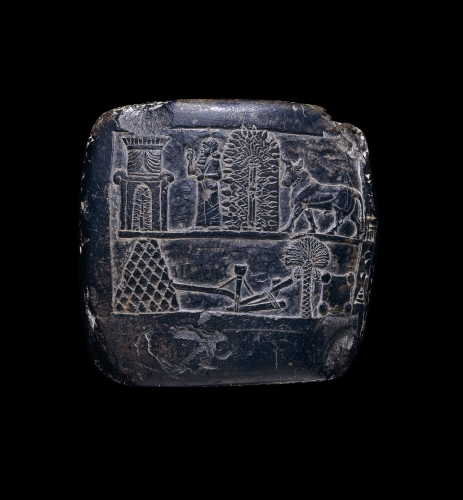
Basalt stone with carved images of trees, with a building, an animal and a man

The city of Babylon. Assyrian, 7th c. BC. —
© The Trustees of the British Museum
(Ref. no. 00032445001)

These musical lines evoke Babylon by night:
the moon and stars reflected in the Euphrates,
the Hanging Gardens rising above the big city,
murmuring fountains and a sparkling harp…
It could be the instrument which rises
sparkling like a star — or its voice.

Palmyra Perennis

Sank auch der stolze Bogen dahin mit dreifachem Seufzer,
ragt uns sein Bildnis im Geist schwerelos über dem Sand.
Sind auch zum Staube gekehrt der Ahnen goldene Hallen,
tragen das Erbe wir fort: sanften Triumph der Vernunft.

Christina Egan © 2015

For a picture of the ruins of Palmyra and a comment on
this poem on enlightenment, please look at my
MOTTO.

The view that cultural vandalism should be recognised as
a war crime akin to genocide has been discussed recently.
April Rules the Land

April Rules the Land
(April haiku)

April rules the land,
leaden and golden in turns,
wayward as we are.

*

Oxford Street, busy,
a splintered rainbow, patterns,
shaken and broken.

*

The white narcissus 
sings with a voice as sweet as
her brother blackbird.

Christina Egan © 2000

The last haiku originally referred to ‘the ivory rose’, although in England, outdoor roses do not blossom yet in April. When I changed the wording to ‘the white narcissus’ to link it to the season and month, I did not know that the flower’s official name is Narcissus poeticus, or Poet’s Narcissus!

The ivory rose
sings with a voice as sweet as
her brother blackbird.

Die Perle im Acker

Die Perle im Acker

Die eine runde Stunde
in deinem Zauberkreis —
Das Licht im Augengrunde,
von dem du selbst nicht weißt —
Musik aus deinem Munde,
die Seligkeit verheißt —
Die Perle ist gefunden,
ich zahle jeden Preis!

Christina Egan © 2016

Wiederum gleicht das Himmelreich einem Kaufmann,
der gute Perlen suchte, und als er eine kostbare Perle
fand, ging er hin und verkaufte alles, was er hatte, und
kaufte sie.

Mt 13, 45-46

These lines may work in a translation software…
although I would not claim to find ‘salvation’ in
a human being, only ‘bliss’ (but this indeed)!

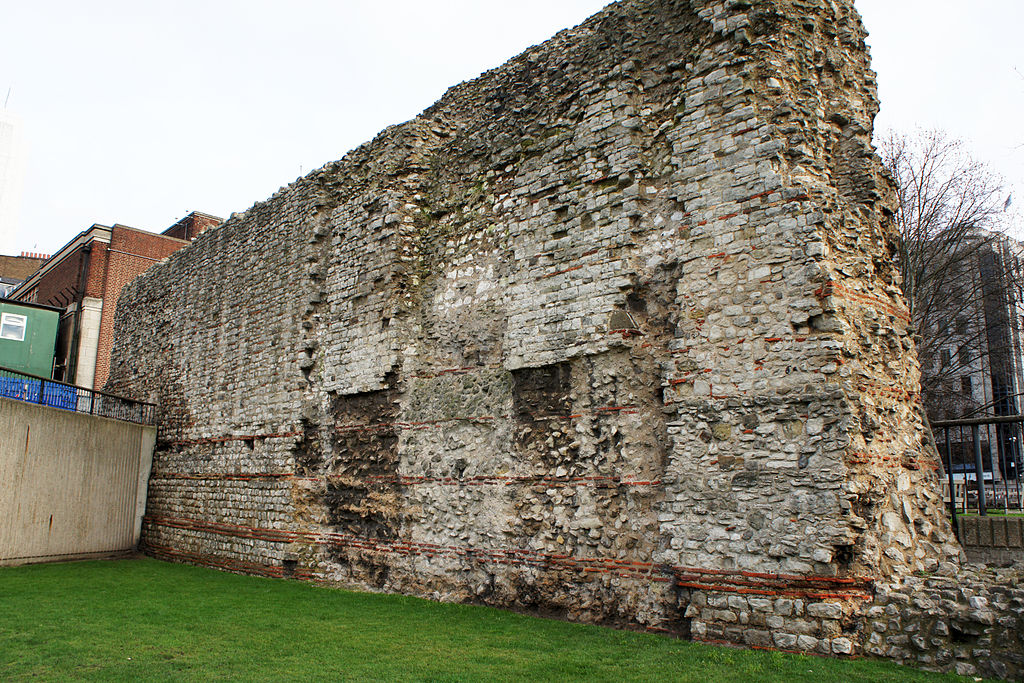
Ode to London Wall

Ode to London Wall

Moss is conquering your broken stones,
weeds are rooting between your bricks;
but you still stand tall, Wall,
facing the winds, the seasons, the years.

The round foundations of your towers
harbour herbs now, neatly labelled;
but your walkways bore watchmen once,
to guard the goods going round and the people.

You lie at my feet now, tall Wall,
I look down from the walkway above you;
but when I step down by two thousand years,
I see you could shelter me still or crush me.

And then I seem to remember –
we have met before, Wall –
you guarded me indeed –
and I guarded you!

On the treacherous clay we erected you,
in the obnoxious fog and sleet:
even and straight and strong as a rock,
forming a line in the marshy meadow,

forming a square along the vague river,
forming a knot in the net of roads,
from London to Chester and York,
from Paris to Sousse and Palmyra.

O Wall of soldiers and explorers,
O Wall of merchants and accountants:
yes,
you still stand tall and you talk,
you tell me to tell your story to all.

Christina Egan © 2015

High wall of neatly piled stone and brick in the midst of the city

You can see a section of the Wall of London and learn more about it in the Roman Galleries of the Museum of London. A visit there inspired me to write these lines. I talk to the stones as they talk to me; and I pass their story on.

Photograph: Roman city wall near Tower Hill Tube station,
by Mariordo (Mario Roberto Durán Ortiz).

London Wall Had Fallen Down

London Wall had fallen down,
brick by brick and stone by stone;
in the crenellation’s crown,
storks and starlings built their home.

London Wall stood in the mud,
but we fixed it brick by brick,
and we filled the wasteland up
with new lanes across the grid.

London Wall was melting down,
but we used it stone by stone;
and we built a bigger town
on the ground of proud old Rome!

Christina Egan © 2015

After the end of the Roman Empire, the Roman City of London was left uninhabited for generations, while a new city sprung up next to it; later, the original precincts became the centre again. This area is now known as ‘The City of London’, although it forms only a small part of the centre of town.

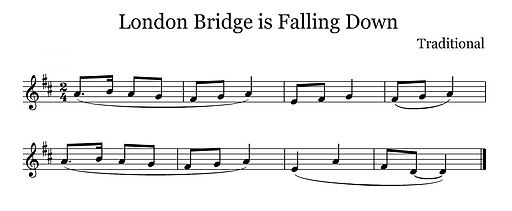
Musical score of 'London Bridge is falling down'


This little song alludes to the nursery rhyme London Bridge is falling down.

Proteus / Daedalus

Proteus

Your beauty is the beauty of the clouds:
as grand and graceful, as remote,
from silver changing into gold,
and changing shape, and changing whereabouts.

Your beauty is the one of Proteus:
I’m bound to watch it swirl and stay,
afraid your heart will likewise sway,
innocuous and gay and treacherous.

Your beauty is the one of Morpheus:
I’m bound to drink it in a dream,
afraid of stumbling on that stream,
with ghostly flowers studded, murderous.

Your beauty is the beauty of the clouds.
your ever-present smile the gleam
behind their soft and tousled seam…
Your soul is what your face reveals and shrouds.

Christina Egan © 2012

Daedalus

I watch the condor pass:
lofty and lonely,
steady and strong,
improbable like Daedalus…

I watch the condor pass
and want to follow him
across the barren peaks –
I want to touch the clouds…

Christina Egan © 2012

Heimkehr nach Köln

Heimkehr nach Köln

Die türmenden Inseln
der Kirchen,
die aschgrauen Schachteln
der Häuser,
die lärmenden Räder
der Plätze –

Geborgen bin ich
im Schoß meiner Stadt,
die mich die Sprache lehrte,
die vergessene Sprache,
die schlichten Gesänge
verschütteten Glücks.

Ein goldenes Antlitz taucht
aus dem bunten Dämmer hervor.
Wer bist du?
Geh nicht fort, Gesicht
ohne Namen, leihe mir
mein Geheimnis heut nacht!

Christina Egan © 1992

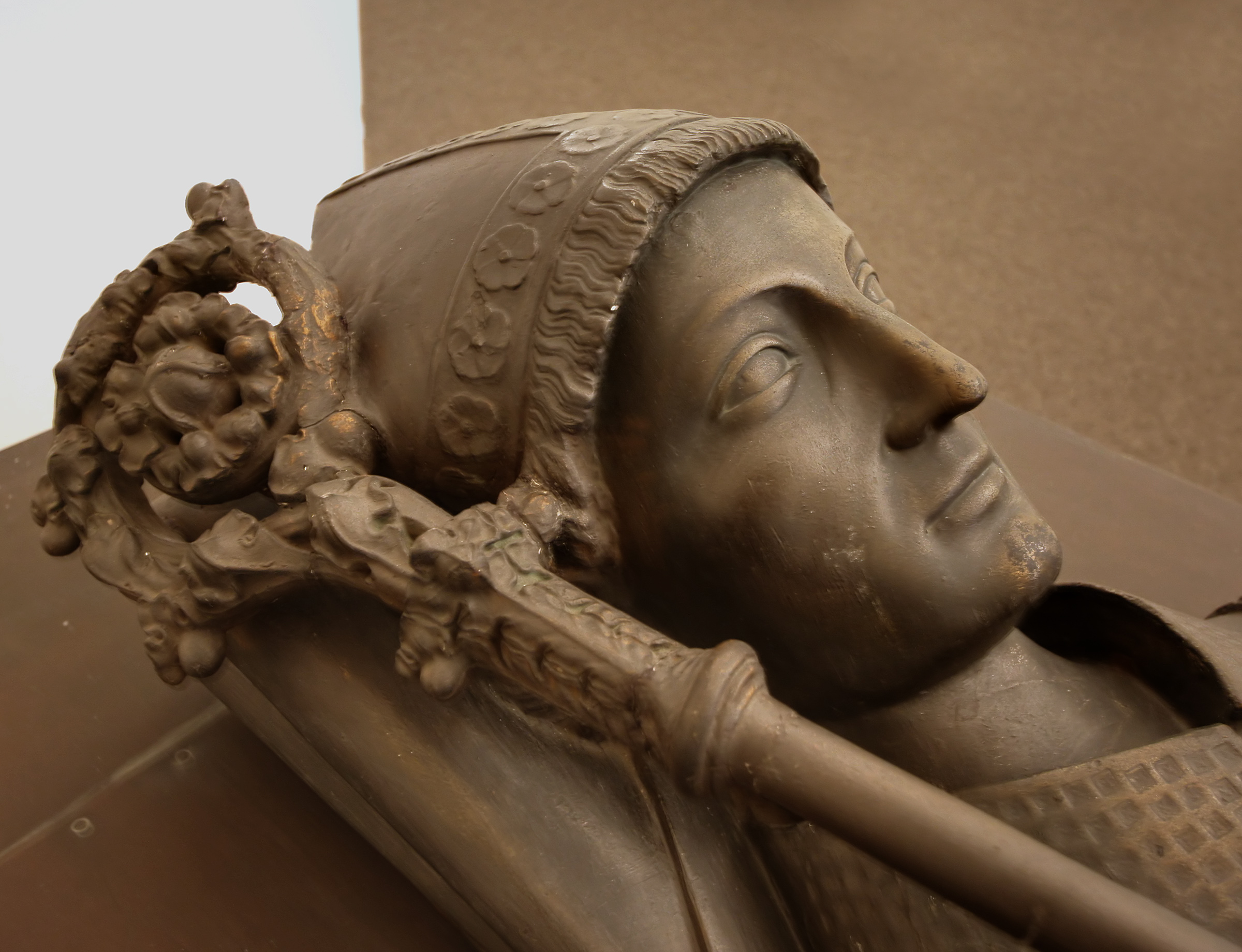
This poem about homecoming to a big city could refer to a place where someone grew up; or where they lived in the past; or where they may have lived in a former life on earth.

Bronze head of a bishop, mediaeval yet classical in appearance.Therefore, the mysterious golden face which is the key to the past could be a late relative; or a lost friend; or else a historical figure. I was thinking of this portrait at the back of Cologne Cathedral.

Photograph: „Grabmal Konrad von Hochstaden Gipsabdruck“ von Elke Wetzig (Elya)

Heimat gibt es doppelt

Heimat gibt es doppelt

Heimat gibt es doppelt: Heimat deiner Jugend,
Kopfsteinpflaster unter den karierten Schuhn;
anderswo vielleicht dann Heimat deines Herzens,
wo gewundne unsichtbare Wurzeln ruhn,

wo die Glocken süß und voll Verheißung beben
wie die frühen fliederfarbnen Azaleen,
wo die vielen flachen blassen Hausfassaden
lächeln, wenn die Wolkenschatten weiterwehn….

wo vor himmelstürmend hohen Kirchentürmen
glutrot oder sonnengelb die Blüten sprühn
und der Teppich der Jahrhunderte darunter
ruft, um deinen Lebensstrang hineinzuziehn.

Christina Egan © 2010

Another love letter to my favourite city, Cologne!

Ashen Land (For Syria)

Ashen Land
(For Syria)

The only offspring left calls from the eaves.
Some houses have a hundred hollow wounds,
and hamlets of a dozen centuries
surrender to contending winds their rooms.

The olive-trees stretch out their silver leaves
like angels’ feathers in a cry for peace.
Where is the comfort for a bird that grieves,
the peace for ashen land? Is it beneath?

It is beneath the nettles and the shards,
beneath the venom seeped into the field;
it is above the silver heaps of stars,
seed of unimaginable yield.

Christina Egan © 2016

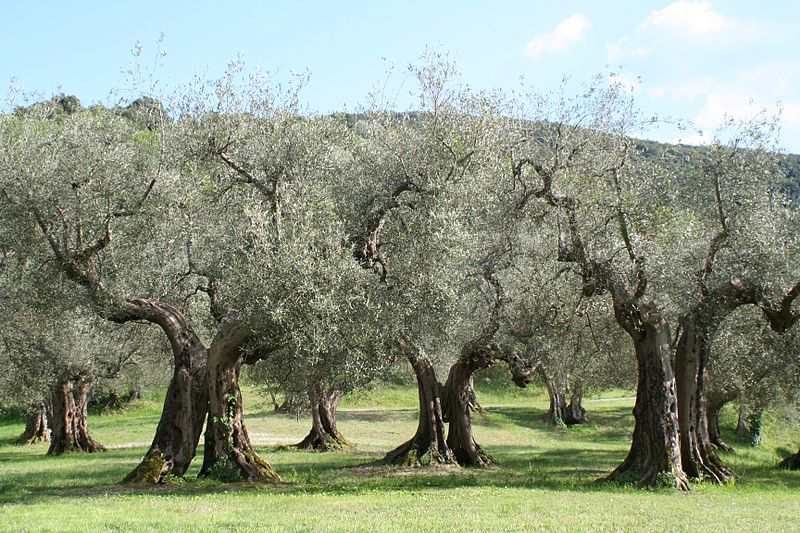
Olive grove, trunks and tree-tops silvery grey, like ashes.Photograph: ‘Olivenbäume in Umbrien’ by Adrian Michael.

I found this marvellous illustration on Wikimedia Commons long after I wrote the poem. I had not even thought of the silver bark and leaves resembling ashes…

In the past few years, millions of Syrians have lost their homes and possessions, or their jobs or studies, or their health or their limbs, or their loved ones or their own lives. The national liberation movement has turned into an apparently bottomless civil war, a literally insane religious war, and a vicarious war of outside powers. This conflict will change the face of the Near East and the face of Europe. Meanwhile, the suffering continues.

Let us pray for peace in Syria. All together.

ostermorgen

ostermorgen

der schwere aschenfarbne vorhang
aus wolken zerrissen und weggefegt
spätmärzhohe morgensonne
ergießt sich als murmelnde orgelfuge

etwas ist geschehen
etwas ist dennoch geschehen
etwas
ist

lösende
lockende
gegenständliche
gegenwart!

Christina Egan © 2013

This poem about Easter morning was published in a previous edition of the Rhönkalender. It does not work in translation machines because the language is unusual and innovative.

For Christians, the resurrection of Jesus is not a myth or symbol but a historical and cosmic event; and God is not a distant force but a living presence.

For more on the symbolism of Lent and Easter, see my previous post Fastenzeit / Lent.

Fastenzeit / Lent

Fastenzeit

An bitterem schwarzen Brot
nagt mein Mund.

An bitterer schwarzer Erde
nagt mein Herz.

Grauer Wind
fegt die Fluren rein.

Alles fastet
der Farbenfülle entgegen.

Christina Egan © 1985

Lent

My foot sinks
into bitter black earth.

My heart gnaws
on bitter black bread.

Grey wind
sweeps the fields clean.

Everything fasts
towards the flood of flowers.

Christina Egan © 1999

The church year mirrors the natural seasons  and symbolises our life events: voluntary renunciation in Lent corresponds to the hardships of winter or to emotional deprivation.

I shall shortly post a poem about Easter at ostermorgen, where faith in God and resurrection is linked to the renewed sunshine of spring and to the experience of communion and fulfilment.