The Tea Turned Cold – V

Please note the fifth part of an essay at POLITICS .

The Tea Turned Cold in the Cup,

or, Why Women’s Work is No Work

V.

When we read that many millions of young children in developing countries have to toil for their living, we are outraged; and when we learn that teenage boys often continue in forced labour while girls are usually forced into marriage, our outrage increases. However, we officially stop counting the child brides as child workers – because they ‘only’ do chores in their ‘own’ homes.

This policy of the International Labour Organization has been branded ‘insulting’ and ‘nonsensical’ by campaigner Stephen Lewis. We have learned to identify child marriage as child abuse; yet we have failed to identify domestic chores as child labour.

When we hear that in many regions of the world, girls must walk for hours to fetch water or firewood, so that they arrive at school late or exhausted, we do not fool ourselves for a moment about their ‘equal opportunities’, even where those are granted by law or where schooling is free.

Read more here.

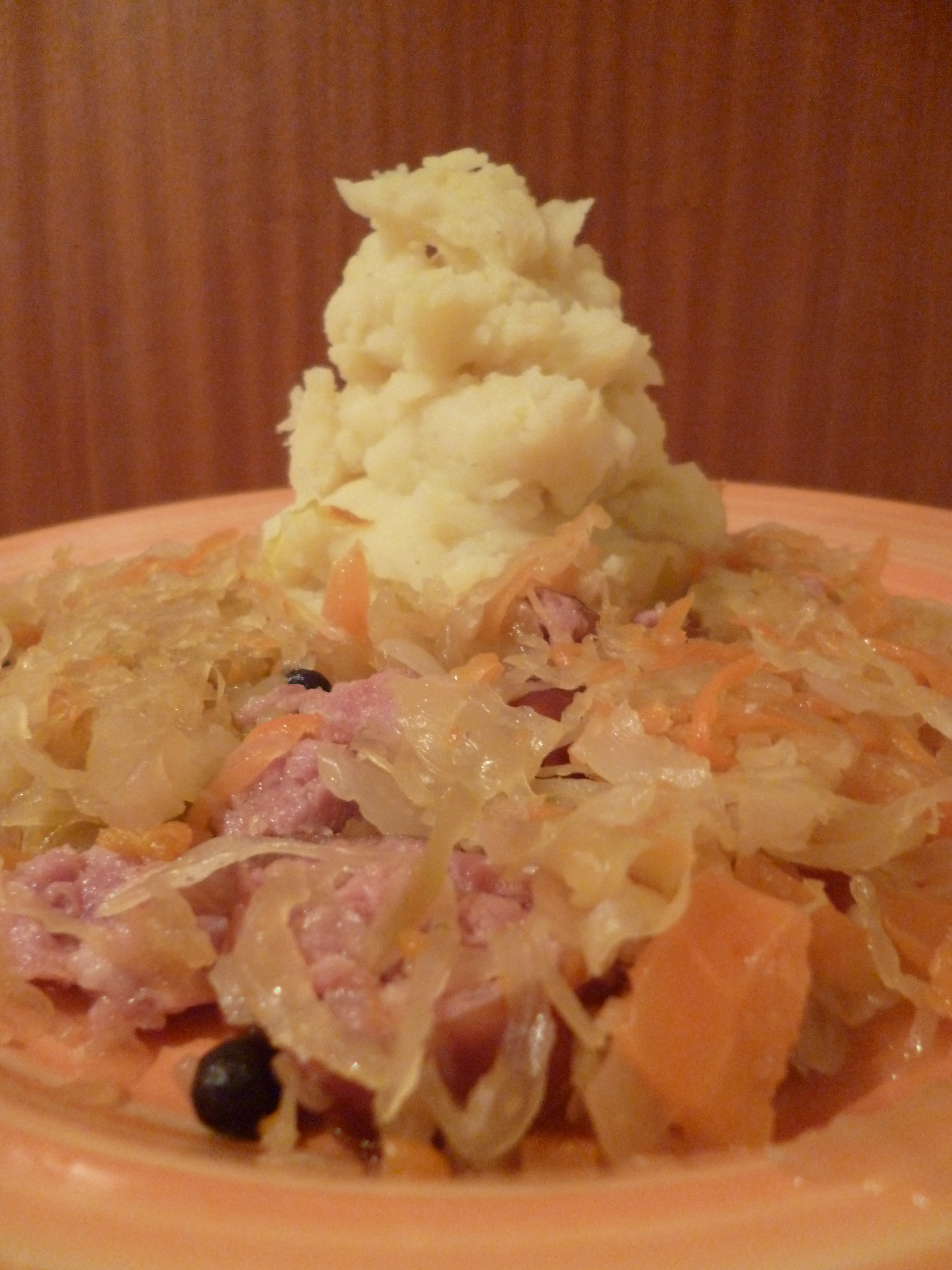
Plate with shredded cabbage and carrots across slices of meat and a little tower of firm mashed potatoes.A towering achievement:
Sauerkraut with pork and mashed potatoes.
Photograph: Christina Egan © 2016.

The Green Dress / Im grasgrünen Kleid

The Green Dress

This green, this green! The purest of greens,
the softest of silk, the smoothest of greens!
It’s mellow and creamy –
and glossy and hard –
it’s distant and dreamy –
and sudden and sharp –
It’s got all the earth in it, fields in full plume,
the glow of the sun and the snow of the moon!
There’s birch in it, ivy –
there’s lemon and lime –
and oceans and icebergs –
and olives and pine –
And the lady beneath the shimmering screen
bears the soul of the earth in the secret of green!
In the gold of her hair
and the blue of her eyes,
in the lines of her limbs
and the flow of her voice
there’s the glow of the sun and the snow of the moon:
a creature of night and a creature of noon.

Christina Egan © 2009


Im grasgrünen Kleid

Ich stehe am Fenster und schaue hinaus,
und niemand bemerkt mein bescheidenes Haus,
und niemand bemerkt mein grasgrünes Kleid,
und niemand bedauert mein aschgraues Leid.

Die Dämmerung wogt, und es rauscht der Verkehr.
Ich stehe und schaue. Und niemand schaut her.
Zuletzt ist es still, und es rauscht nur die Zeit.
Ich weine allein in mein grasgrünes Kleid.

Und einst werd ich fort sein und einst sogar tot,
und nur dieses Liedlein bezeugt meine Not:
Mein Kleid wie der Sommer, mein Haar wie der Herbst,
mein Leben, das niemand als du, Leser, erbst.

Christina Egan © 2016


The woman in the green dress stands for life, fertility, plenty, joy — like the Green Man or Green Woman of ancient pagan traditions, I suppose…

Die blauen Fernen

Die blauen Fernen

Fernab der Meere und der mächtgen Ströme
liegt meine Hügelheimat hingebreitet;
mit jeder Wendung, Steigung, die ich nehme,
wird mir der Blick auf neue Höhn geweitet.

Was braucht es Meere, wenn uns Wald und Wiesen
und Feld und Felsen und die blauen Fernen
wie Wellenberge, Wellentäler fließen,
den Schritt beflügeln und das Herz erwärmen?

Die Luft ist rein, mit Duft und Kraft geladen,
die Glieder und den Geist mir zu verjüngen;
und winters werden Schnee und Nebelschwaden
des Eismeers Zauber in die Berge bringen.

Christina Egan © 2016


One stanza of this poem is printed in the Rhönkalender 2018 with a photo from that part of the Central German Highlands; the whole poem has been published in the Münsterschwarzacher Bildkalender 2019.

Der letzte Tropfen

Der letzte Tropfen

Wein von der Farbe des Blutes, jedoch vom Dufte der Rosen,
Wein von des Abends Kühle, darauf von der Hitze des Herdes…
Halb nur bewußte Gebete murmelnd, vergieß’ ich das Opfer:
Göttern den ersten Tropfen, den letzten dem fernen Geliebten.
Unbekannt sind mir jene, nicht weniger fremd ist mir dieser,
marmornes Bildnis verborgen im Haine heiliger Pinien.
Glatt wie silberne Spiegel und pfeilgerade die Straßen,
welche das mächtige Rom über Sümpfe und Hügel geknüpft hat:
Dennoch führt nicht eine zum Ziel, zum Dache des andern,–
ewig harrt man allein, allein unter schweigenden Sternen.

Christina Egan © 2015

Roman mosaic of bottle and cup

Like every year, I begin this blog with a Roman road

The poem is written in hexametres, which I find difficult to emulate in English and German.

You can find another story with spilt wine and ancient roads, in the form of an English poem, at Quo vadis?.


Roman mosaic, Bardo Museum, Tunis.
Photograph: Christina Egan © 2014.

ich sammle das goldblatt / Scant Scent

ich sammle das goldblatt

ich sammle das goldblatt vom himmel
wer hat es gemalt?
den lapislazulischimmer
wer hat ihn bezahlt?

ich sammle den pfeil jener elster
ein schrei und ein flug
ich schneide das bild aus dem fenster
der glanz sei genug

ich fange den wind in den zweigen
bevor er verweht
ich schreibe mit purpur das schweigen
das späte gebet

Christina Egan © 2017

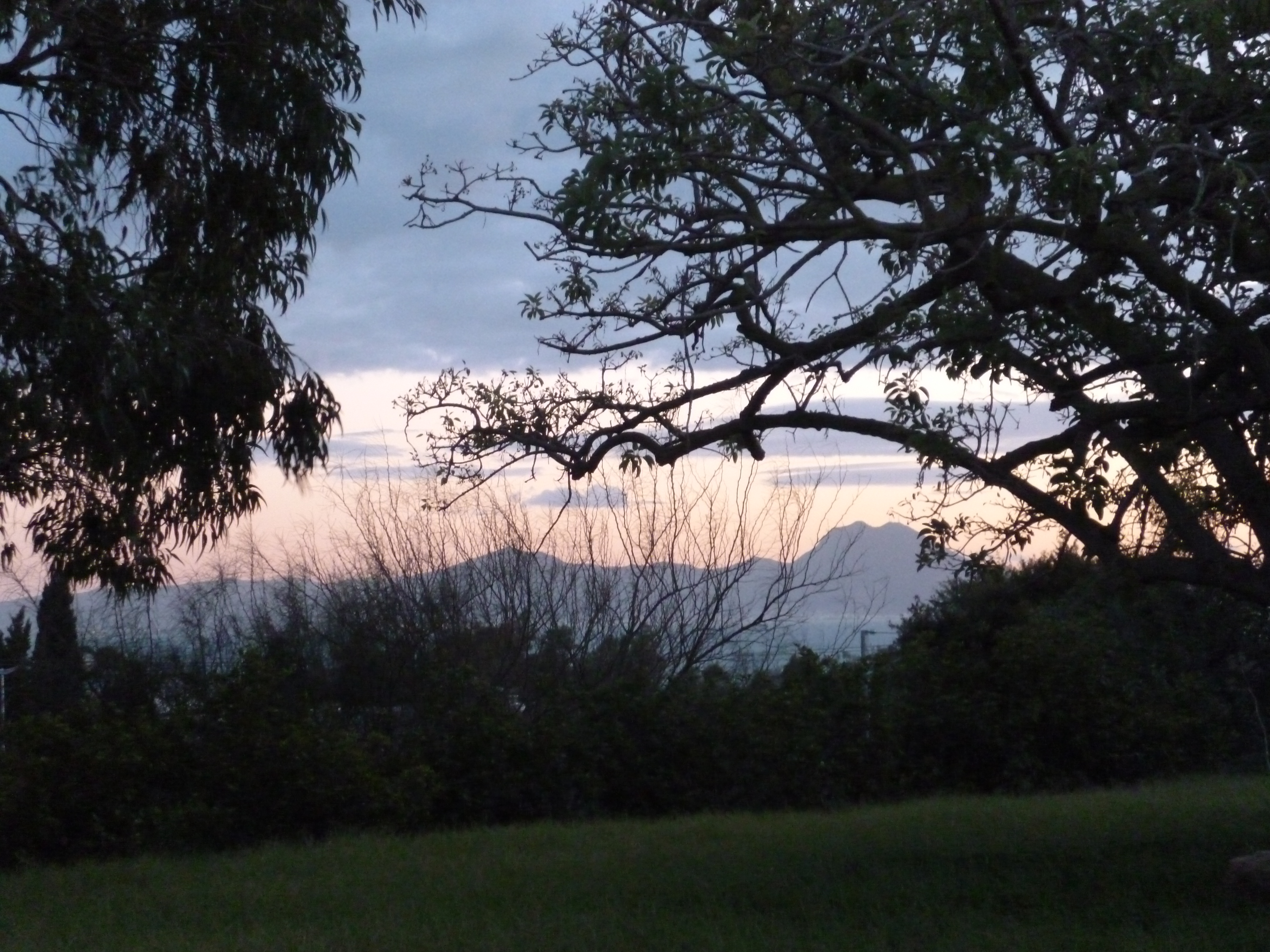
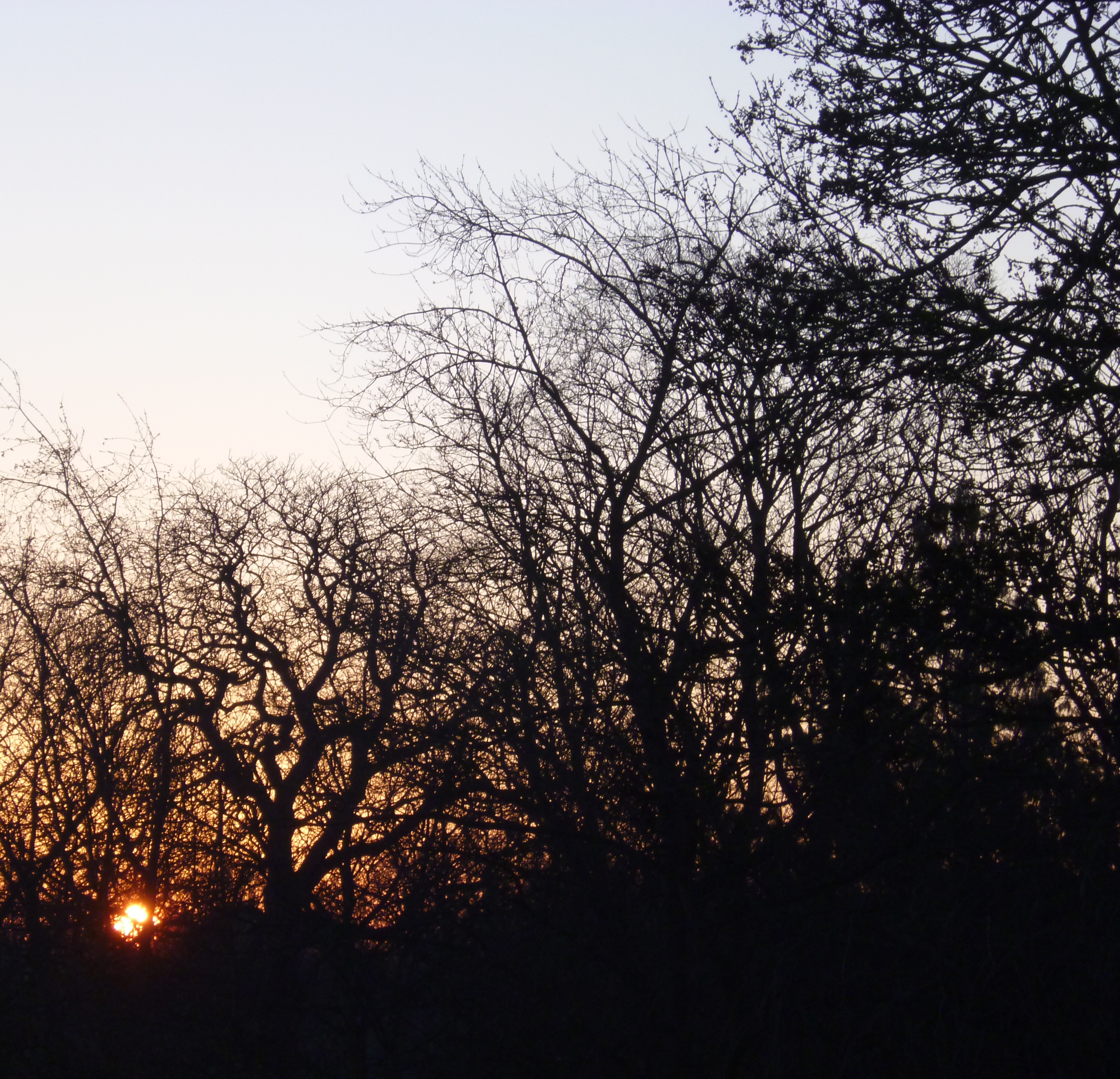
Bare branches against sunset in mauve and apricot; high mountains along horizon.


Sunset over the Bay
of Carthage, Tunisia,
around New Year’s Eve.

Photograph:
Christina Egan © 2013


Scant Scent

The incense of my prayer
turned damp in this dark place,
where layer upon layer
of cloud obscures the grace
of light and breath and warmth,
of ease and joy and strength —
O Lord of Hosts, accept
my incense with scant scent…

Christina Egan © 2017

I Sought the Star / Weihnachtskerzenflamme

I Sought the Star

Weary was, had wandered far…
        Again, it snowed.
Without a doubt, I sought the star
        above the road:

 The star that had been made for me,
        a radiant face,
above the maze of destiny,
        above the ice.

I climbed a random rugged hill –
        and there it burned!
Above a shelter bright and still
        and warm and firm.

And still they glow, the tiny spark
        and snowed-in home,
both given to my hungry heart
        by faith alone.

Christina Egan © 2010


Weihnachtskerzenflamme

Wie eine Weihnachtskerzenflamme strahlt
dein sanftes schmales Angesicht,
auf dem sich langersehnte Freude malt,–
so hell bist du und ahnst es nicht.

Wie hoheitsvolle Rosenknospen stehn
die Hände in dem goldnen Licht,
so zart, als würden sie im Wind vergehn,–
so weich bist du und weißt es nicht.

Christina Egan © 2014


A ‘Christmas Candle Flame’ as an image for a joyful, gentle, guileless face works only where, like in Germany, the tradition of real candles is upheld!

The second stanza compares the person’s hands to tender, graceful, regal rosebuds. The poem appears to describe a child but was in fact written for an adult.

bei der kapuzinerkresse

bei der kapuzinerkresse

die hohen blättertreppen übersteigt
ein strauß aus scharfen feuerfarbnen blüten
du stehst und schaust und malst dir aus er gleicht
den küssen die das lächeln überbieten

und fragst dich ob in dem verwunschnen garten
umsäumt von fremden roten blumenfächern
wohl wirklich solche gaben dich erwarten
als antwort auf dein grenzenloses lächeln

Christina Egan © 2011


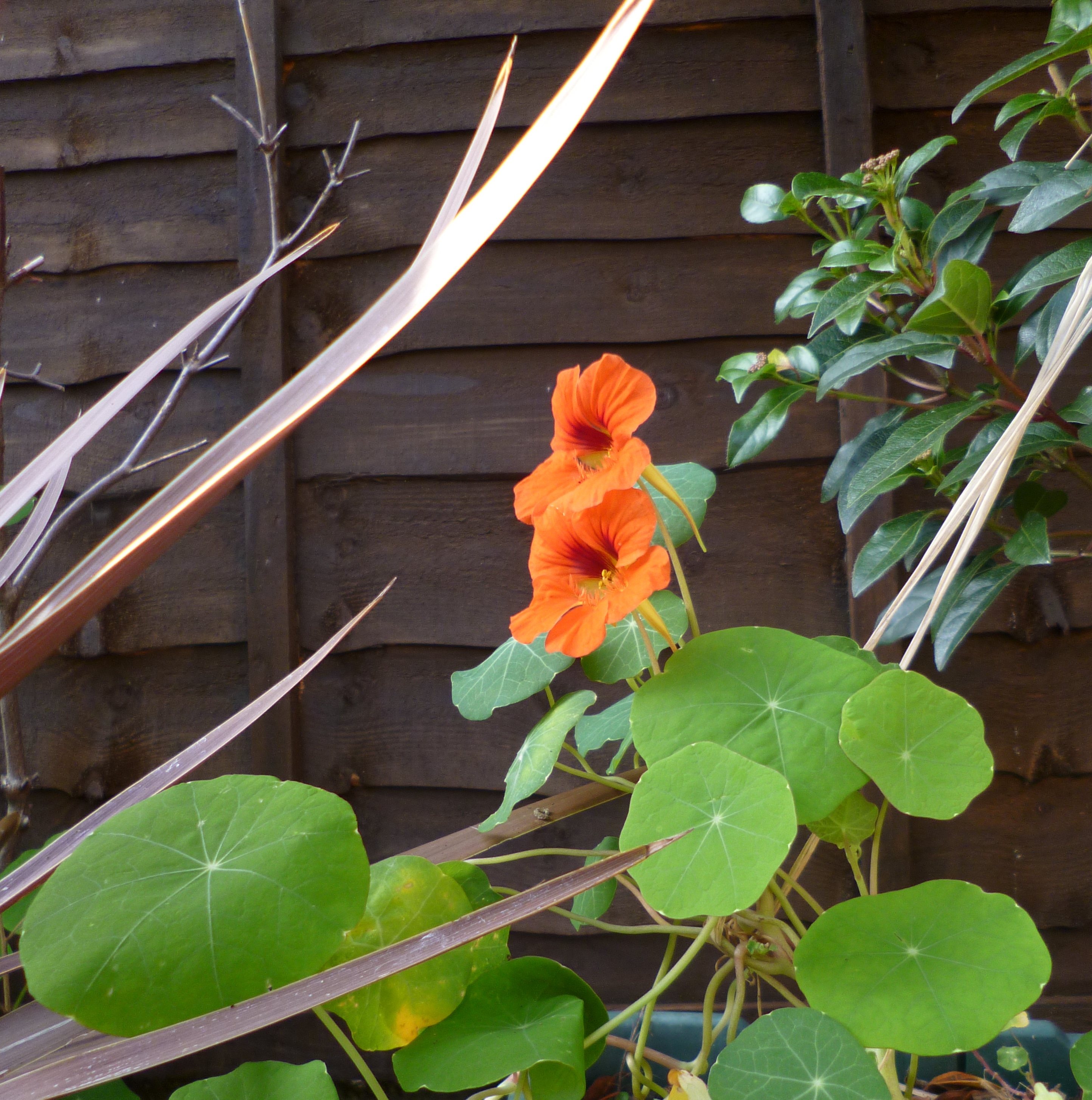
Two nasturtium flowers in very strong orange with some of their large round leaves in fresh green


You can actually eat the petals and young leaves of nasturtium: and they taste as fiery as they look! These were the last of cascades of blossom — in December!


Photograph: Christina Egan © 2015.


Beetles on the Ark / Urban Copse

Verquer

Verquer

Garden furniture jumbled up by storm in front of old wooden shed.Ich schau auf die Straße:
Doch niemand kommt her.
Die Sonne ist prachtvoll,
die Wolken sind schwer.

Ich schau in den Garten:
Die Stühle sind leer.
Die Welt ist betörend,
die Welt ist verquer.

Und niemand, ach niemand
erahnt meinen Schmerz!
Das Leben – ein Schicksal?
Das Leben – ein Scherz?

Wie Weihrauch denn steige
mein Wort himmelwärts,
daß Gott sich mir neige
und wandle mein Herz.

Christina Egan © 2015

Photograph: Christina Egan © 2012.


The Dance of the Sacks

The Dance of the Sacks

There’s the war tax and the peace tax
There’s the core tax and the fleece tax
There’s the fish tax and the spice tax
There’s the poll tax and the vice tax!

There’s the whisper of a tax-plan
There’s the whistle of the tax-man!

There’s the old tax and the new tax
There’s the wool tax and the wheat tax
There’s the old tax for the new sacks
And the new tax for the old sacks!

There’s the tax-man with his tablet
It’s a state-protected racket!

Christina Egan © 2011

Small clay tablet with cuneiform text.

This comical song for a jig is taken from my stage play The Bricks of Ur  (© 2011) set around 2000 BC.

The tax collectors could wield either Sumerian clay tablets or 21st century electronic tablets!

I must have been inspired by a hilarious jig in one of the first seasons of Shakespeare’s Globe in London…

Receipt for 13 woolen garments, ca. 2038 BC. Photograph by Rama, Cc-by-sa-2.0-fr [CeCILL or CC BY-SA 2.0 fr] via Wikimedia Commons.