Wandel (Wo ist der hohle Baum)

Wandel

Wo ist der hohle Baum
im Kreise der steinernen Bänke,
der mit knochigen Fingern
die Netze des Nebels,
mit knorrigen Zehen
das feuchte Gras durchfischte?

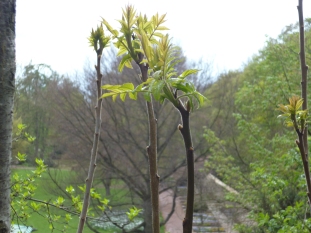
Buds and fresh leaves on top of shoots above a parkAlles ist quellendes Blatt nun
und berstendes Bunt,
Laubzauber, lautloses Lachen,
tiefer Atem langer Tage
zwischen bergendem Grund
und goldenem Wind.

Christina Egan © 2006

Schloßpark Fulda im Frühling.
Photograph: Christina Egan © 2014.

The Aqueduct of Summer

The Aqueduct of Summer

A mighty bridge delivers, arch on arch,
the elixir of life: the light, the sun.
More yellow blossom blinks beneath each arch.
A milestone stands before arch twenty-one:
Hic aequinoctium, hinc lucis pars.
From equal night and day, the light has won.
This is the aqueduct of summer: March.
Proserpina returns with Phaeton’s run!

Christina Egan © 2016

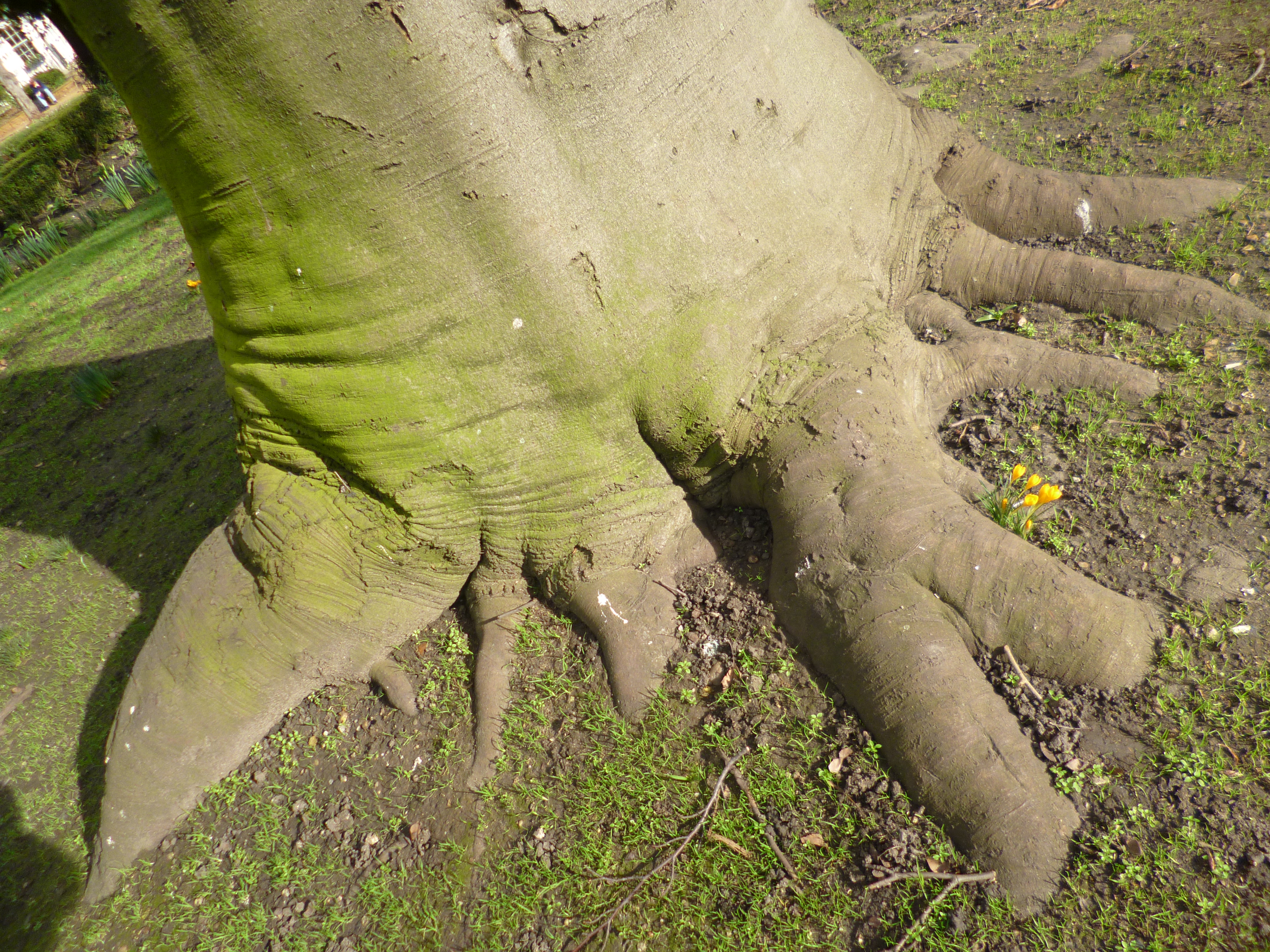
Tiny bundle of yellow crocusses between massive tree roots, with sparse grass around.

Phaeton is an ancient sun god and Proserpina (or Persephone) a spring goddess who returns from the underworld for the duration of summer.

You will find German poems on the spring equinox at Westminster Bridge, Mitte März  and on the autumn equinox at Der letzte Tag des Sommers ist gekommen  and Hält die Waage Nacht dem Tage.

The Latin quotation is made up…!

Photograph: Christina Egan © 2017.

gesichter (fotografie / teetasse / verabredung)

gesichter

I.

fotografie

dein angesicht fängt wie ein schrein
den flammenglanz des himmels ein
und stellt ihn zart und zauberbunt
in meines herzens mittelpunkt…
ich bin allein und nicht allein.

II.

teetasse

ich schau in einem schwarzen teich
flüchtig und deutlich ein gesicht
vor einsamkeit und kummer bleich
wie ein gespenst bei mondenlicht…
ich bin es und ich bin es nicht.

III.

verabredung

zwei stimmen stimmen überein
und fremde züge spiegeln sich
zuweilen blütenblätterfein:
auf deines reimt sich mein gesicht!
du weißt es und du weißt es nicht.

Christina Egan © 2012


Two voices which echo each other, two faces which mirror each other, two people who rhyme… Everyone’s dream — and sometimes it comes true.

The Spell of Spring

The Spell of Spring

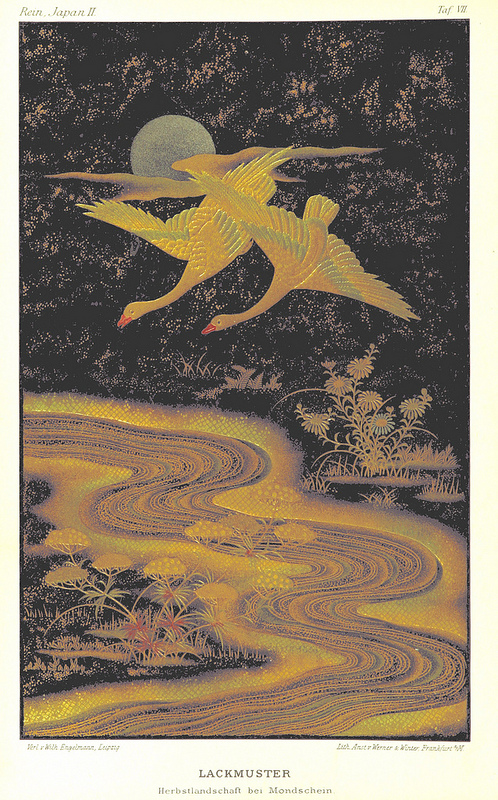
Japanese laquer picture: two flying geese above river in gold, full moon in silver.When seven geese arise and fly
in magic patterns through the sky,
the silver rings of cloud will blush,
the orb of sparse young green glow lush.

When seven geese cry out and glide
from wintertide to summertide,
we’ll pass an arbour like an arch
and be transformed by mighty March!

You have become my you, and I,
your you, and our hearts float high,
when seven geese sail out of sight
into the secrets of the night.

Christina Egan © 2015

Image from: Japan nach Reisen und Studien by J. J. Rein (1881-86). Provided by the British Library through Flickr.

Dem Freunde

Dem Freunde

Wir brauchen gar nicht viel zu reden
und haben uns doch so rasch erkannt…

Es ist,
als seien wir in einem andern Leben
Hand in Hand
durch die lachenden Felder gerannt
und hätten uns, ernsthaft und atemlos,
ein Versprechen gegeben –

oder als seien unsere Sprachen
eng miteinander verwandt:
dein Gesicht will ich entziffern,
deine Worte erleben
und deine Hand…

Als welche Botschaft, Freund,
sind wir einander gesandt?

Christina Egan © 1990

Zauberspruch zur Winterverbrennung

Zauberspruch zur Winterverbrennung

Lohende Flammen, lohende Glut,
schmelzet den Schnee uns, schmelzet den Frost!
Knisternde Äste, knisterndes Holz,
brechet den Bann uns, brechet das Eis!

Christina Egan © 2016

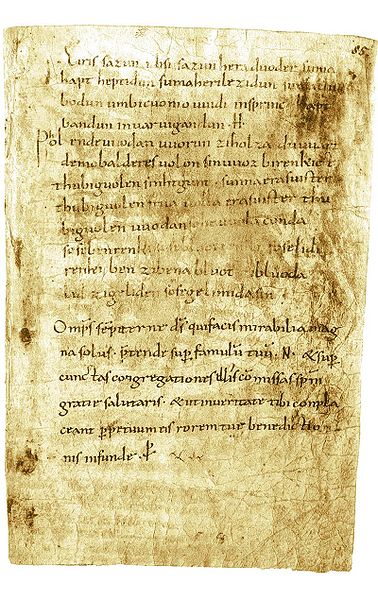
Ancient manuscript (9th/10th c. AD) in neatly written Old High German.


These lines were inspired by two things: the German custom of gathering round huge bonfires to drive the winter out; and those few pagan spells in ancient German which have come down to us.

The sound of the hissing flames and the crackling branches is captured in the verse. The power of winter is interpreted as a spell, an ordeal of darkness and cold, which this spell, the chant or prayer of man, can break.


The only pagan spells in Old High German, probably written down in Fulda monastery in the 9th or 10th century AD. – Photograph: Public domain, via Wikimedia Commons.

Rhymes / Known

Rhymes

No, our names don’t rhyme well,
we come from far-off lands –
but neither rhyme nor reason
can censor our hands,

those hands that seem created
to grasp the chance, to grasp
each other, tight and quiet,
as if two souls could clasp.

Yes, hills from hills are distant
and can’t wed as they would,
they cannot warp and wander –
but people could and should.

Christina Egan © 2004

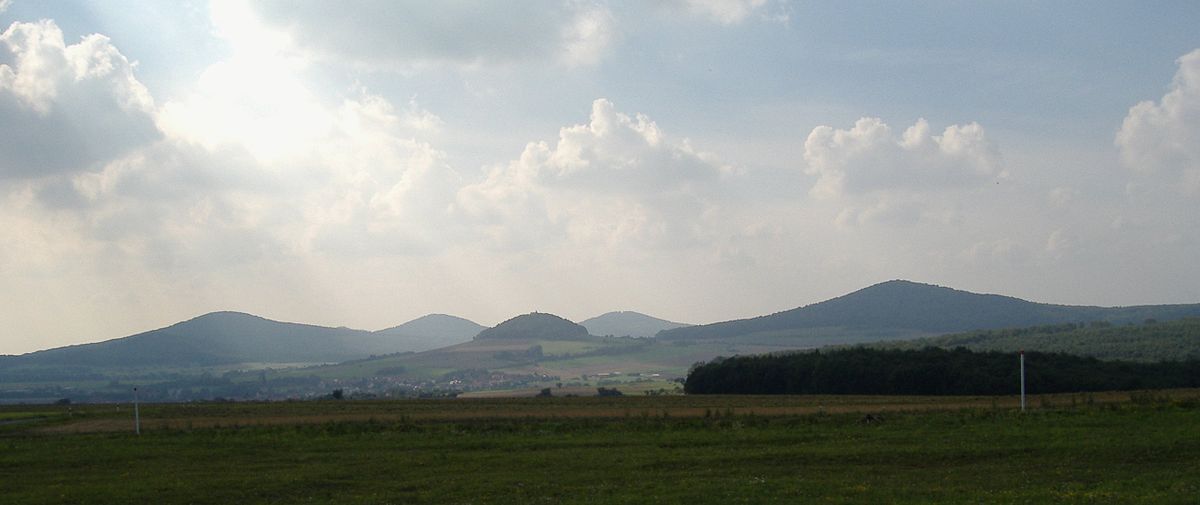
Silhouette of low silver-blue mountain range against silver-blue sky, just like in the poem.

Known

I’ve smelt the rarest rose of snow,
I’ve tasted of the sun’s last glow.

I’ve met you on a cloud-veiled ridge,
perhaps the planet’s highest bridge.

I’d looked out long. And now I’ve seen.
I’ve once been loved. I’ve known. I’ve been.

Christina Egan © 2004


The thought that people, unlike mountains, can get to each other across distances, goes back to a Greek proverb.

Photograph: “Kegelspiel” by N8mahl at the German language Wikipedia. Licensed under CC BY-SA 3.0 via Commons.

Irgendein Montag

Irgendein Montag

Was wär das Leben enthoben vom Nebel?
Was wär das Leben mit prallvollem Segel?
Was wär der Tag wo sich alles gelohnt hat?
Irgendein Montag…

Einmal die Plätze und Parks zu durchwandern
im Wissen du bist unterwegs zu dem andern
der deine Augen studiert wie ein Buch
als wärst du die Erde als wärst du genug

Das wär das Leben so wie es gedacht ist
das wär das Leben für das du gemacht bist
das wär der Tag wo sich alles gelohnt hat
irgendein Montag…

Einmal gemeinsam die Nacht zu durchschweben
einmal das Leben zu Ende zu leben
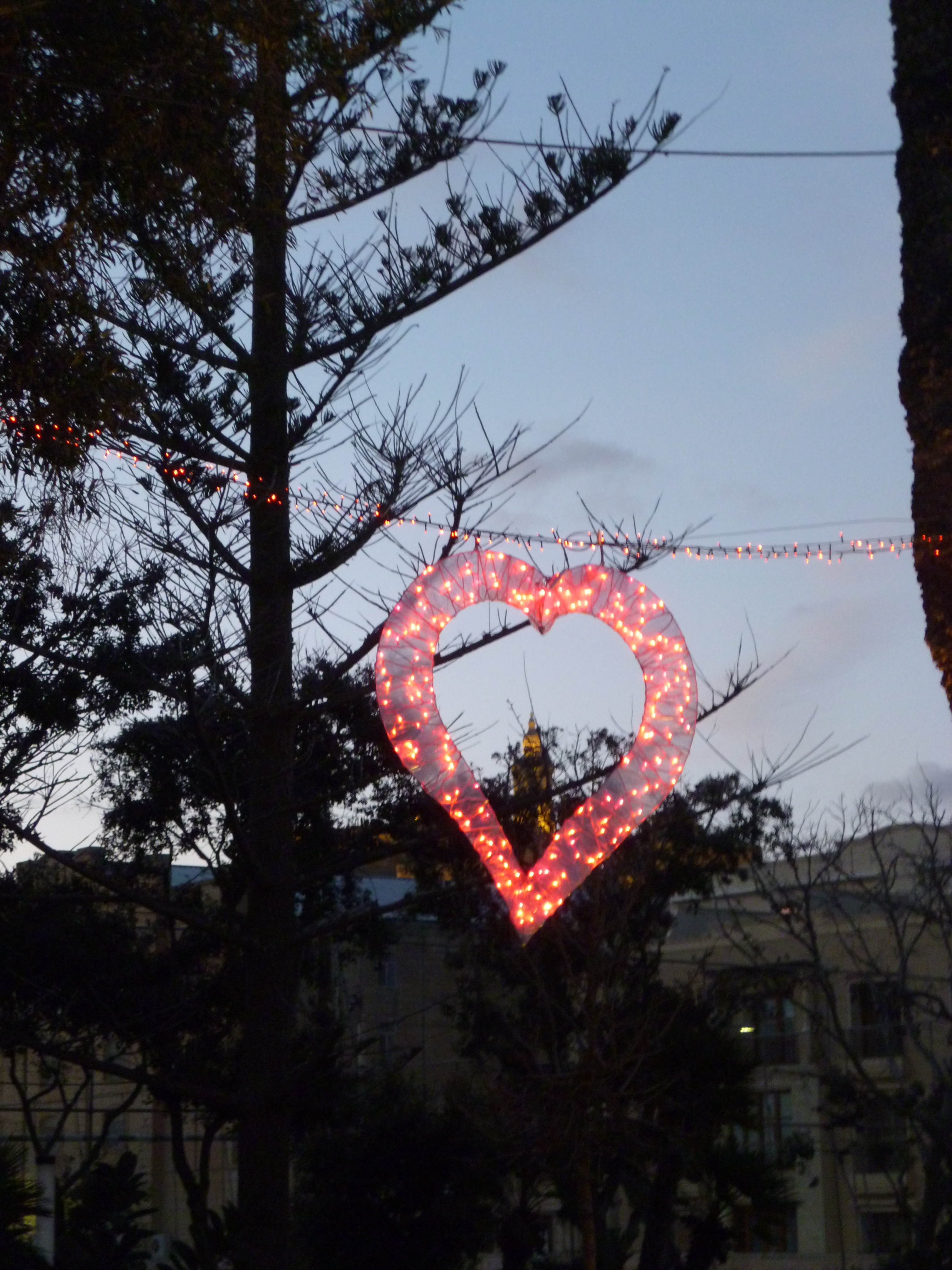
Park in the dusk, with heart-shaped illuminated decoration, forming a frame around a spire in the distance.einmal zu wissen ein einziges Mal
wenn auch zur Zeit nur im Konditional:

Dies wär die Liebe so wie sie gedacht ist
dies wär die Liebe für die du gemacht bist
dies wär der Mensch der wenn er dich küßt
weiß wer du bist

Das wär das Leben so wie es gedacht ist
das wär das Leben für das du gemacht bist
das wär der Tag wo sich alles gelohnt hat
irgendein Montag…

Christina Egan © 2011

Valentine’s Day on Gozo, Malta.
Photograph: Christina Egan © 2018.

Weißer Schnee auf roten Rosen

Weißer Schnee auf roten Rosen

Graue Gänse, grauer Himmel
Stumme Stämme um den Teich
Ungewohntes weißes Flimmern
Und ein Schimmern im Gesträuch

Weißer Schnee auf roten Rosen
Hingesunken über Nacht
Stengel von der Last gebogen
Späte Knospen überrascht
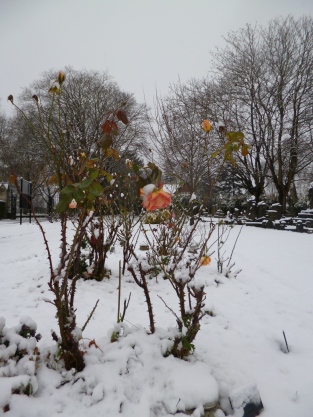
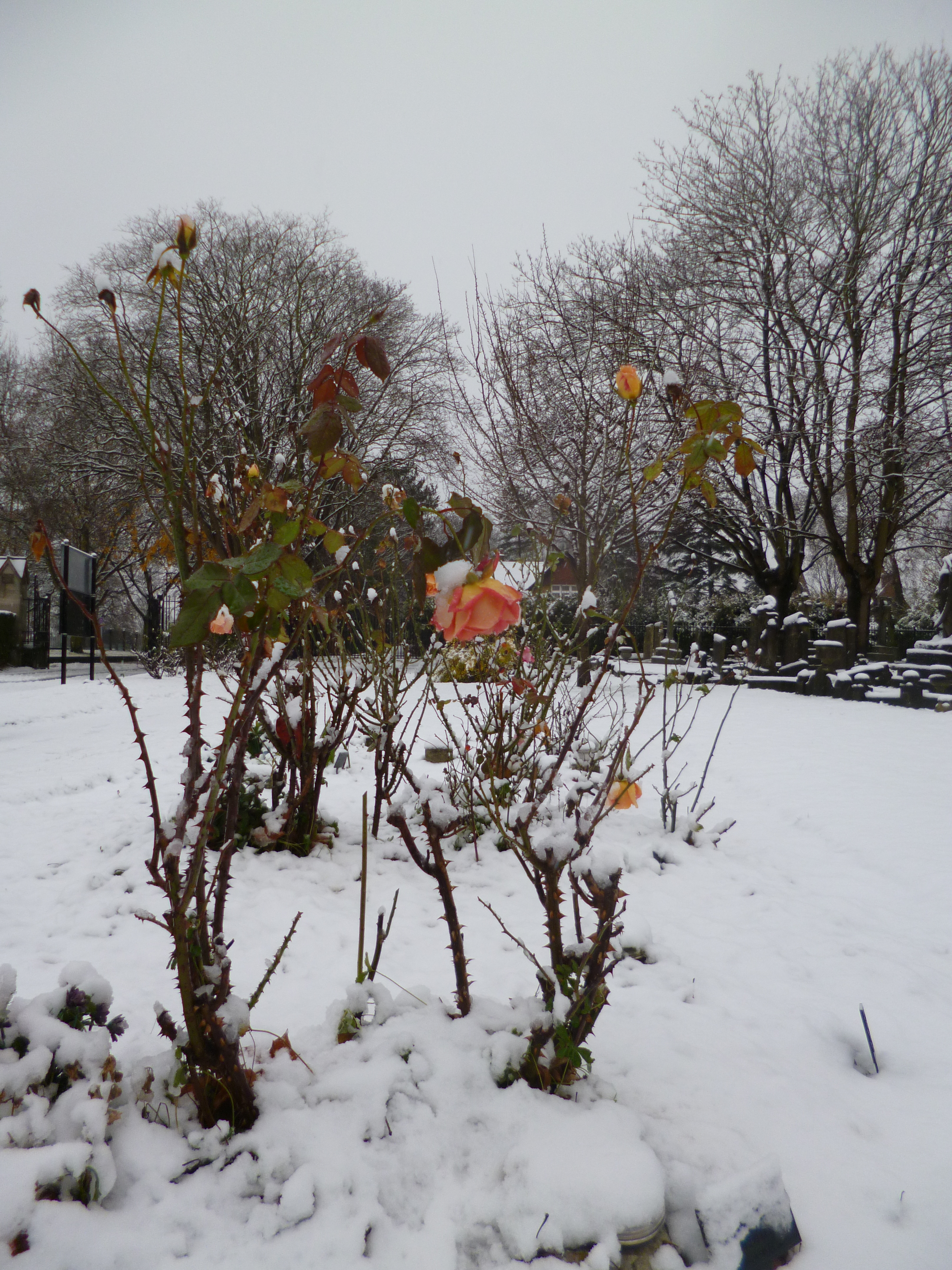
Glowing roses, golden with red rims, standing in thick snow amongst bare trees.Weißer Schnee auf bunter Mütze
Und dein Lachen wie Gesang
Häherschrei von Tannenspitze
Glockenruf minutenlang

Weißer Schnee auf roten Rosen
Weißer Hauch auf rotem Mund
Ja, auch ich hab dich erlesen
Niemals tat ich es dir kund

Erster Schnee auf grauen Gänsen
Jede Flocke wie ein Stern
Weißer Schnee auf roten Rosen
Und ich weiß: Du hast mich gern

Christina Egan © 2017

White snow melting on red roses.
Photograph: Christina Egan © 2017.

This is the second of two love songs which could stand alone or be sung by a woman and a man — from opposite ends of a stage or hall, though…

In White snow on white roses, the first person confesses she (or he) still secretly wishes they had got together a long time ago, and wonders if her friend feels the same.

In White snow on red roses, the second person reveals that he (or she), too, has longed for this relationship all along, but he never lets his friend know… not now either.

Each of them sings into the wind, into the snow… The ‘years that flew away’ like the wild geese in the first poem and the ‘late buds surprised’ by the snow in the second poem show that the pair are at a later stage of life.

The Palms and the Poet

The Palms and the Poet

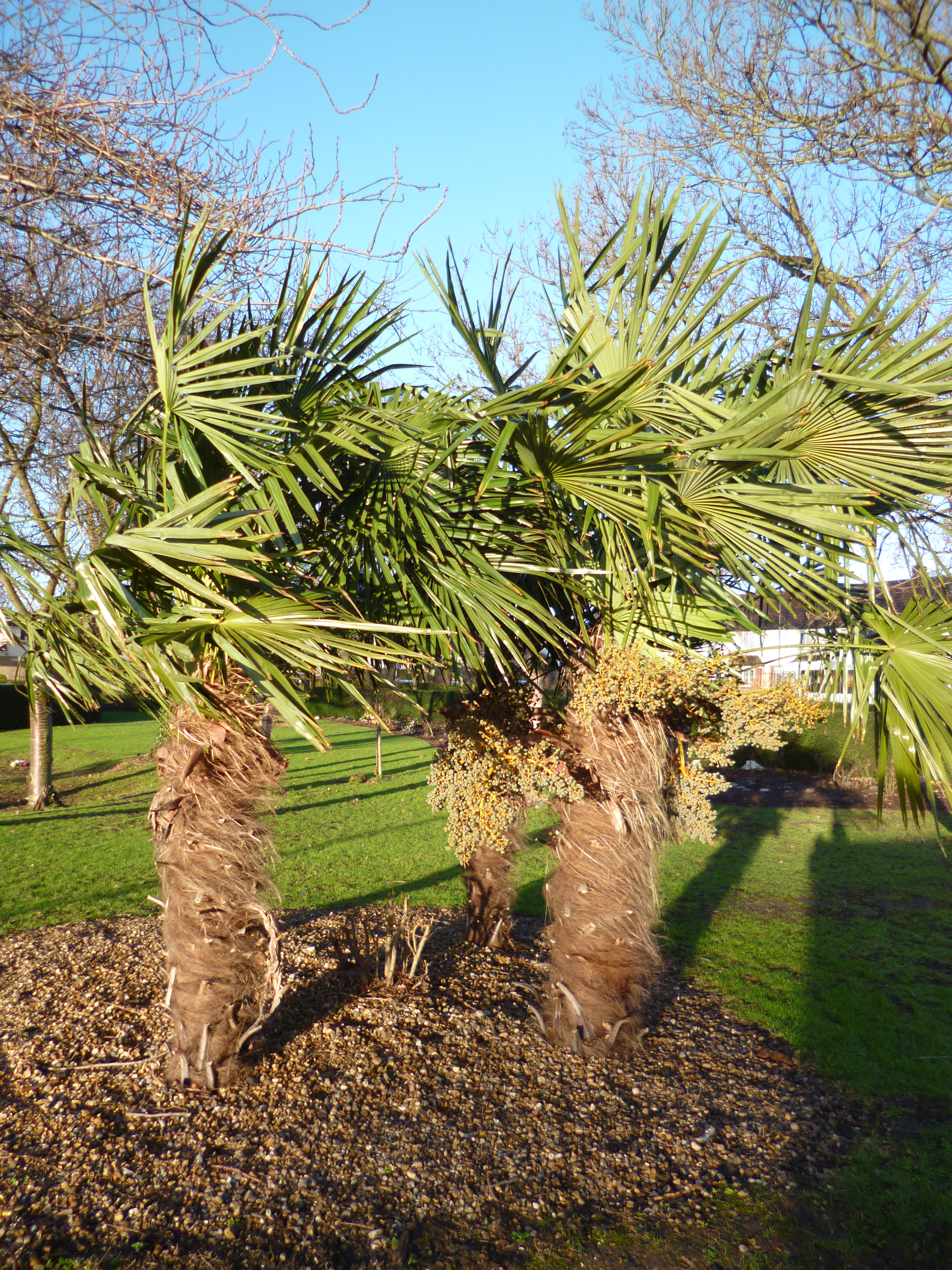
Short sturdy palm-trees, their leaves being blown to one side by a strong wind; blue sky, bright lawn.The palm-trees where the poet lingers
stretch out a thousand feathery fingers
and offer sweetest dates.
The shoulder-high ones’ shining tresses
give to the passing knight caresses,
the tall ones, sprinkled shades.

They weave their silken wings together
to shield him from the weighing weather
and point him to the wells.
He seems to smile, but does not notice
the leaves nor fruits, for in his throat is
a spring of syllables.

Christina Egan © 2005

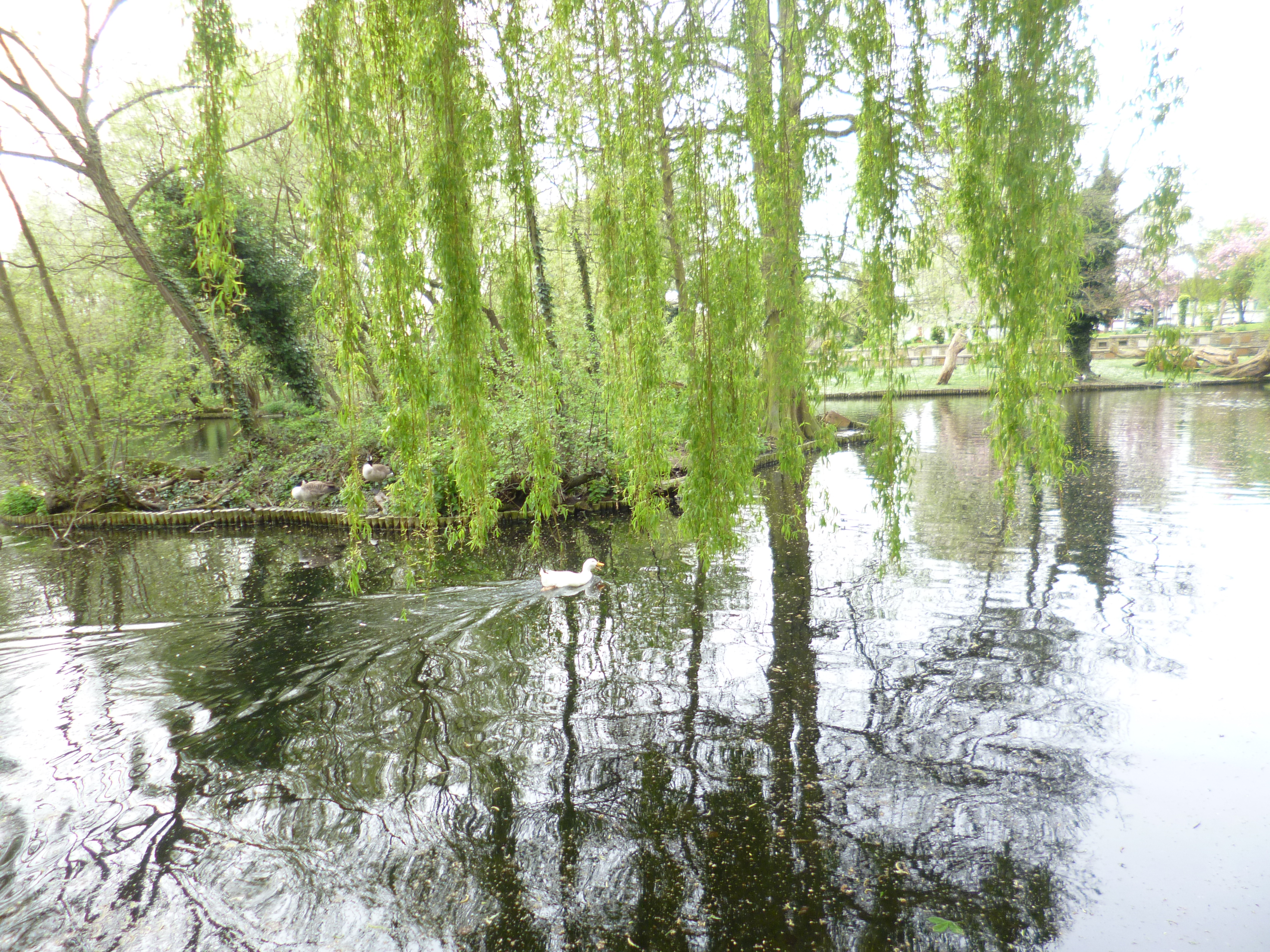
Pond with weeping willow reflected and white goose crossing.


Huge Harp

The weeping willow
is smiling in the sunshine,
dancing in the wind.
You sit by the pond beneath,
as if inside a huge harp.

Christina Egan © 2017

The tanka’s image of the poet beside a large harp or lyre, as if he were sitting inside, was inspired by stained-glass windows or illuminated manuscripts showing King David performing the psalms he is said to have composed.

Photographs: Christina Egan © 2014 / © 2018.